The Big Idea: Controlled Explosions, Thousands of Times a Minute
Every time you press the accelerator, you're triggering a rapid series of controlled explosions inside your engine. That may sound dramatic, but it's the fundamental principle behind almost every car on the road. Fuel and air mix inside a cylinder, ignite, and the resulting expansion of gases pushes a piston downward - that linear motion is then converted into the rotational force that spins your wheels.
This process is called the four-stroke combustion cycle, and it's repeated in each cylinder dozens of times per second. Most passenger cars have four, six, or eight cylinders, all firing in a carefully timed sequence to produce smooth, continuous power. Understanding this cycle demystifies a huge amount of what happens under the hood - and makes you a more confident driver and vehicle owner. You can explore more foundational concepts in our guide to car parts you should know by name.
The Four-Stroke Cycle, Step by Step
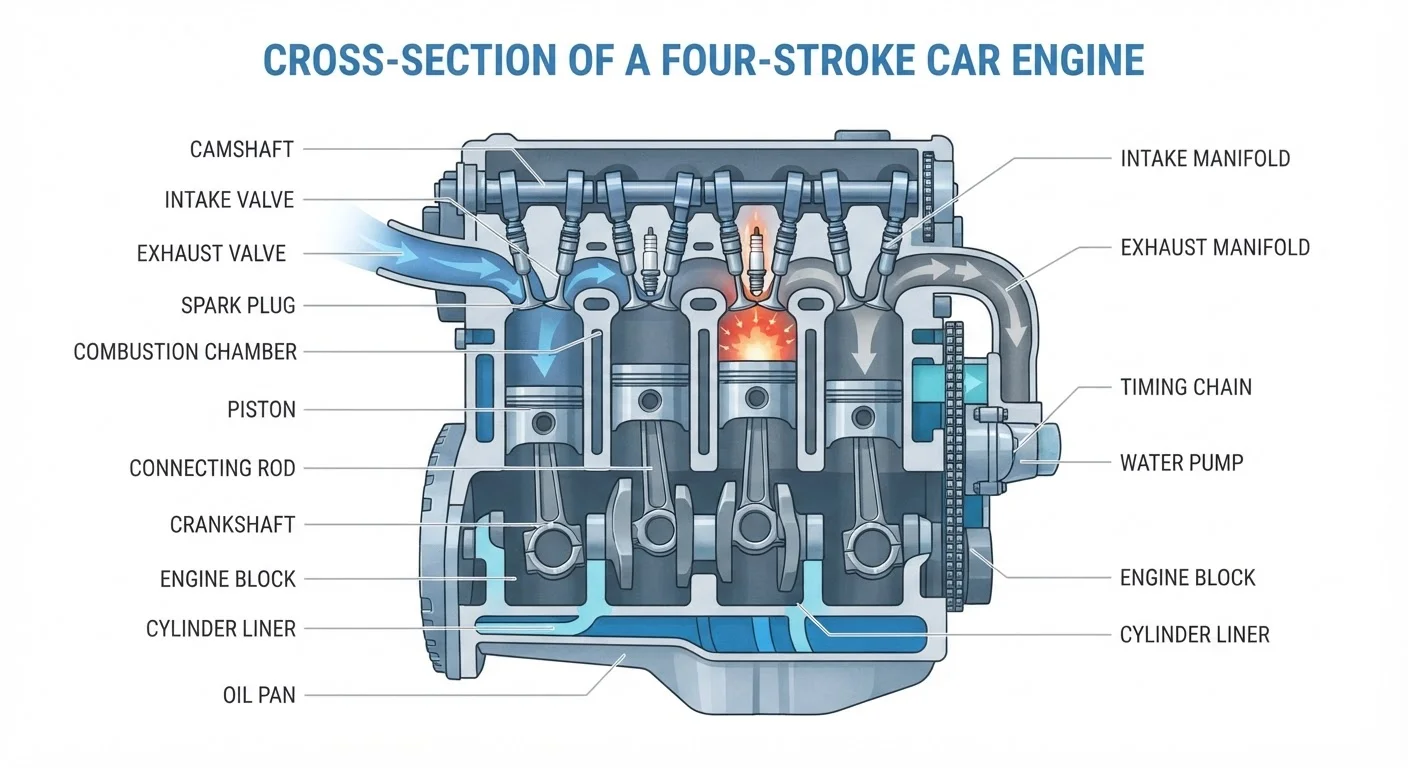
Each cylinder goes through four distinct strokes in sequence. Here's what actually happens:
- Intake: The piston moves downward, and the intake valve opens. A carefully metered mixture of air and fuel (in fuel-injected engines, these are introduced separately and mix in the cylinder) is drawn in.
- Compression: The intake valve closes and the piston moves back up, compressing the air-fuel mixture into a much smaller space. Compression increases the mixture's energy potential - the tighter the squeeze, the more power the combustion can deliver.
- Power (Combustion): At the top of the compression stroke, the spark plug fires, igniting the compressed mixture. The rapid expansion of burning gases forces the piston down with considerable force. This is the only stroke that actually produces power; the others support it.
- Exhaust: The exhaust valve opens and the piston moves back up, pushing spent gases out of the cylinder and into the exhaust system, which channels them through the catalytic converter and out the tailpipe.
This four-step sequence happens so fast - and across multiple cylinders firing in rotation - that the output feels like smooth, uninterrupted power to the driver.
4,000-7,000
Engine RPM at highway cruising speed
At 65 mph, a typical four-cylinder engine completes thousands of combustion cycles per minute across all cylinders.
~30%
Thermal efficiency of a typical gasoline engine
Engineering studies estimate that conventional gasoline engines convert roughly 20-40% of fuel energy into usable motion; the rest is lost as heat.
4
Strokes per complete combustion cycle
Intake, compression, power, and exhaust - each piston completes all four strokes before the cycle begins again.
From Pistons to Wheels: How Motion Travels
The downward push of each piston connects to the crankshaft via a connecting rod. The crankshaft's offset design converts the pistons' up-and-down (reciprocating) motion into rotation - the same principle as how a bicycle's pedals convert leg movement into wheel spin. That rotational force, measured in torque, is what ultimately drives your vehicle forward.
From the crankshaft, power flows through the transmission, driveshaft, and differential before reaching the wheels. The transmission's job is to multiply or modulate that torque to suit different driving conditions. Our explainer on how transmissions work picks up exactly where the engine leaves off.
“The internal combustion engine is essentially an air pump. Everything else - fuel delivery, ignition timing, exhaust scavenging - is in service of moving as much air as efficiently as possible through that cycle.”
— Automotive Engineering Perspective, Widely referenced principle in mechanical engineering education
Why This Matters for Maintenance
Knowing how an engine works gives everyday maintenance a clearer purpose. Engine oil, for instance, isn't just a fluid you top off - it's the lifeblood of the combustion process, lubricating hundreds of moving metal parts that operate under extreme heat and pressure. Dirty or depleted oil increases friction, raises operating temperatures, and accelerates wear on cylinder walls and piston rings. Our overview of synthetic vs. conventional motor oil explains how oil type affects engine protection.
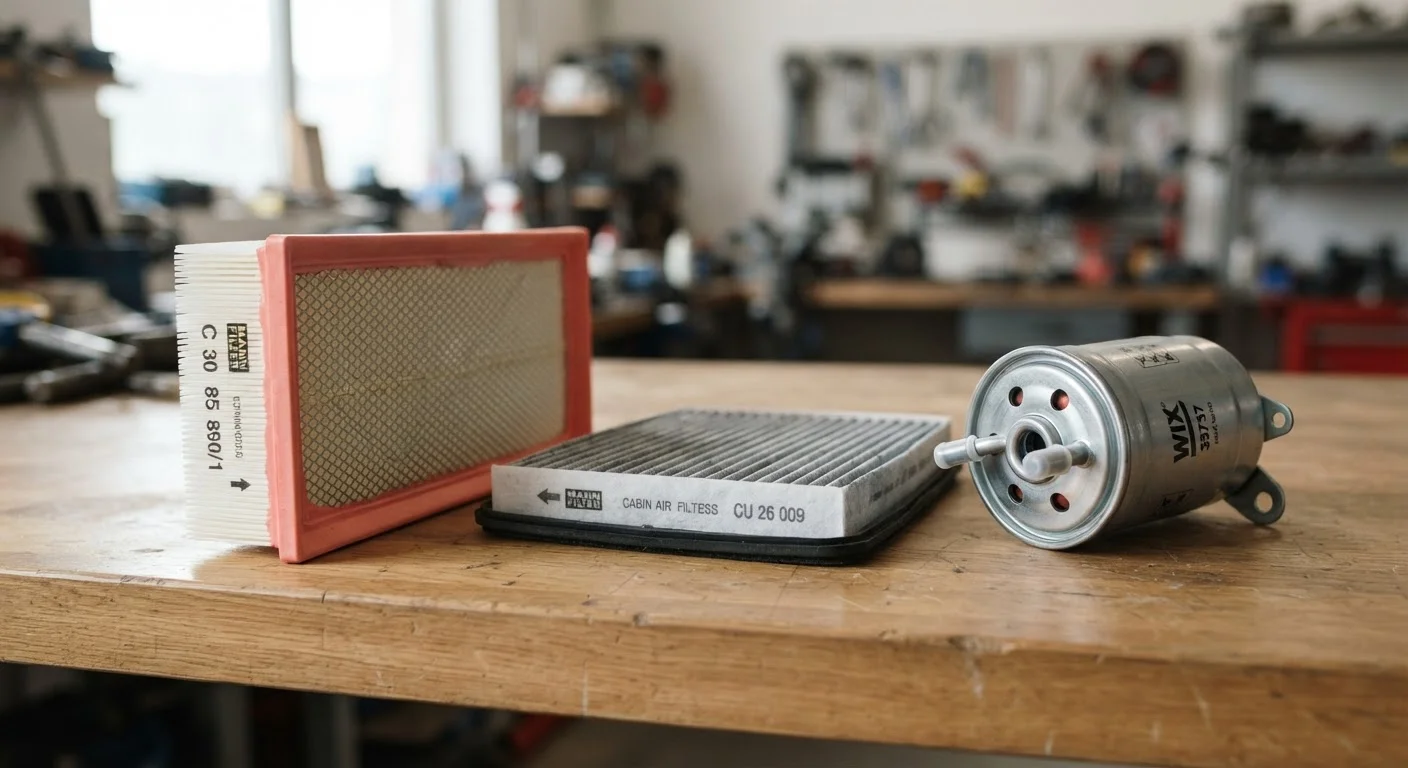
The air filter matters too: restricting the air supply to the intake stroke starves the combustion cycle, reducing efficiency and power. Spark plugs that are worn or fouled misfire during the power stroke, causing rough idling, reduced fuel economy, and increased emissions.
Follow Your Owner's Manual on Service Intervals
Your vehicle's owner's manual specifies oil change intervals, spark plug replacement schedules, and air filter inspection timelines based on your specific engine design. Following these intervals - rather than relying on rules of thumb - is the most reliable way to keep the combustion cycle running as the manufacturer intended.
When a mechanic explains a repair, you're now better equipped to understand why it's necessary - and to ask the right questions. That knowledge also helps you recognize when something sounds off before it becomes a costly problem.
Putting It All Together
The internal combustion engine is one of the most refined mechanical systems ever built for mass use. Each component - from the intake valves to the crankshaft to the exhaust system - plays a specific role in extracting motion from fuel. When the system is healthy and well-maintained, it operates with remarkable efficiency across hundreds of thousands of miles.
For drivers who want to go deeper, our car ownership guide for new drivers covers the practical side of keeping your engine - and the rest of your vehicle - in good shape from day one. And if you've ever wondered whether conventional wisdom about warming up your engine or using premium fuel actually holds up, our roundup of common car myths separates fact from long-standing fiction.