Three Filters, Three Very Different Jobs
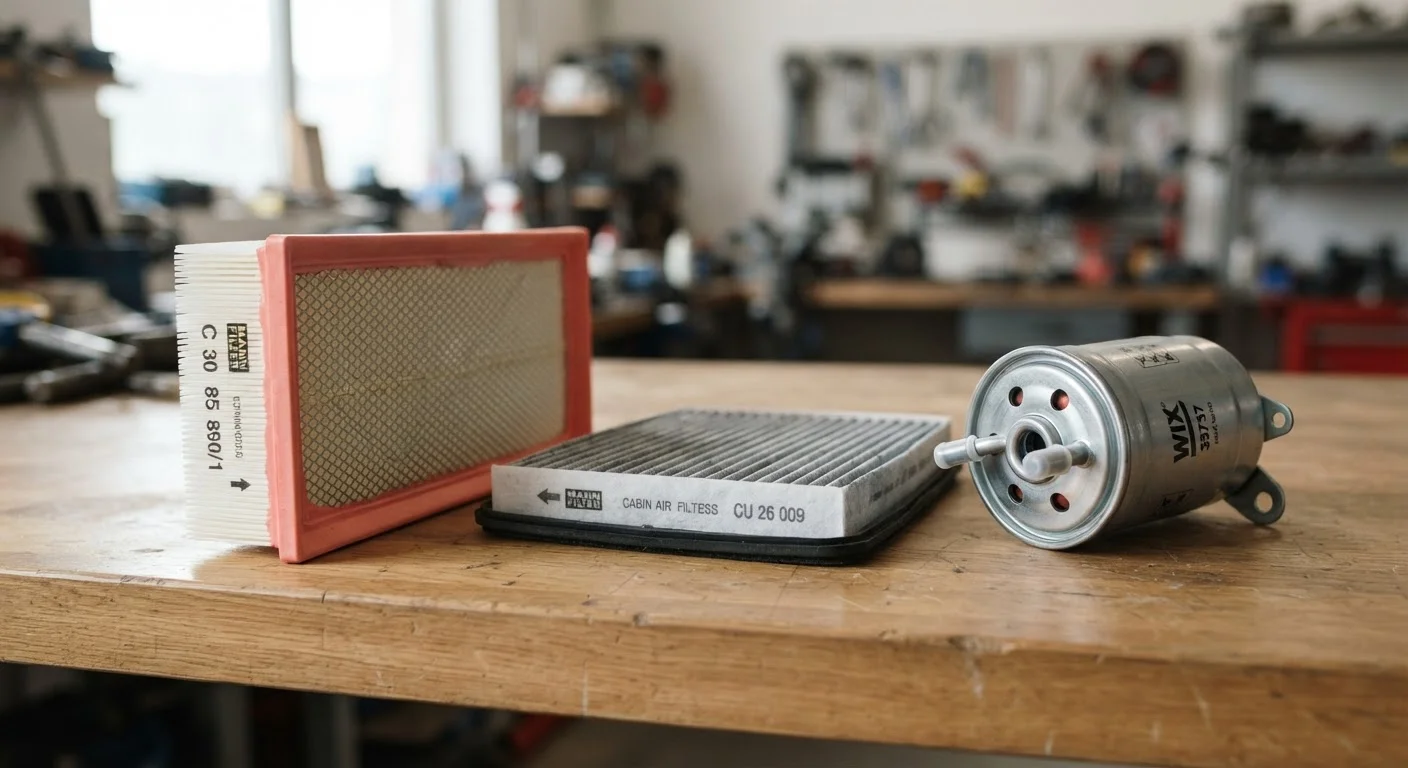
Your car relies on filters to keep contaminants out of critical systems - but not every filter does the same thing. Many drivers conflate the engine air filter with the cabin filter, or assume a fuel filter is optional maintenance. All three serve distinct protective roles, and letting any one of them go neglected can lead to real mechanical or comfort problems.
Understanding what each filter actually does - and what it protects - is one of the most practical pieces of knowledge any driver can carry. It helps you ask better questions at the shop and avoid paying for services you don't need, or skipping ones you do. See our decoded maintenance schedule guide for a broader look at how these intervals fit into overall vehicle upkeep.
| Engine Air Filter Interval | Every 15,000-30,000 miles (General manufacturer guidance; varies by vehicle and environment) |
| Cabin Air Filter Interval | Every 15,000-25,000 miles (General manufacturer guidance; more frequent in high-pollen areas) |
| Fuel Filter Interval | Every 30,000-60,000 miles (Varies significantly by make/model; consult owner's manual) |
| What Engine Air Filter Protects | Engine combustion system |
| What Cabin Air Filter Protects | Passenger air quality |
| What Fuel Filter Protects | Fuel injectors and fuel delivery system |
Engine Air Filter: Protecting Your Combustion System
The engine air filter sits between the outside atmosphere and your engine's intake. Its job is to trap dust, dirt, pollen, insects, and debris before that air enters the combustion chamber. Internal combustion engines require a precise mixture of clean air and fuel - contaminated air introduces abrasive particles that can accelerate wear on pistons, cylinders, and other internal components.
A clogged engine air filter restricts airflow, which forces the engine to work harder and can reduce fuel efficiency. In severe cases, it can contribute to a rough idle, sluggish acceleration, or even trigger a check-engine light. Most manufacturers recommend replacing the engine air filter every 15,000 to 30,000 miles, though drivers in dusty or rural environments may need more frequent replacements. Inspect it visually - a filter that was once light gray or white and is now dark brown or visibly packed with debris is ready to be replaced.
Engine Air Filter
A replaceable filter that removes dust, dirt, and debris from incoming air before it enters the engine's combustion system. Protects internal engine components and helps maintain proper air-to-fuel ratios.
Cabin Air Filter
A filter positioned in the vehicle's HVAC system that cleans the air circulated through the interior. Captures pollen, dust, and particulates to improve passenger air quality.
Fuel Filter
A filter that removes contaminants - such as rust and sediment - from fuel before it reaches the injectors or carburetor. Helps protect precision fuel delivery components and maintain engine performance.
Fuel Injector
A precision valve that delivers a controlled spray of fuel into the engine's combustion chamber. Injectors have very tight internal tolerances and are susceptible to damage from contaminated fuel.
HVAC System
Stands for Heating, Ventilation, and Air Conditioning. In a vehicle, it controls interior temperature and airflow; the cabin air filter cleans the air this system circulates.
Intake Restriction
A reduction in the volume or speed of airflow entering the engine, often caused by a clogged air filter. Can reduce fuel efficiency and engine responsiveness.
Cabin Air Filter: Protecting the People Inside
The cabin air filter has nothing to do with engine performance. Instead, it filters the air that flows through your vehicle's heating, ventilation, and air conditioning (HVAC) system - the air you and your passengers actually breathe. It captures pollen, dust, mold spores, exhaust particles, and other airborne contaminants before they circulate inside the cabin.
A neglected cabin filter doesn't endanger the engine, but it does degrade air quality and HVAC efficiency. Symptoms of a clogged cabin filter include reduced airflow from the vents even on maximum fan settings, musty or stale odors when running heat or AC, and worsened allergies for sensitive passengers. Replacement intervals typically fall between 15,000 and 25,000 miles, but drivers with allergies or those who frequently drive in high-pollen or high-pollution areas may benefit from more frequent changes. The cabin filter is often located behind the glove box and is usually a straightforward swap - though always check your owner's manual first.
Cabin Filter Location Varies by Vehicle
On many vehicles the cabin air filter is accessed behind the glove box, but some models place it under the dashboard or beneath the hood near the windshield base. Before attempting a replacement, check your owner's manual for the correct location and procedure. Incorrect installation can allow unfiltered air to bypass the filter entirely.
Fuel Filter: Protecting Fuel Delivery
The fuel filter screens contaminants - rust particles, sediment, and debris - out of the fuel before it reaches your fuel injectors or carburetor. Clean fuel is essential for efficient combustion and for protecting the precision components in a modern fuel injection system. Injectors have extremely tight tolerances; even small particles can cause clogs or uneven spray patterns that hurt performance and fuel economy.
Symptoms of a failing fuel filter include hard starting, engine hesitation or stuttering under acceleration, and in advanced cases, stalling. Some modern vehicles integrate the fuel filter into the fuel pump module inside the tank, making replacement a more involved job best left to a qualified mechanic. On vehicles with a serviceable inline fuel filter, replacement intervals commonly range from 30,000 to 60,000 miles, though specifications vary significantly by make and model. Always consult your owner's manual or a professional for your specific vehicle.
For drivers working within a tight budget, prioritizing what actually matters is worth reading - engine air and fuel filters typically rank high because neglecting them can lead to more expensive downstream repairs.
15,000-30,000 mi
Typical engine air filter replacement interval
Most vehicle manufacturers recommend this range, though dusty environments may require more frequent changes.
3 systems
Distinct vehicle systems protected by filters
Engine intake, passenger cabin, and fuel delivery each rely on a separate filter designed for that system's specific demands.
30,000-60,000 mi
Common fuel filter service interval
Interval varies widely depending on vehicle make, model, and whether the filter is inline or integrated into the fuel pump assembly.
Knowing When Each Filter Needs Attention
No single replacement schedule fits every vehicle or every driver. Mileage guidelines from manufacturers are good starting points, but real-world conditions - climate, road type, commute patterns - all affect how quickly filters degrade. A driver on unpaved rural roads may need to replace an engine air filter twice as often as someone who commutes on clean city highways.
The practical rule: inspect filters at every oil change interval. Pull the engine air filter and hold it up to light. Check your cabin filter for visible debris or odor. Pay attention to any performance symptoms that could indicate a restricted fuel filter. If you're not sure what you're looking at, your mechanic can inspect all three during a routine service. For a broader understanding of how your vehicle's systems connect, knowing your car's key components by name helps you communicate confidently when it's time to ask questions.
It's also worth noting that automotive filters and home HVAC filters share a concept but work in very different environments - HVAC filter maintenance follows its own schedule and logic entirely.
Your Car's Maintenance Schedule, Decoded
A plain-language breakdown of common service intervals - including where filter replacements fit - to help you understand what your vehicle actually needs and when.
Car Maintenance on a Tight Budget
Practical guidance on which maintenance tasks to prioritize when funds are limited, with clear reasoning for why certain services - like filter replacements - protect against larger repair costs.