Why Brake Myths Are So Costly
Brakes are one of the most safety-critical systems on any vehicle, which makes them fertile ground for misinformation. Drivers reasonably err on the side of caution - and shops sometimes exploit that instinct. The result is that many Americans pay for brake services they don't yet need, or panic over symptoms that are completely normal.
Understanding how brakes actually work helps cut through the noise. For a solid foundation on the two main brake system types, see our overview of disc brakes vs. drum brakes. With that context in mind, here are the most common brake myths - and what the evidence actually shows.
Myth
If my brakes squeal, the pads are worn out and need immediate replacement.
Fact
Squealing has several causes, most of which are not emergencies. Worn pads are just one possibility.
Brake pads do include a small metal wear indicator designed to produce a squealing sound when friction material gets low - but that's not the only reason brakes squeal. Morning squealing that goes away after the first few stops is typically caused by surface rust or moisture on the rotors, both entirely normal. Dust, debris, or certain pad compounds can also produce noise with plenty of life remaining. A grinding or metal-on-metal scraping sound is the more urgent signal, suggesting the friction material may be fully depleted. Squealing alone warrants an inspection, not an automatic replacement.
Myth
Brake dust on my wheels means something is wrong with my brakes.
Fact
Brake dust is a normal byproduct of friction and does not indicate a defect or problem.
Every time you apply the brakes, the pad material wears against the rotor and releases fine particles - that's how friction braking works. The dark residue that accumulates on wheel faces is largely iron from the rotor combined with pad binder material. Heavier dust simply means the pads are doing their job. Some pad compounds, particularly semi-metallic types, produce more dust than others. Excessive heat-related discoloration on the rotor or a burning smell after normal driving is worth investigating, but dust on its own is not a warning sign.
Myth
Brake pads need to be replaced every 25,000-30,000 miles.
Fact
Pad lifespan varies enormously - anywhere from roughly 25,000 to over 70,000 miles depending on several factors.
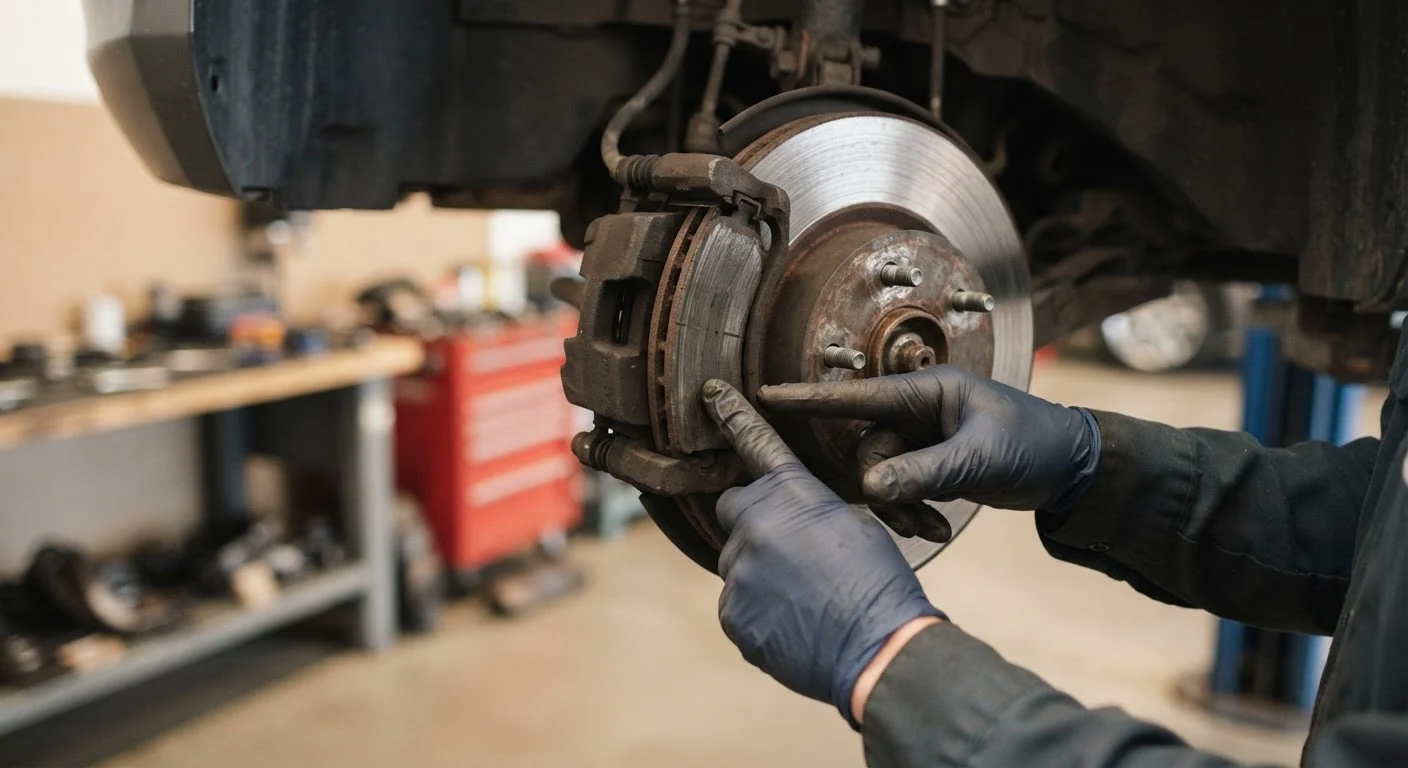
A fixed mileage interval for brake pads is a convenient rule of thumb, but it doesn't reflect reality. City drivers who brake frequently at traffic lights will wear pads much faster than highway commuters. Towing or hauling heavy loads accelerates wear. Pad compound matters too: ceramic pads generally outlast organic ones under comparable conditions. Rather than replacing by mileage, the correct approach is to measure pad thickness during regular inspections and replace when the material approaches the manufacturer's minimum. This approach is both safer and more economical.
Myth
You should always replace rotors when you replace brake pads.
Fact
Rotors only need replacement when they fall below minimum thickness or show damage - not automatically with every pad change.
Rotors are precision-machined metal discs with a specific minimum thickness specification stamped directly on them. As long as a rotor measures above that specification, is free of deep grooves, and doesn't show warping (which causes a pulsating pedal feel), it can typically remain in service. Replacing perfectly usable rotors adds significant cost without improving braking performance. Ask a technician to measure rotor thickness with a micrometer and compare it to the spec. Replacement is warranted by measurement and condition, not by default.
Myth
New brakes will feel firm immediately after installation.
Fact
New brake pads and rotors require a bedding-in period before delivering optimal, consistent performance.
Bedding-in (sometimes called break-in) is the process of transferring a thin, even layer of pad material onto the rotor surface. Until this is complete, braking force may feel inconsistent or slightly reduced. Many manufacturers and technicians recommend a specific series of moderate stops from low speeds to seat the new components properly. Skipping this step can lead to uneven deposits, judder, or reduced performance. Your mechanic should explain the bedding-in procedure - or refer you to the pad manufacturer's recommendations - when handing back the vehicle after a brake job.
What Actually Determines When You Need Service
No single mileage number applies universally to brake pad replacement. Driving habits matter more than odometer readings: stop-and-go city commuting wears pads significantly faster than highway driving, where sustained speeds mean fewer hard braking events. Pad material also plays a role - organic pads wear faster but run quieter, while semi-metallic and ceramic compounds last longer under heavier use.
Don't Ignore a Grinding Sound or Soft Pedal
While many brake noises and symptoms are benign, two warrant prompt professional attention: a grinding or metal-on-metal scraping noise during braking, and a brake pedal that sinks unusually low or feels spongy. The first may indicate pads have worn through completely; the second can signal a hydraulic issue. Neither should be dismissed or delayed - have the vehicle inspected by a qualified mechanic before continuing to drive it extensively.
The most reliable guidance lives in your vehicle's owner's manual, which contains manufacturer-specified inspection intervals tailored to your car. Most manuals recommend having brake thickness checked annually or at every tire rotation - a low-cost inspection that gives you real data rather than guesswork. Speaking of which, routine tire rotations and brake inspections often happen together; skipping tire rotations can also accelerate uneven brake wear. If you haven't consulted your manual lately, it contains more useful maintenance information than most drivers realize.
When a shop recommends brake work, ask for the measured pad thickness in millimeters. Most manufacturers set a minimum acceptable thickness - typically around 2-3 mm - and anything above that threshold may not require immediate replacement. A reputable technician will show you the measurement and explain where you stand relative to that limit.