
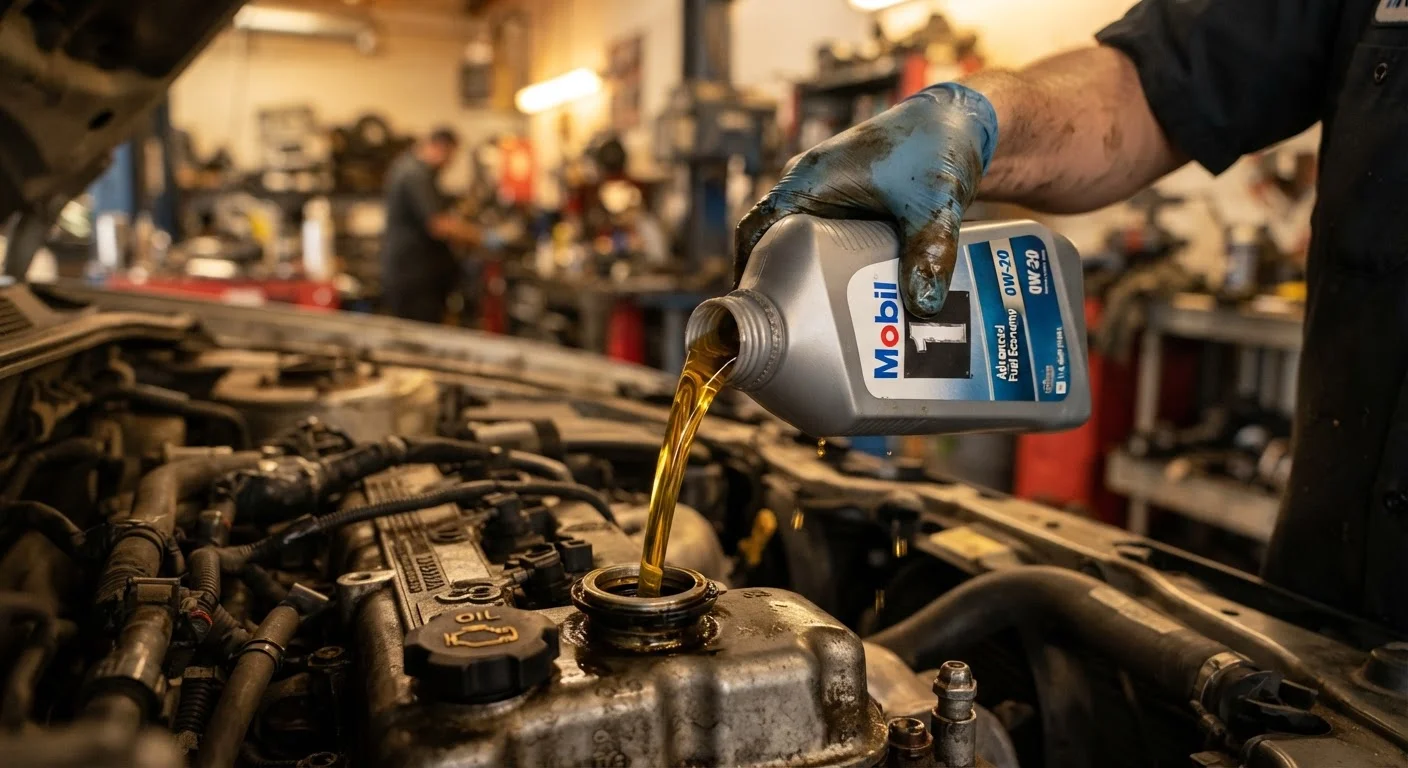
How Each Oil Is Made
The most fundamental difference between synthetic and conventional motor oil comes down to origin and manufacturing. Conventional oil - also called mineral oil - is refined directly from crude petroleum extracted from the ground. During refining, impurities are removed, but the process leaves behind a mixture of hydrocarbon molecules of varying sizes and shapes. That inconsistency is built into the product.
Synthetic oil, by contrast, is chemically constructed in a lab. Engineers start with a base stock - often derived from natural gas or crude oil compounds - and rebuild it molecule by molecule. The result is a lubricant with a uniform molecular structure, free of the natural impurities and irregularities that come with refined crude. This consistency is what gives synthetic oil most of its performance advantages. To understand why lubrication matters so much, it helps to know how an engine converts fuel into motion - the sheer number of moving metal parts involved makes clean, stable lubrication critical.
Performance Differences That Actually Matter
The molecular uniformity of synthetic oil translates into measurable performance differences in real-world driving situations.
| Criterion | Conventional Oil | Synthetic Oil |
|---|---|---|
| Origin | Refined from crude petroleum | Chemically engineered base stock |
| Molecular consistency | Variable - natural impurities present | Uniform - engineered to spec |
| Cold-weather performance | Thickens more at low temperatures | Flows readily in cold conditions |
| Heat resistance | Breaks down faster under high heat | Resists thermal breakdown longer |
| Typical drain interval | 3,000-5,000 miles | 7,500-15,000 miles |
| Sludge resistance | More prone to oxidation and deposits | Resists oxidation and sludge buildup |
| Cost per quart | Lower upfront cost | Higher upfront cost |
| Best suited for | Older engines, mild conditions | Modern engines, extreme conditions |
Cold starts are one of the most stressful moments for any engine. Oil must circulate quickly to protect metal surfaces before friction causes wear. Conventional oil can thicken significantly in cold temperatures, slowing that circulation. Synthetic oil flows more readily at low temperatures, providing faster protection at startup.
At the high end of the temperature range, synthetic oil resists thermal breakdown (the process by which heat causes oil molecules to degrade and lose their lubricating properties) far better than conventional oil. This matters for drivers in hot climates, those who tow or haul heavy loads, and anyone whose engine regularly runs hard.
~70%
Engine wear occurring at cold startup
Industry engineering data suggests a significant share of engine wear happens in the first moments after a cold start, before oil fully circulates.
2-4×
Longer drain interval vs. conventional
Many synthetic oil formulations are rated for change intervals two to four times longer than those recommended for conventional oil under normal driving conditions.
Synthetic oil also does a better job resisting oxidation - a chemical reaction with oxygen that causes oil to thicken and form sludge deposits over time. Sludge can clog passages and starve engine components of lubrication. Because synthetic oil resists this process more effectively, it stays cleaner longer.
Drain Intervals and Long-Term Costs
One of the most practical differences between the two oil types is how long each lasts before it needs to be changed. Conventional oil typically requires changes every 3,000 to 5,000 miles under normal driving conditions. Synthetic oil, depending on the vehicle and the specific product, is often rated for 7,500 to 15,000 miles between changes.
Synthetic oil costs more per quart - sometimes two to four times as much - but the extended drain interval means fewer changes per year. Over the life of a vehicle, the cost difference can narrow considerably. Always follow your owner's manual for interval guidance rather than relying on general rules. The decision to change your own oil or use a shop is a separate but related consideration worth thinking through.
Turbocharged Engines Need Extra Attention
Turbocharged engines run hotter than naturally aspirated engines and place greater demands on motor oil. Most manufacturers of turbocharged vehicles specifically require full synthetic oil. Using conventional oil in a turbocharged engine can accelerate wear and lead to a condition called coking - carbon deposits forming in oil passages - which can damage the turbocharger. If your vehicle has a turbocharger, synthetic oil is generally non-negotiable.
Which Oil Does Your Engine Actually Need?
The clearest answer to this question lives in your vehicle's owner's manual. Manufacturers specify the oil type and viscosity grade - such as 5W-30 or 0W-20 - based on how the engine was designed. Many vehicles produced in the last decade or so are engineered specifically for full synthetic oil, and using conventional oil in those engines may not provide adequate protection.
If your vehicle accepts either type, your driving habits and environment become the deciding factors. Extreme temperatures, frequent short trips, towing, or high-mileage use all favor synthetic. Mild conditions and infrequent use may make conventional oil a reasonable, lower-cost choice. There's also a middle-ground option: synthetic blend oil, which mixes conventional and synthetic base stocks and falls between the two in both performance and price.
One concern some drivers raise is whether switching from conventional to synthetic can cause leaks in older engines. This is addressed in our guide to common car myths that have been steering drivers wrong for years. In most cases, switching is safe - but when in doubt, your mechanic is the right person to ask.