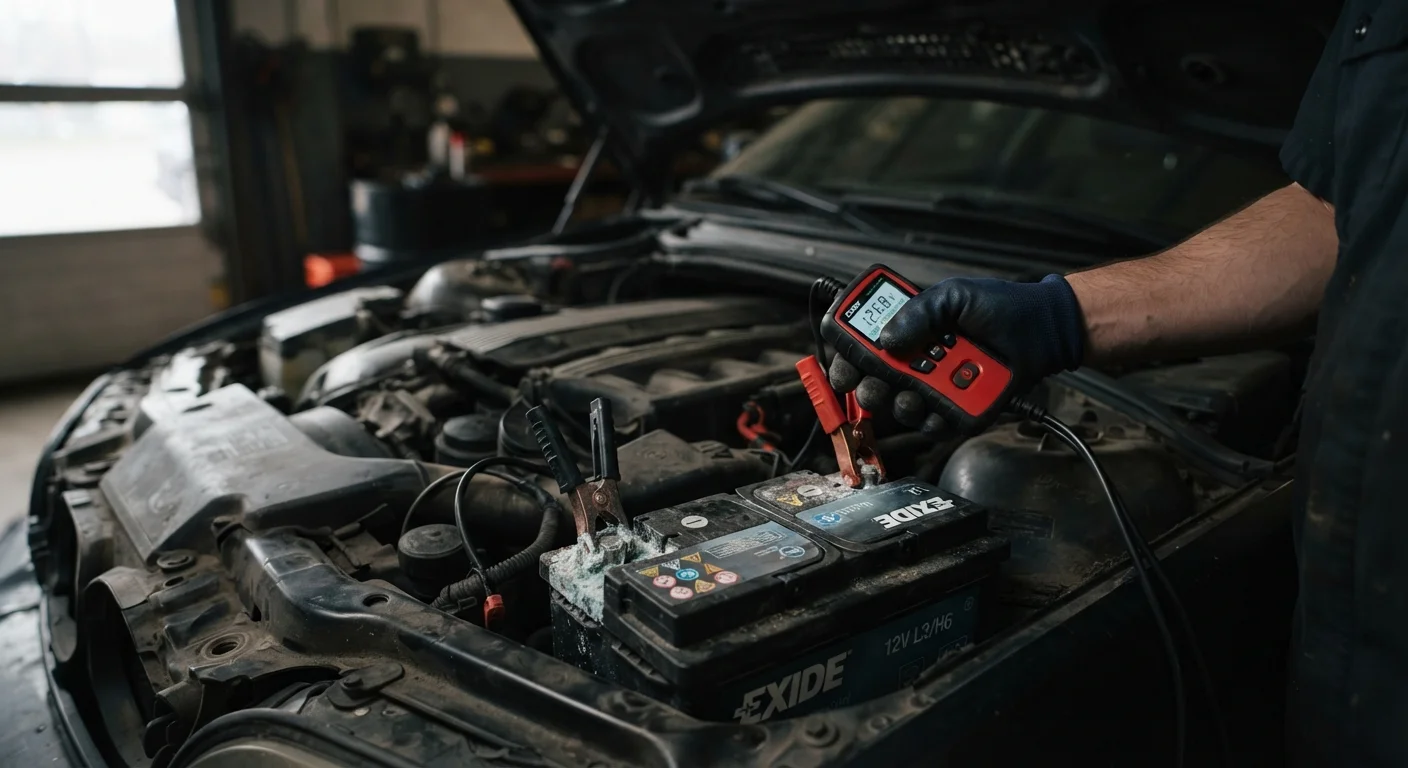
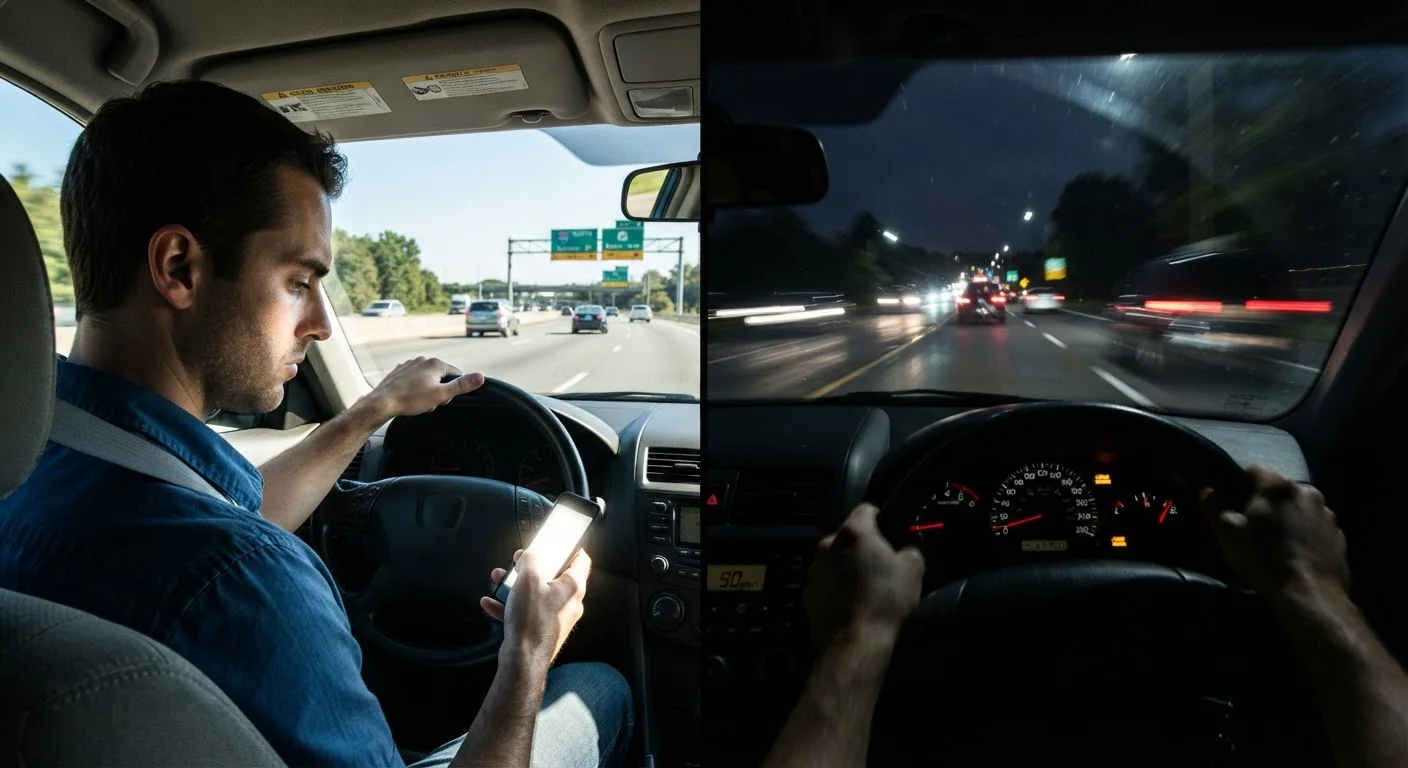
Two Different Threats to Driver Performance
Distracted driving and impaired driving are frequently grouped together in road safety conversations - and for good reason. Both increase crash risk substantially. But they work in fundamentally different ways, and understanding those differences helps drivers make smarter choices before and during every trip.
Distracted driving occurs when a driver's attention is diverted away from the primary task of operating a vehicle. This can be visual (eyes off the road), manual (hands off the wheel), or cognitive (mind off driving). Sending a text message, for example, involves all three types simultaneously. Even a brief glance at a phone at highway speed means traveling the length of a football field without fully attending to the road.
Impaired driving describes a different kind of deficit - one rooted in the body and brain rather than attention allocation. Alcohol, cannabis, prescription medications, over-the-counter drugs, and illicit substances can all reduce a driver's ability to perceive, process, and respond to the road environment. The key distinction: an impaired driver's underlying capabilities are diminished, not just momentarily redirected.
For a deeper look at proactive strategies for managing both types of risk, see our guide to defensive driving.
| Criterion | Distracted Driving | Impaired Driving |
|---|---|---|
| Primary mechanism | Diverted attention | Degraded brain function |
| Driver self-awareness | Usually aware of lapse | Often unaware of impairment |
| Common causes | Phones, navigation, passengers, eating | Alcohol, cannabis, medications, drugs |
| Reaction time impact | Delayed while distracted | Slowed throughout entire drive |
| Judgment affected | Generally intact between distractions | Compromised continuously |
| Key legal framework | Handheld device bans (varies by state) | DUI/DWI laws (federal and state) |
| Primary countermeasure | Habit change, device management | Pre-commitment, designated driver |
How Each Impairment Affects the Brain
Distraction works by competing for limited attentional resources. Research into cognitive load - the mental effort required to process information - shows that the human brain cannot fully parallel-process driving and a secondary task. A hands-free phone call isn't as safe as it sounds: studies have found that conversational engagement with a remote party pulls attention in ways a passenger conversation typically doesn't, because passengers naturally pause when driving demands increase.
Impairment, by contrast, alters the brain's baseline function. Alcohol, for instance, suppresses activity in the prefrontal cortex - the region responsible for judgment and inhibition - while also slowing neural transmission throughout the brain. This is why impaired drivers often feel more confident while performing worse: the mechanism that would normally trigger caution is itself compromised.
Cannabis impairs spatial perception and time estimation. Many sedating antihistamines and muscle relaxants slow reaction time measurably. Some prescription opioids affect coordination and visual tracking. The specific profile of impairment varies by substance, but in each case the driver's core capabilities are diminished before any external distraction is introduced.
~3,000
Annual U.S. distraction-related traffic fatalities
According to NHTSA data, distracted driving is linked to thousands of deaths on U.S. roads each year.
~10,000
Annual U.S. drunk-driving fatalities
NHTSA estimates that alcohol-impaired driving crashes account for roughly one-third of all U.S. traffic fatalities annually.
~23x
Crash risk increase when texting while driving
Research by the Virginia Tech Transportation Institute found that texting drivers faced dramatically elevated crash or near-crash risk compared to undistracted drivers.
Fatigue shares characteristics with both categories - it diverts attention and degrades brain function simultaneously. Our article on driver fatigue explores this overlap in detail.
Self-Awareness and the Danger of Underestimation
One of the most important differences between distraction and impairment is how well drivers can assess their own state. A driver who glances at their phone generally knows they're distracted - the lapse in attention is brief and obvious in retrospect. The behavior is a choice, even if the risk is underestimated.
Impairment is more insidious. Alcohol at moderate blood-alcohol concentrations has been shown to reduce drivers' ability to accurately judge their own driving performance. The same neural systems responsible for self-monitoring are affected by the substance itself. This is why "I feel fine to drive" is not a reliable safety check after drinking - the tool used to make that judgment is compromised.
This distinction matters for interventions too. Reducing distracted driving leans heavily on habit change and norm-setting - making it socially unacceptable to use a phone at the wheel, just as seatbelt use became a norm over decades. Reducing impaired driving also requires pre-commitment strategies: deciding before drinking begins that someone else will drive, or using a ride-share service.
When Distraction and Impairment Overlap
Drivers who are both impaired and distracted face compounded risk that exceeds either factor alone. An impaired driver reaching for their phone, for example, loses the limited compensatory behaviors - like slowing down or avoiding lane changes - that might otherwise partially offset their diminished capabilities. If you suspect a driver is both impaired and distracted, maintaining maximum following distance and removing yourself from proximity to that vehicle is the safest course of action.
Environmental factors - like night driving - can amplify both types of risk. Our piece on night driving risks explains how reduced visibility interacts with driver attention and impairment.
Legal and Real-World Consequences
Both distracted and impaired driving carry legal consequences in every U.S. state, though the frameworks differ. Driving under the influence (DUI) laws are well-established, with per se limits for blood-alcohol concentration and increasingly standardized approaches to drug impairment. Penalties typically escalate with prior offenses and can include criminal charges, license revocation, and mandatory treatment programs.
Laws targeting distracted driving vary more significantly by state. Handheld phone bans are now common, and some states have enacted broader restrictions on any manual device interaction. Enforcement remains challenging because distraction is harder to observe and document than impairment detected through a breathalyzer or field sobriety test.
Beyond the legal dimension, the human cost of both behaviors is significant. The NHTSA (National Highway Traffic Safety Administration) publishes annual data documenting thousands of fatalities attributable to both distracted and impaired driving each year. These are largely preventable deaths, which is what makes both behaviors so important to understand and address.
Passengers also play a role - for better or worse - in shaping driver risk. Our article on how passengers affect driver behavior looks at what the evidence shows.
This article is for general informational and educational purposes only. It does not constitute legal advice. Traffic laws vary by state; consult official state resources or a qualified legal professional for guidance specific to your situation.