Why Passengers Change the Driving Equation
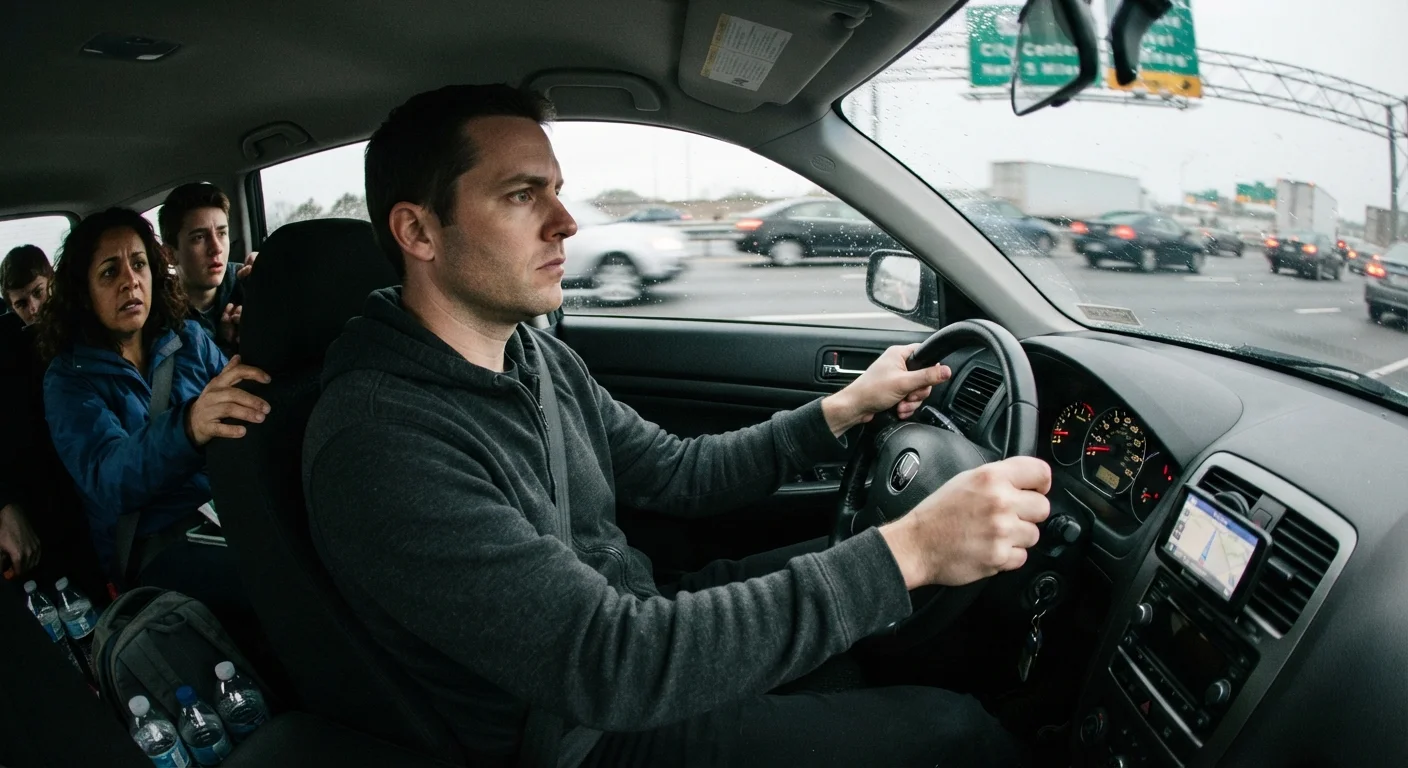
Most drivers think about risk in terms of their own habits - how alert they are, whether they're checking their phone, how fast they're going. But the people riding in the vehicle are part of the equation too. Decades of traffic safety research have established that passengers can meaningfully shift a driver's behavior, for better or worse, depending on who's behind the wheel and who's in the seat next to them.
This isn't a marginal effect. For certain driver populations - particularly teenagers - carrying passengers is one of the strongest documented risk multipliers in crash data. For others, a calm adult passenger may actually improve safety. Understanding the mechanism behind the passenger effect helps drivers of all experience levels make smarter decisions before they pull out of the driveway.
For a broader look at how human factors shape crash risk, see the Safe Driving From All Angles overview, which covers the psychology behind everyday driving decisions.
~2x
Teen crash rate increase with one peer passenger
Multiple studies, including research cited by the Insurance Institute for Highway Safety (IIHS), indicate teen crash risk roughly doubles with a single peer passenger compared to driving alone.
16-17
Highest-risk age range for passenger-related crashes
The CDC and NHTSA consistently identify 16- and 17-year-old drivers as the group most adversely affected by carrying peer passengers based on crash record analysis.
50+
U.S. jurisdictions with GDL passenger restrictions
All 50 U.S. states and the District of Columbia have some form of Graduated Driver Licensing that includes passenger restrictions for newly licensed drivers.
Teen Drivers and Peer Passengers: A High-Risk Combination
The evidence on teen drivers carrying peer passengers is particularly consistent. Studies using crash records and naturalistic driving data have repeatedly found that the presence of age-similar passengers substantially elevates crash risk for adolescent drivers. The relationship also has a dose-response quality: risk tends to climb with each additional passenger.
The mechanism isn't simply distraction in the traditional sense. Social dynamics play a central role. Teens are more likely to speed, run yellow lights, accept risky gaps in traffic, and engage in showing-off behavior when peers are watching. The brain systems responsible for weighing consequences against social approval aren't fully mature until the mid-twenties, which makes young drivers structurally more vulnerable to peer influence inside a moving vehicle.
This body of research directly informed the design of Graduated Driver Licensing (GDL) systems now in place across the U.S. Most states restrict the number of non-family passengers a newly licensed driver can carry, particularly during nighttime hours. These restrictions have been associated with reductions in teen crash rates in states where they're enforced.
For Parents: Talk Before They Drive Alone
Before a newly licensed teen starts carrying passengers, have a direct conversation about peer pressure inside the vehicle - not as a lecture, but as practical preparation. Research suggests that teens who've discussed these scenarios with a parent are better equipped to resist in-the-moment pressure. Role-playing a situation where a passenger pressures them to speed can build a mental script they can actually use.
Adult Passengers: A Different Dynamic
The picture looks quite different for experienced drivers. Research on adult drivers suggests that having a mature passenger often has a neutral to mildly positive effect on safety. An attentive adult co-passenger can flag hazards, help navigate, and serve as an informal check on overly aggressive driving. The conversation between a driver and an adult passenger also tends to be self-regulating: most adults naturally pause or lower their voice when traffic conditions become demanding.
This is one of the key distinctions between passenger conversation and phone use. As explored in research on cell phone use while driving, a phone call - even hands-free - involves a remote party who has no awareness of road conditions and won't pause when a hazard appears. A passenger in the vehicle shares the same physical environment and can read driving cues.
That said, even adult passengers can create problems in certain contexts: heated arguments, emotionally charged conversations, or passengers who are intoxicated or behaving erratically all impose real demands on driver attention.
Building Habits That Manage Passenger Risk
Recognizing the passenger effect is the first step; managing it is what actually improves safety. Experienced drivers tend to develop habits - often unconsciously - that keep passenger interaction from overwhelming their primary task of controlling the vehicle. These deliberate habits take time to develop, but they can be consciously cultivated.
Some practical approaches:
- Set expectations before departure. If you're carrying passengers who tend to be loud or distracting, a brief, calm statement at the start - "I need to focus when merging, so let's keep it down then" - can help without being confrontational.
- Defer non-urgent conversations. If a passenger raises a complex or emotionally loaded topic, it's reasonable to say you'll revisit it when you've parked.
- For teen drivers: leverage the rules. GDL restrictions exist precisely because the data supports them. Using the law as cover for declining peer passengers removes some of the social pressure.
- Model the behavior you want. Parents who visibly manage distractions and maintain composure while driving teach those habits to the next generation of drivers.
Understanding how passengers fit into the broader landscape of driver distraction is useful context - especially when compared with other common risks like distracted and impaired driving.
GDL Laws Vary by State
Graduated Driver Licensing restrictions - including passenger limits - differ across U.S. states in terms of which passengers are restricted, how many are allowed, and for how long the restrictions apply. Drivers and parents should verify the specific rules in their state rather than assuming a uniform national standard. Most state DMV websites publish current GDL requirements.