Why Color Is Never Just Decorative
Before you've spoken a word or someone has noticed your silhouette, color has already made an impression. Hues carry psychological weight — they signal energy, approachability, authority, creativity, and more. That's not just fashion lore; it's backed by decades of color psychology research showing that color affects perception in measurable ways.
This makes color one of the most powerful — and most underused — tools in personal style. Many people default to neutrals because they feel 'safe,' while others gravitate toward whatever's trending without asking whether it actually reflects who they are. Neither approach is wrong, but both leave something on the table. Understanding color's role lets you use it on purpose.
If you're still working out what personal style even means to you, our guide to what personal style actually means is a great place to start before diving into color specifically.
90%
Of snap judgments based on color alone
Research cited in studies on color psychology suggests that up to 90% of an initial product or person assessment can be based on color, underscoring its outsized role in first impressions.
62–90%
Of interaction influenced by color
Multiple studies in environmental and consumer psychology estimate that color accounts for 62–90% of a first impression in social and retail contexts.
4 colors
Average size of a cohesive signature palette
Style educators and wardrobe consultants generally recommend anchoring a personal color story around two to four core hues for maximum outfit versatility and visual cohesion.
Color Psychology: What Your Wardrobe Communicates
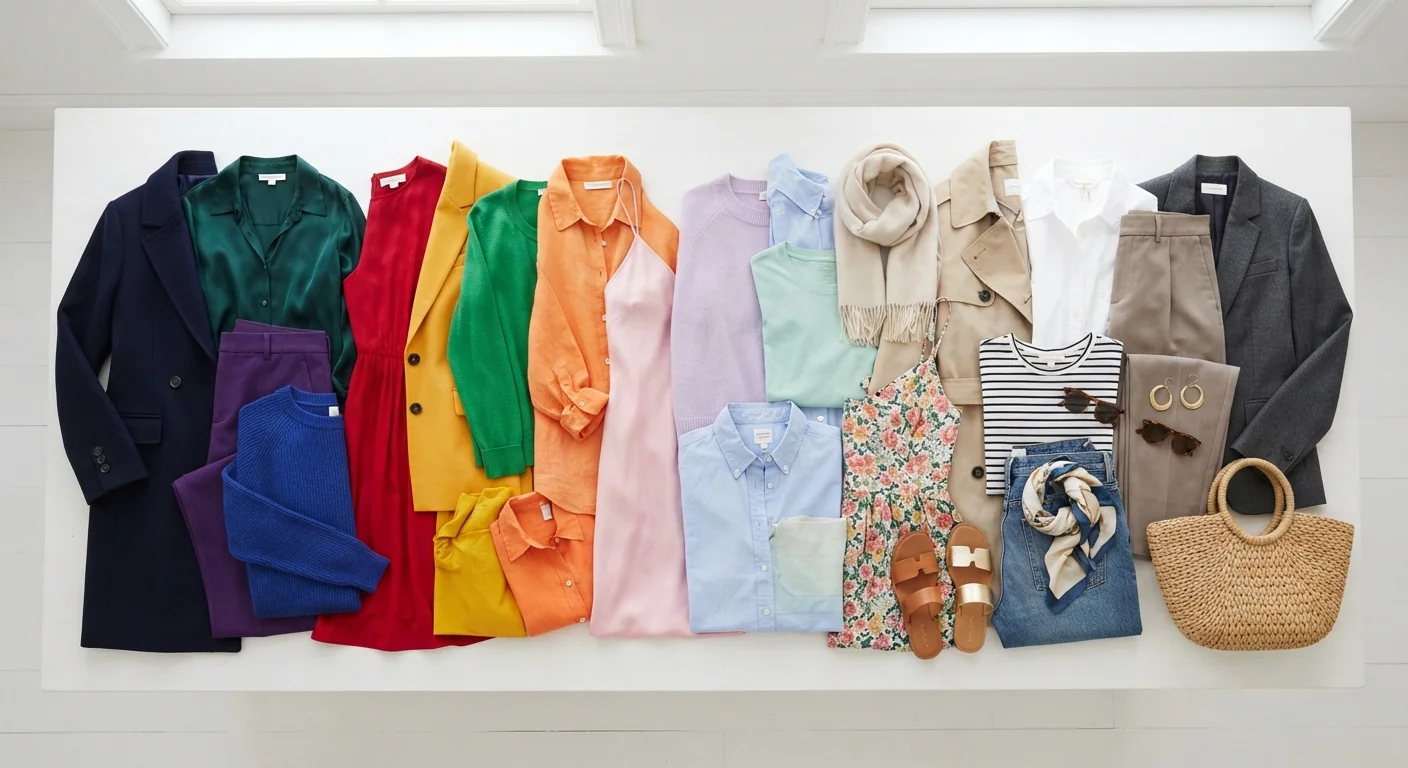
Color psychology explores how specific hues affect human perception and emotion. In a wardrobe context, this translates into the signals your clothing sends before you interact with anyone. Some associations are widely shared across cultures — red often reads as bold or energetic; navy as dependable and authoritative; yellow as optimistic and approachable — though individual and cultural variation always applies.
The key insight isn't that you should engineer your wardrobe to manipulate perceptions. It's that being aware of these associations gives you agency. If you want to walk into a meeting feeling grounded and taken seriously, deep tones and structured palettes can support that. If you want a Saturday to feel light and joyful, softer or brighter hues can reinforce that intention. Your wardrobe becomes a tool for reinforcing your own self-image, not just dressing a body.
Research into the concept of enclothed cognition — how clothing choices influence the wearer's own psychological state — supports the idea that what we wear affects how we feel and act, not just how we're perceived. Our article on dressing intentionally and self-image explores this connection in more depth.
“Color is a power which directly influences the soul. Color is the keyboard, the eyes are the hammers, and the soul is the piano with many strings.”
— Wassily Kandinsky, Pioneering abstract artist and color theorist, author of 'Concerning the Spiritual in Art'
Building a Personal Color Palette
A signature color palette is one of the clearest markers of a developed personal style. Rather than wearing whatever's in season or available, you work from a consistent set of hues that feel authentically yours. This doesn't mean rigidity — it means clarity.
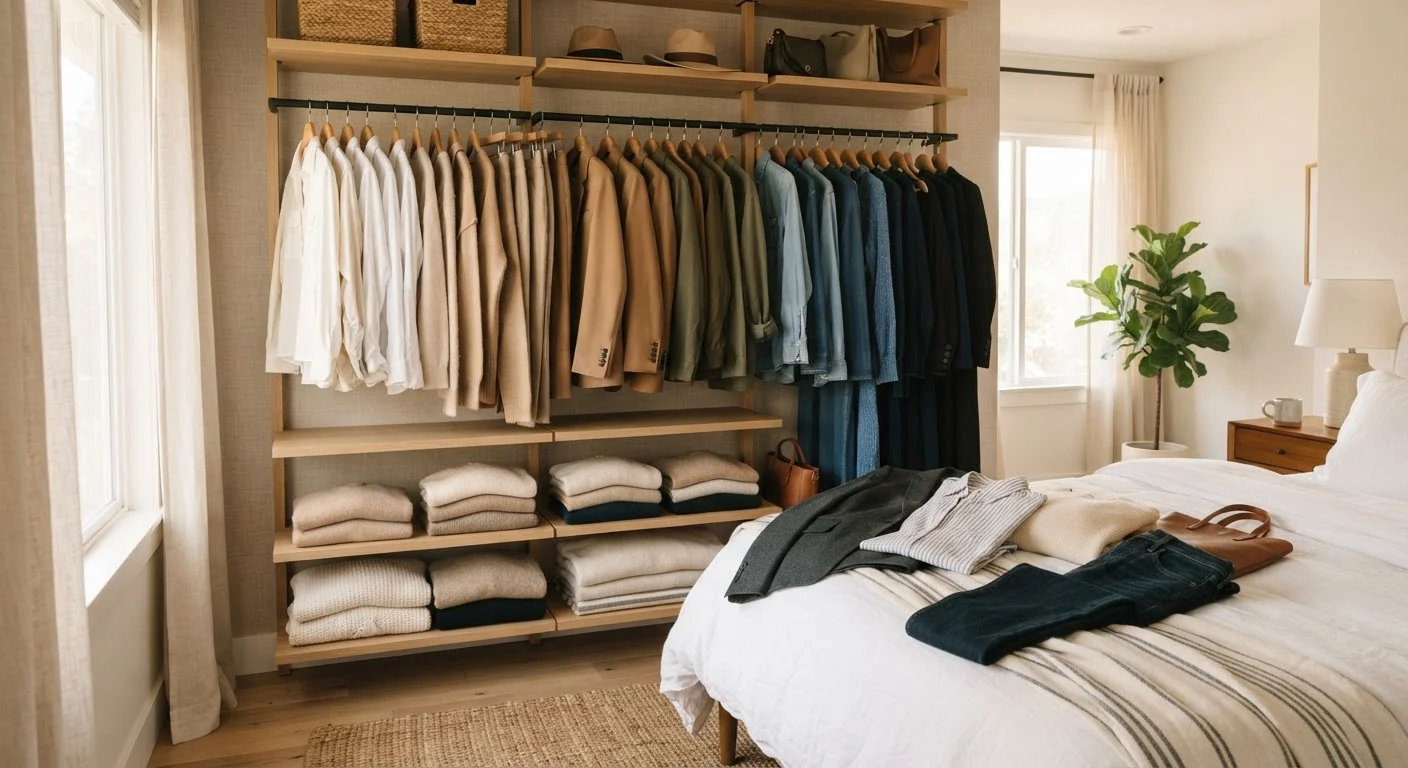
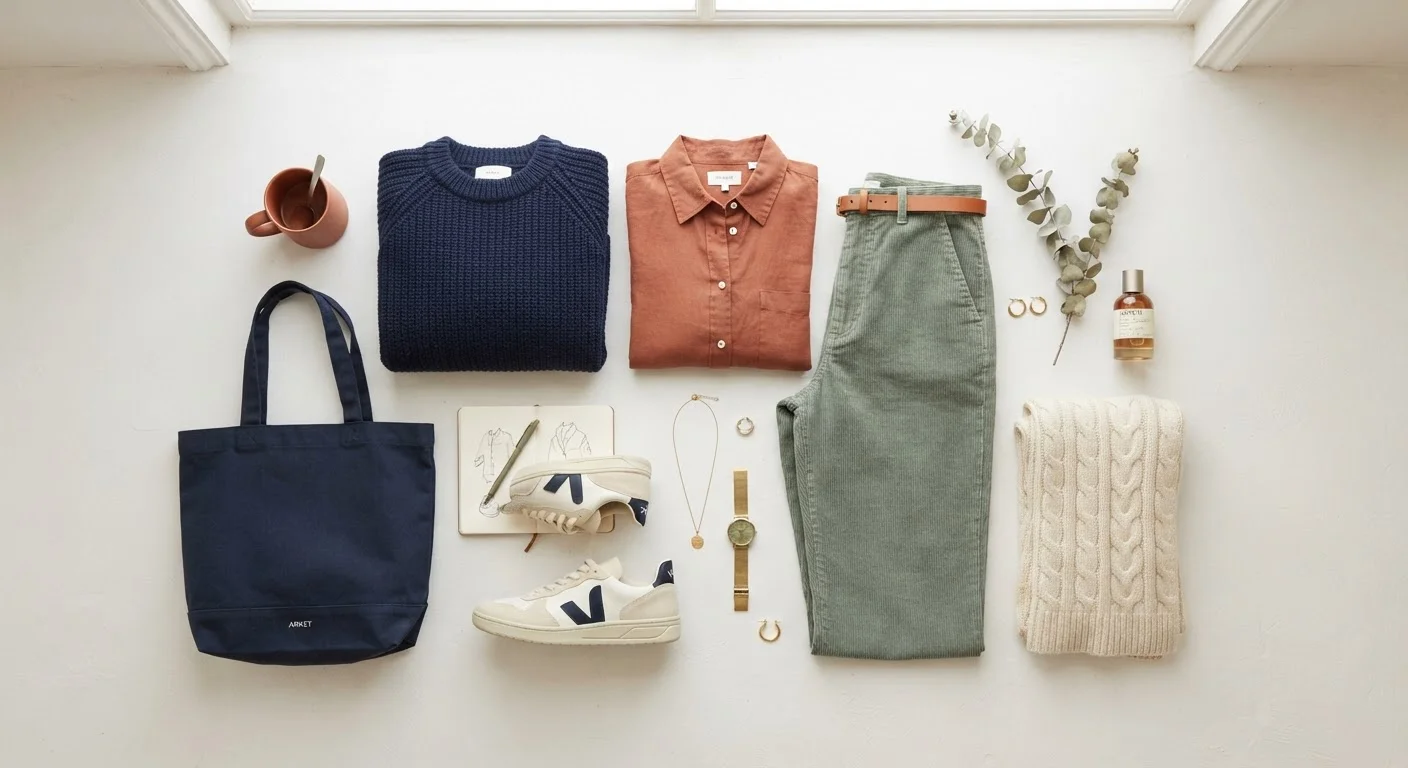
To start identifying your palette, notice the colors you reach for repeatedly, the hues that draw compliments you actually believe, and the shades that make you feel most like yourself (not most 'put-together' by someone else's standards). Pay attention to whether you're drawn to warm tones (amber, terracotta, olive, cream) or cool tones (cobalt, dusty rose, sage, charcoal). Most people have an instinctive lean, even if they've never named it.
Once you have a few anchor colors, build outward: identify two or three neutrals that pair easily with them, and perhaps one accent color you use sparingly for visual interest. This is the foundation of a wardrobe that feels intentional and cohesive. For the mechanics of how colors actually work together, color coordination principles every dresser should know is an excellent companion read.
Color as One Thread in a Larger Style Story
Color is powerful, but it works best as part of a larger, considered approach to personal style. Your silhouette preferences, the textures you love, the occasions you're dressing for — all of these interact with color to create a coherent aesthetic. Someone who gravitates toward relaxed, earthy palettes is likely also making choices about cut and fabric that reinforce that same feeling.
This is why developing a signature color palette often goes hand-in-hand with identifying what style thinkers call touchstones — the recurring elements that give a look its recognizable quality. Explore how color fits into the broader picture in our piece on style touchstones that define a signature look.
It's also worth noting that color choice and body-shape conventions don't have to drive each other. The traditional advice to use dark colors to 'minimize' and bright colors to 'highlight' is just one lens — and a limiting one. Dressing for your personality and mood can be equally valid. Our article comparing dressing for body shape versus dressing for personality unpacks that tension thoughtfully.
Ultimately, color in personal style is about fluency, not formula. The goal is to understand the language well enough to speak it in your own voice — confidently, expressively, and on your own terms.
Try a Color Audit Before Buying Anything New
Before expanding your wardrobe, spend ten minutes pulling out the pieces you actually wear and grouping them by color family. The clusters that emerge often reveal your natural palette better than any quiz or system. Use what you find as a filter for future purchases — if a new piece doesn't connect to at least one existing color group, pause before buying it.