Why Dress Codes Still Matter
Getting dressed for an occasion isn't just about aesthetics — it's a form of communication. The clothes you wear signal awareness of context, respect for others, and confidence in your own identity. Yet most people have stood in front of their closet genuinely unsure whether a blazer is too much or jeans are too little.
The confusion usually comes down to three foundational registers: casual, smart casual, and formal. These labels get thrown around loosely, but each has a distinct logic. For a deeper dive into specific event-based dress codes, explore the full dress codes breakdown that covers everything from business casual to black tie.
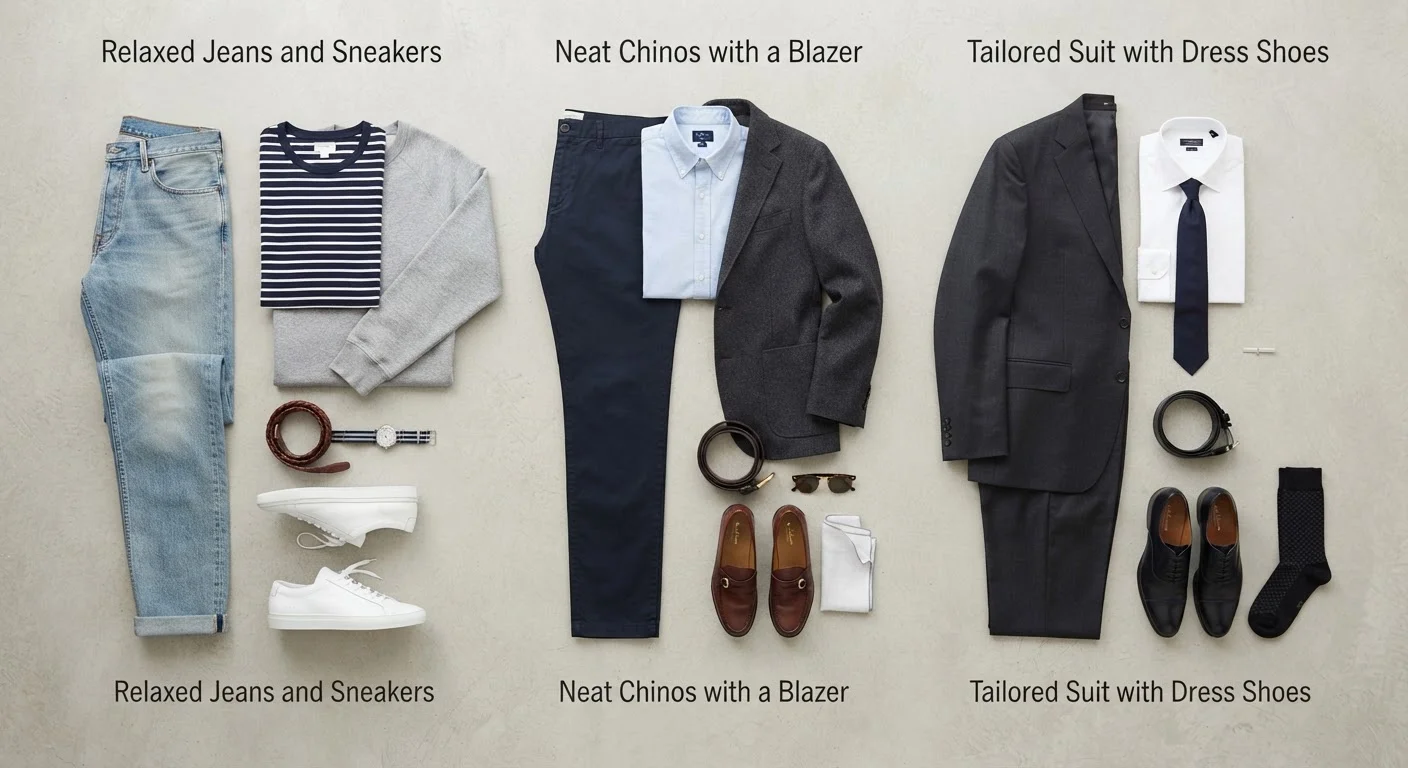
| Casual | Smart Casual | Formal | |
|---|---|---|---|
| Typical garments | Jeans, tees, sneakers | Chinos, blazers, loafers | Suits, gowns, dress shoes |
| Fabric expectations | Cotton, denim, jersey | Linen, twill, knit | Wool, silk, satin |
| Fit flexibility | Relaxed or oversized OK | Tailored or neat fit preferred | Precise, structured fit required |
| Occasion examples | Errands, casual hangouts | Work, dinner dates, events | Weddings, galas, interviews |
| Room for personal expression | Very high | Moderate | Low to none |
| Common pitfalls | Worn or ill-fitting pieces | Mixing too casual or too formal | Poor fit, wrong formality level |
Casual: Freedom With a Foundation
Casual dressing is the most flexible register — but flexibility doesn't mean anything goes. At its core, casual clothing prioritizes comfort, ease of movement, and personal expression. Think denim, T-shirts, sneakers, hoodies, and relaxed-fit trousers. The absence of strict rules is the point.
What separates polished casual from sloppy casual is fit and condition. A well-fitting, clean white T-shirt reads very differently from a stretched, faded one — even though both technically qualify. Casual occasions include weekend outings, informal get-togethers, and most everyday errands.
The Fit Rule Applies Everywhere
Regardless of how casual or formal the occasion, fit is the single most powerful signal of intentionality. A well-fitted casual outfit reads as deliberately styled; a poorly fitted formal look reads as uncomfortable and unconvincing. When in doubt, prioritize how garments sit on your body over the label or price tag.
If you're building out your casual wardrobe with intentionality, your underlying style identity shapes which casual pieces actually feel like you. Comparing wardrobe archetypes can help clarify which aesthetic framework resonates most.
Smart Casual: The Trickiest Middle Ground
Smart casual is where most people get tripped up — and understandably so. The register asks you to look intentional and put-together without crossing into formal territory. It's the dress code of most modern workplaces, nicer restaurants, and semi-formal social events.
The key is elevation through detail: swap sneakers for leather loafers, trade a graphic tee for a clean button-down, or layer a tailored blazer over dark jeans. Fabric quality becomes more visible here — linen, cotton twill, and knit fabrics in neutral or muted tones tend to land well. Avoid athletic wear, distressed items, and overly casual graphics.
Don't Rely Solely on the Invitation
Event invitations that say 'smart casual' vary widely in expectation depending on the host's culture, region, and industry. When uncertain, it's generally safer to err slightly more formal than more casual — arriving polished rarely offends, while arriving underdressed can create genuine awkwardness. If possible, ask someone familiar with the event before deciding.
Smart casual rewards thoughtfulness. Understanding how your personal style identity intersects with these expectations can make the register feel natural rather than forced. Dressing for personality vs. proportion explores how to make outfit decisions that feel authentic to you.
Formal: Precision and Protocol
Formal dressing operates by the tightest conventions and leaves the least room for interpretation. This register covers everything from job interviews and weddings to galas and black-tie events. The expectation is a high standard of polish: structured silhouettes, quality fabrics (wool, silk, satin), and restrained accessories.
For most formal occasions in the U.S., this means a tailored suit or dress in a dark or neutral palette, dress shoes, and minimal ornamentation. Evening formal events may call for floor-length gowns or tuxedos, depending on the specific dress code. Fit is non-negotiable at this level — ill-fitting formal wear undermines the entire effect regardless of quality.
As your life evolves — career milestones, relocations, shifting social circles — the occasions calling for formal dress often shift too. Navigating style across life transitions addresses how to adapt your wardrobe without losing your sense of self.