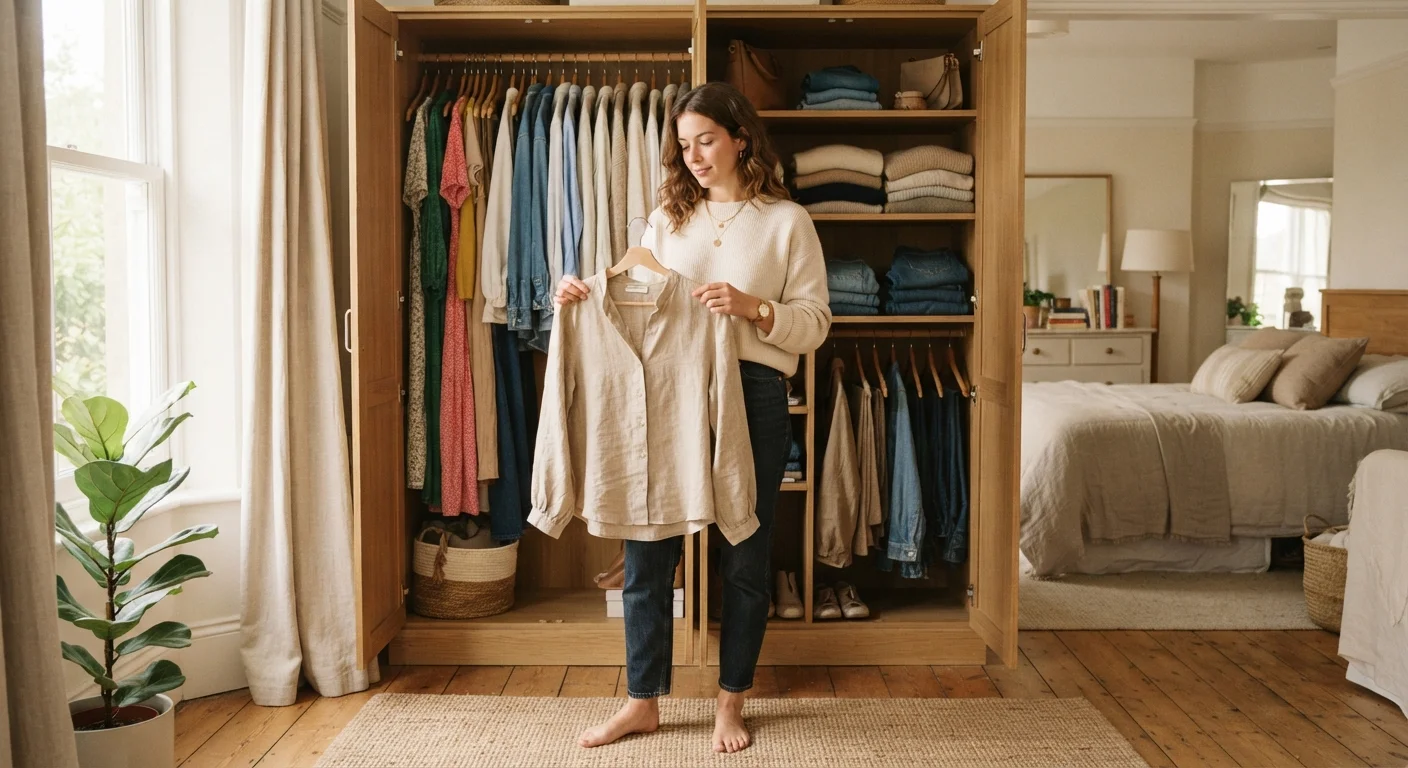
Why Life Transitions Disrupt Your Wardrobe
Few things expose the relationship between identity and clothing quite like a major life change. A new job, a move across the country, becoming a parent, navigating a breakup, or simply growing older — each of these shifts can make a closet full of clothes feel suddenly foreign. You reach for something familiar and it no longer feels like you.
This disorientation is completely normal. As our guide to what personal style really means explores, the clothes we wear are deeply tied to how we see ourselves and how we want others to perceive us. When identity shifts, style naturally follows — or struggles to catch up.
The goal isn't to resist that evolution. It's to navigate it with intention rather than panic-buying or abandoning your aesthetic entirely.
Best Practices for Evolving Your Style Thoughtfully
Whether you're entering a new professional chapter or simply feeling like a different person than you were five years ago, these approaches can help you move through a style transition with clarity and confidence.
For deeper context on building a lasting personal aesthetic, the complete personal style framework offers an end-to-end look at identity, fit, color, and self-expression.
Staying Grounded When Everything Is Changing
One of the most common mistakes during a life transition is treating your wardrobe as the first thing to overhaul. In reality, style is most resilient when it's rooted in consistent values rather than circumstances. Ask yourself: What do I want to feel when I get dressed? That question tends to stay more stable across transitions than any specific aesthetic category.
Style Transitions and Emotional Wellbeing
For some people, major life transitions bring genuine emotional complexity that extends well beyond the wardrobe. Feelings of grief, disorientation, or identity loss during periods of change are real and valid. If a transition is feeling particularly heavy, understanding how emotional needs shift with age and circumstance may offer helpful perspective. Style can be a tool for grounding and self-expression, but it isn't a substitute for professional support when that's what's needed.
It's also worth remembering that style evolution doesn't happen in isolation from trends. Understanding the tension between trends and timelessness can help you decide which shifts to embrace and which to filter out. And if occasion requirements are changing — say, shifting from casual remote work to a professional office — occasion dressing guidance can help you adapt without starting from scratch.
Personal style across life transitions is less about reinvention and more about reconnection — to what you value, how you want to move through the world, and who you're becoming. The wardrobe follows naturally from there.