What Each Feeding Method Actually Means
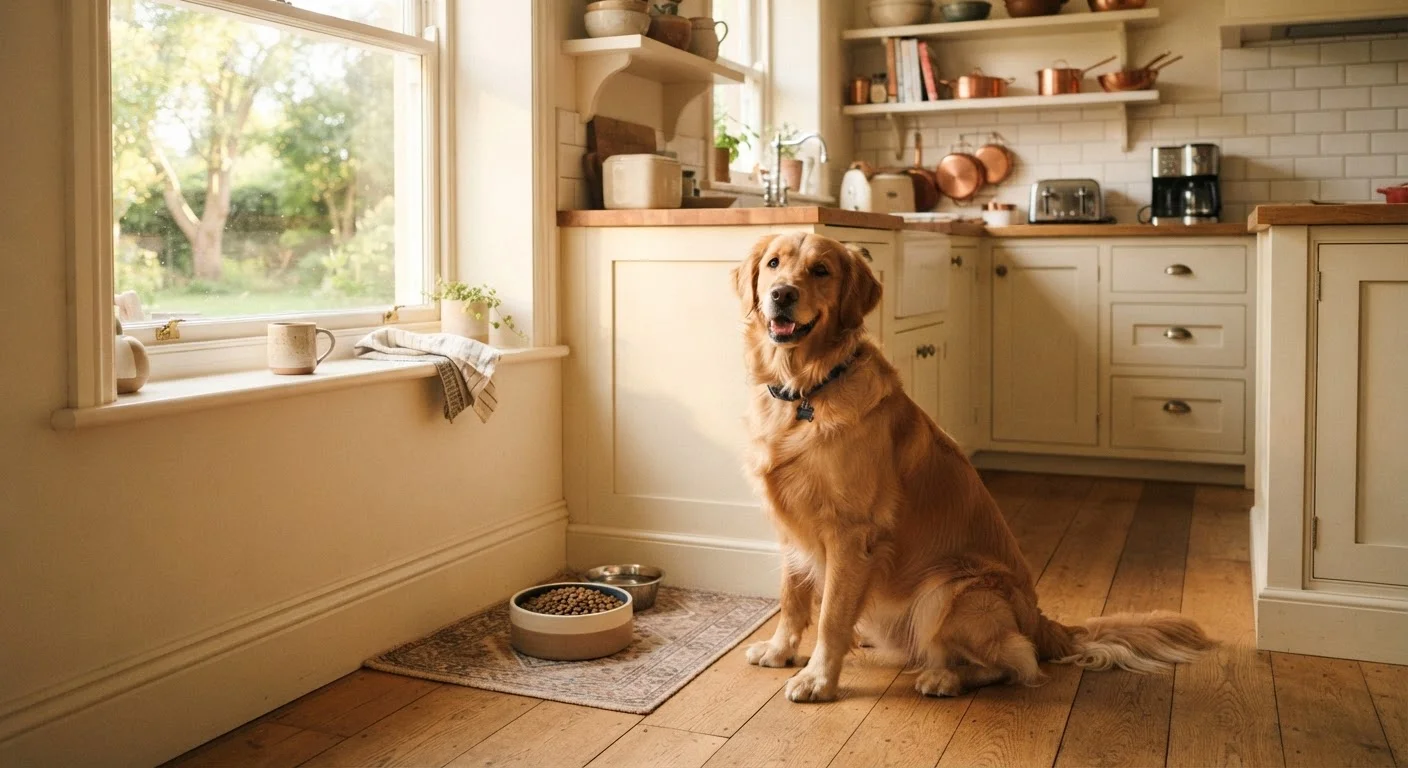
Free-feeding (also called ad libitum feeding) means leaving a supply of food in the bowl at all times so your pet can eat whenever they choose. Measured meal feeding means portioning out a specific amount of food and offering it one to three times per day at consistent times.
Both approaches are widely used, but they produce very different outcomes depending on the animal, the food type, and the household. Understanding the mechanics of each is the first step toward choosing wisely. Keep in mind that the food format matters too — see our guide to dry vs. wet food for context on how format interacts with feeding style.
| Free-Feeding | Measured Meals | |
|---|---|---|
| Portion control | Difficult to monitor | Precise and trackable |
| Weight management | Higher obesity risk for many pets | Supports healthy weight |
| Food freshness | Wet food spoils quickly; dry only | Both dry and wet food compatible |
| Routine reinforcement | Minimal structure | Builds predictable daily routine |
| Multi-pet suitability | Prone to competition and overeating | Easier to manage separately |
| Appetite monitoring | Changes hard to detect | Changes noticed quickly |
| Owner convenience | Less time-intensive daily | Requires consistent schedule |
How Each Method Affects Weight and Digestion
Weight management is one of the most significant practical differences between these two approaches. With free-feeding, it can be very difficult to track how much your pet is actually eating each day — and for many animals, unlimited access leads to overeating. Overweight pets face elevated risks of joint problems, diabetes, and reduced lifespan. Our article on why pets gain weight explains how free-feeding is frequently a contributing factor.
Measured meals give owners a direct line of sight into their pet's daily caloric intake. If a pet leaves food behind or cleans the bowl quickly, that's useful data. Meal feeding also tends to produce more regular digestive rhythms, which can make it easier to spot changes in appetite — often an early indicator of illness.
Track Body Condition, Not Just Weight
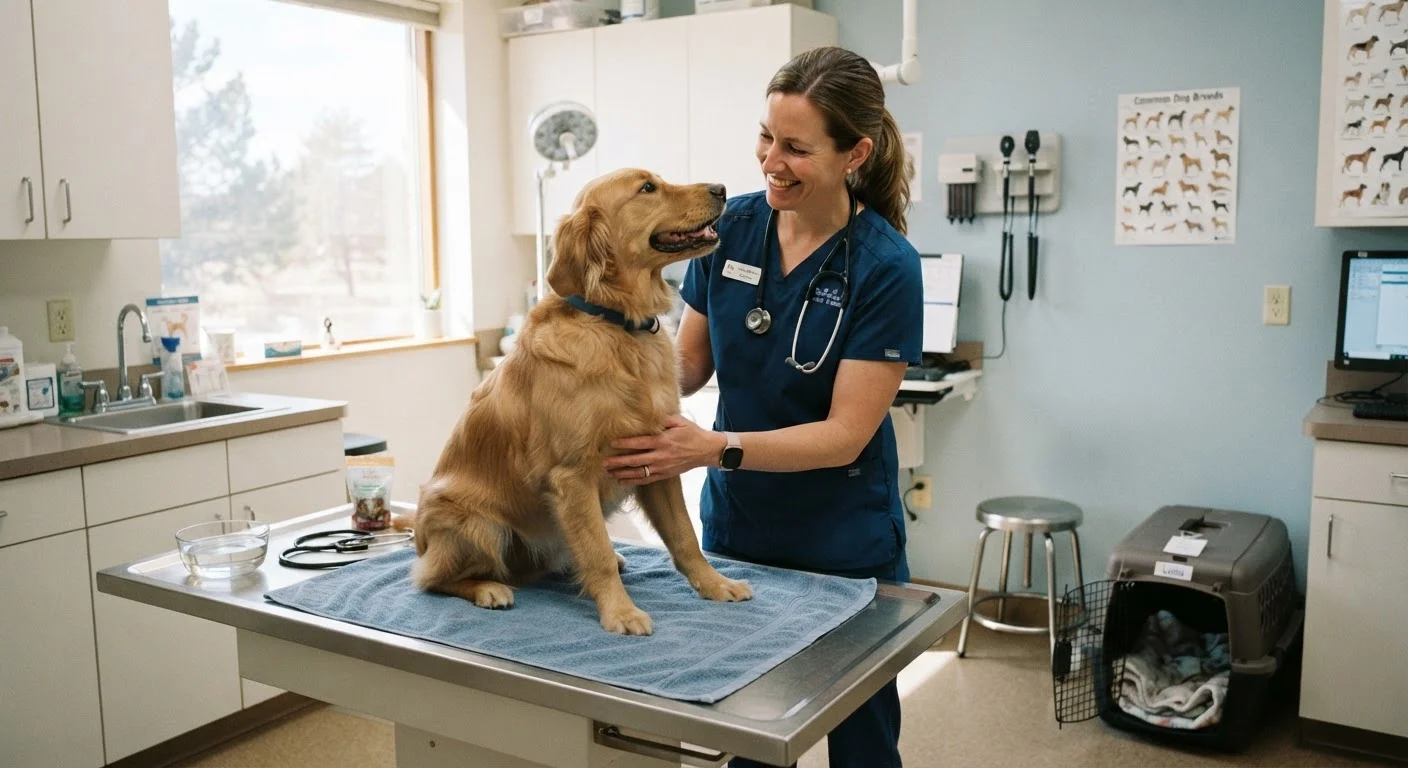
Scale weight alone doesn't tell the full story of your pet's health. Veterinarians use a body condition score (BCS) — a hands-on assessment of fat coverage over ribs, spine, and hips — to evaluate whether a pet is under, over, or at a healthy weight. Ask your vet to show you how to assess your pet's BCS at home so you can catch changes between annual checkups.
Species Differences: Dogs vs. Cats
Dogs are generally not well-suited to free-feeding. Most dogs lack a natural satiety signal that stops them from eating past their caloric needs. Studies in veterinary nutrition consistently show that meal-fed dogs have lower rates of obesity than free-fed dogs. Scheduled meals also reinforce daily routine, which supports calmer, more predictable dog behavior.
Cats are more nuanced. As natural grazers, some cats regulate their intake reasonably well when dry kibble is freely available. However, this self-regulation is not universal. Indoor cats with lower activity levels are particularly prone to weight gain under a free-feeding system. Wet food generally cannot be left out for more than a few hours without spoiling, which makes it incompatible with true free-feeding. For cats prone to weight issues, portioned meals are strongly preferred by most veterinary nutritionists.
For a broader look at how lifestyle factors affect cat health, see our article on indoor vs. outdoor cats.
Practical Considerations for Multi-Pet Households
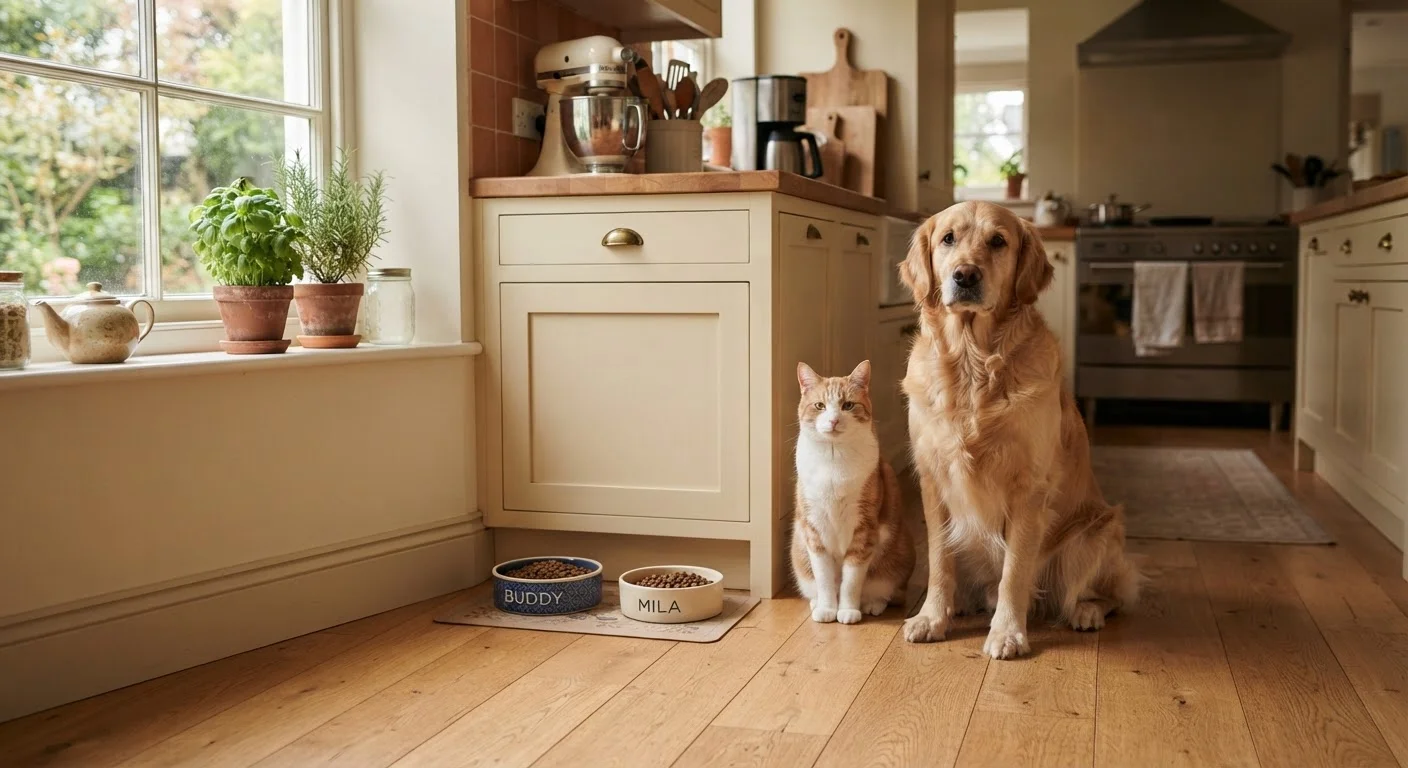
In homes with multiple pets, feeding method becomes especially complicated. A free-feeding setup can result in one pet eating another's portion — particularly problematic when pets have different caloric needs or dietary restrictions. A dog that eats cat food, or a dominant cat that prevents a timid housemate from reaching the bowl, are common real-world scenarios.
Separate, timed meals fed in different locations are often the most practical solution in mixed-species or multi-pet households. This approach gives each animal their own controlled portion while reducing competition and food-related tension. Predictable mealtimes also support good behavioral patterns across the household.
Don't Assume All Pets Self-Regulate
A common misconception is that pets will naturally stop eating when they're full. Many dogs — and a significant number of cats — will continue eating as long as food is available, regardless of hunger. If you notice your pet consistently finishing food immediately or gaining weight, free-feeding is likely not appropriate for them. Consult your veterinarian before assuming self-regulation is safe for your animal.
Making the Right Call for Your Pet
Before changing your pet's feeding routine, consider their current weight, age, activity level, and any existing health conditions. A veterinarian can recommend a daily caloric target and appropriate portion size, taking the guesswork out of measured feeding. If your pet has been free-fed for years, transition to scheduled meals gradually to reduce anxiety or food-guarding behavior.
It's also worth being cautious about common feeding myths — our piece on pet nutrition myths veterinarians correct covers several misconceptions that influence how owners approach daily feeding. Whatever method you choose, consistent monitoring of your pet's body condition is the most reliable tool you have.
This article is for general informational purposes only and does not constitute veterinary medical advice. Always consult a licensed veterinarian for guidance specific to your pet's health needs.