How the Cooling System Actually Works
Your engine generates an enormous amount of heat - enough to destroy itself within minutes without active temperature management. The cooling system exists for one purpose: to move that heat away from critical engine components before it causes damage.
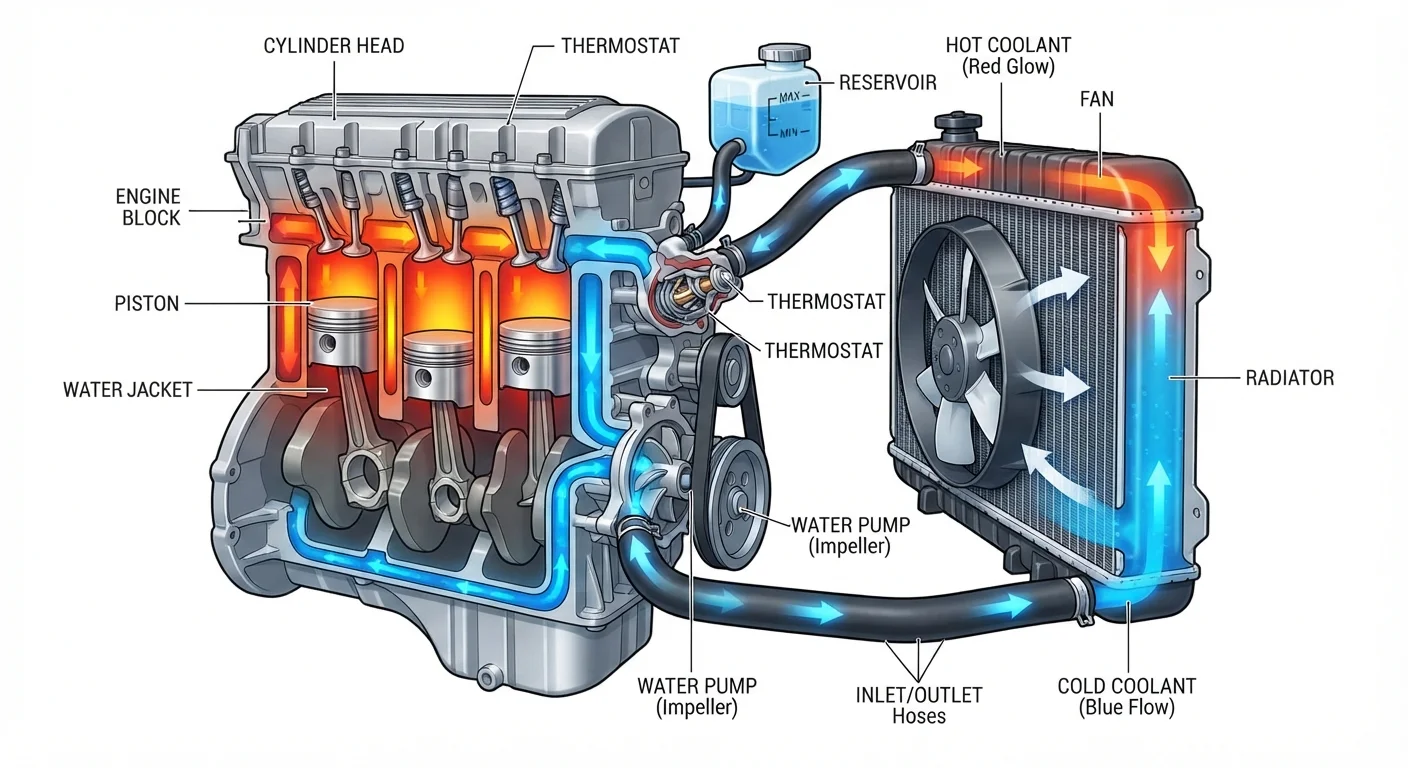
Here's the basic circuit: the water pump circulates a mixture of water and antifreeze (collectively called coolant) through passages cast into the engine block and cylinder head. The coolant absorbs heat from the metal around it, then travels out to the radiator - a large heat exchanger mounted at the front of the vehicle. As air passes through the radiator's thin fins (aided by a fan when the car is stationary), the coolant releases its heat and returns to the engine cooler, ready to absorb more.
The thermostat acts as a gatekeeper. When the engine is cold, it stays closed, allowing the engine to reach operating temperature faster. Once the engine reaches its target temperature, the thermostat opens and allows the full coolant circuit to flow. This precise regulation is what keeps the engine running in its optimal temperature window - not too cold, not too hot.
Coolant and Antifreeze: Same Thing?
The terms are often used interchangeably, but antifreeze is the concentrated additive (usually ethylene glycol) that, when mixed with water, becomes the coolant that circulates through the system. The mixture both lowers the freezing point and raises the boiling point of the fluid - protecting the system in both extreme cold and extreme heat. Most manufacturers specify a 50/50 mix, but always check your owner's manual.
For a broader look at how heat and cold affect vehicle health across the year, see our guide on seasonal car maintenance.
What Goes Wrong: The Most Common Causes of Overheating
Overheating almost always traces back to one of four failure points:
- Low or depleted coolant: Leaks from hoses, the radiator, the water pump, or the head gasket reduce the volume of coolant in the system. With less fluid circulating, heat removal becomes less efficient - and temperatures climb.
- Failed water pump: The water pump is a mechanical component driven by the engine. If its impeller (the internal paddle that moves fluid) corrodes or the pump's seal fails, coolant stops circulating properly even if the reservoir is full.
- Clogged or damaged radiator: Mineral deposits, debris, and old degraded coolant can restrict flow through the radiator's passages. Bent fins from road debris reduce airflow. Either reduces the radiator's ability to shed heat.
- Stuck or failed thermostat: A thermostat that sticks closed prevents coolant from flowing to the radiator at all - a fast path to overheating. One that sticks open causes the engine to run too cool, which creates its own efficiency problems.
Cooling fan failures, a burst hose, or a blown head gasket (which allows combustion gases to enter the coolant) can also cause rapid overheating. Warning signs often appear before a full breakdown - learning to recognize them is worth the effort.
240°F+
Temperature at which engine damage becomes likely
Most passenger car engines are designed to operate between 195°F and 220°F; sustained temperatures above 240°F risk warping aluminum components.
$1,500-$3,000+
Typical cost to repair a blown head gasket
Head gasket failure is one of the most common consequences of severe overheating and among the most labor-intensive engine repairs.
30,000-50,000 mi
Common coolant flush interval
Most manufacturers recommend refreshing engine coolant within this range, though always verify the interval specified in your owner's manual.
What Overheating Does Inside the Engine
When coolant temperature rises beyond safe limits, the consequences escalate quickly. Aluminum cylinder heads - used in virtually all modern engines - expand faster than the iron engine block beneath them. This differential expansion can cause the head to warp, breaking the precise flat surface needed for a proper seal.
The head gasket, which seals the joint between the cylinder head and block, is particularly vulnerable. A blown head gasket allows coolant to leak into the combustion chamber or oil passages - leading to milky, contaminated oil, white exhaust smoke, and a loss of compression. This is one of the most expensive repairs a car can require.
Engine oil also suffers. As temperature climbs, oil thins out and loses its ability to maintain a protective film between metal surfaces. Bearings, camshafts, and cylinder walls can suffer scoring or seizure damage that shortens engine life dramatically.
Never Open a Hot Radiator Cap
The cooling system operates under pressure, which raises the boiling point of the coolant. Opening the radiator cap or coolant reservoir on a hot engine releases that pressure suddenly, and scalding coolant can erupt violently. Always wait until the engine has cooled completely - typically 30 minutes or more - before opening any part of the cooling system.
Preventing Overheating: What Maintenance Actually Matters
The good news is that overheating is largely preventable with consistent, straightforward maintenance. The cooling system doesn't require constant attention - but it does require periodic attention.
Coolant flushes: Over time, coolant breaks down chemically. Its corrosion inhibitors deplete, and it becomes acidic - accelerating wear on metal and rubber components throughout the system. Following your manufacturer's recommended flush interval keeps the coolant fresh and the system protected.
Visual inspections: Periodically check the coolant reservoir level (never open a hot radiator cap) and look for any discoloration, oily film on the coolant surface, or visible leaks under the vehicle. Catching a small hose weep or a slow radiator drip early is far less costly than an engine repair later.
Belt and hose condition: In many vehicles, the water pump is driven by the timing belt or serpentine belt. A belt failure can simultaneously cause overheating and other serious engine problems. Replacing belts and hoses on schedule is a core part of prioritizing maintenance that actually protects your engine.
If you notice the temperature gauge climbing, steam rising from the hood, a sweet coolant smell, or any of the early warning signs of a developing problem, take it seriously. Have a qualified mechanic inspect the cooling system before minor symptoms become a major repair. The Car Maintenance hub has further guidance on keeping your vehicle in reliable condition year-round.