Why Prioritizing Matters When Budget Is Limited
Vehicle maintenance isn't all-or-nothing. When money is tight, the practical question isn't whether to skip maintenance entirely - it's which services protect your engine and safety most, and which can genuinely wait. Treating every service as equally urgent leads either to overspending or to paralysis where nothing gets done.
The items that matter most share a common trait: neglecting them causes damage that compounds quickly and is disproportionately expensive to repair. An oil change skipped once or twice isn't catastrophic; an oil change habit abandoned for 20,000 miles can destroy an engine. The same logic applies across the vehicle - small, timely interventions prevent large, costly failures.
As a general reference point, high-mileage vehicles that stay reliable typically share one common thread: their owners stayed consistent on a short list of fundamentals rather than doing everything occasionally.
Your Owner's Manual Is the Authority
Every service interval mentioned in this article is a general guideline. Your vehicle's manufacturer has published specific mileage and time-based intervals for your exact engine, transmission, and climate conditions - and those specifications take precedence. If you've misplaced your physical manual, most manufacturers make digital versions available through their official websites. Following manufacturer-specified intervals, rather than generic rules of thumb, is the most reliable way to maintain your vehicle correctly.
The Maintenance Items That Deserve Your Limited Dollars
Engine oil and filter changes
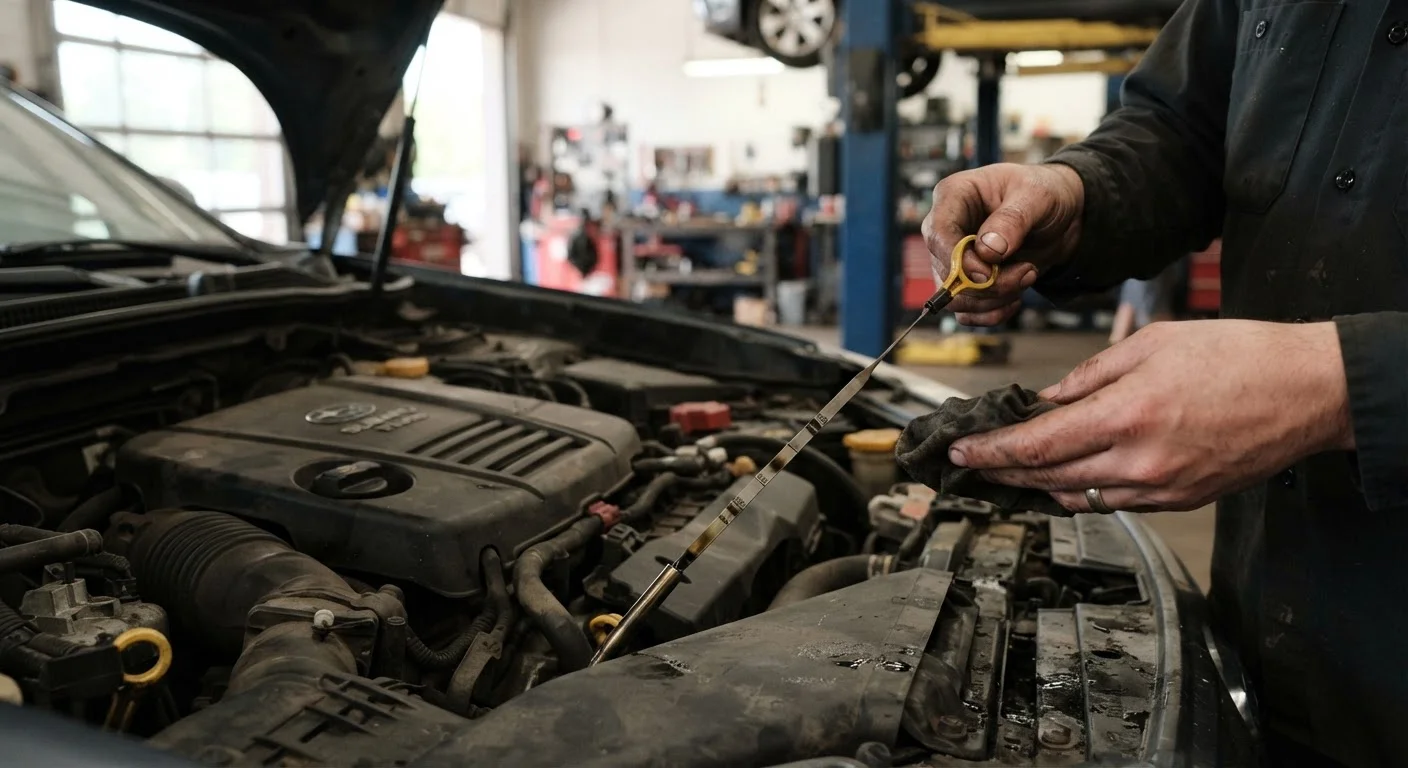
If you can only afford one maintenance item, make it this one. Engine oil lubricates hundreds of moving metal parts, carries heat away from the engine, and suspends combustion byproducts so they can be filtered out. When oil degrades or runs low, metal contacts metal - and that wear is cumulative and irreversible.
Modern engines and synthetic oils have extended change intervals beyond the old 3,000-mile rule. Many vehicles are engineered for 5,000 to 10,000 miles between changes, and some go longer. Your owner's manual will tell you the interval and oil specification that applies to your specific engine - follow that, not shop upsells.
If cost is a concern, a DIY oil change is one of the more accessible home tasks for drivers with basic tools, and can meaningfully reduce the per-service cost.
When oil degrades or runs low, metal contacts metal - and that wear is cumulative and irreversible.
Tire pressure and tread depth
Tires are your only contact with the road. Underinflated tires wear unevenly, reduce fuel economy, generate excess heat, and can fail at highway speeds. Overinflated tires reduce traction and ride quality. Checking tire pressure takes under five minutes and costs nothing - a quality gauge runs only a few dollars and lasts years.
Tread depth matters as much as pressure. The penny test is a widely used rough check: insert a penny into the tread groove with Lincoln's head pointing down. If you can see all of Lincoln's head, the tread is at or below 2/32 of an inch - a threshold at which wet-road stopping distances increase significantly. At that point, replacement is a safety matter, not a budget decision.
Rotating tires on schedule (typically every 5,000-7,500 miles, or as specified) evens out wear across all four tires and extends the life of the full set - which is almost always cheaper than replacing two worn tires early.
Tread depth affects wet-road stopping distance - at 2/32 of an inch, replacement becomes a safety matter.
Coolant level and cooling system basics
Engine overheating is among the most destructive failures a car can experience. A warped cylinder head or blown head gasket - both common results of sustained overheating - can cost thousands of dollars to repair, sometimes more than the vehicle is worth. The cooling system prevents this by circulating coolant (antifreeze mixed with water) through the engine and radiator.
Checking the coolant reservoir level takes seconds and costs nothing. If it's consistently low, that signals a leak - either external (look for puddles or staining) or internal (a more serious scenario). Never open a hot radiator cap; coolant under pressure is scalding. See our full guide to how cooling systems work for a deeper look at failure points.
Coolant itself degrades over time and should be flushed and replaced per your manufacturer's schedule, but simply monitoring the level and catching leaks early is the budget-friendly first step.
A warped cylinder head from overheating can cost more to fix than many cars are worth.
Brake inspection
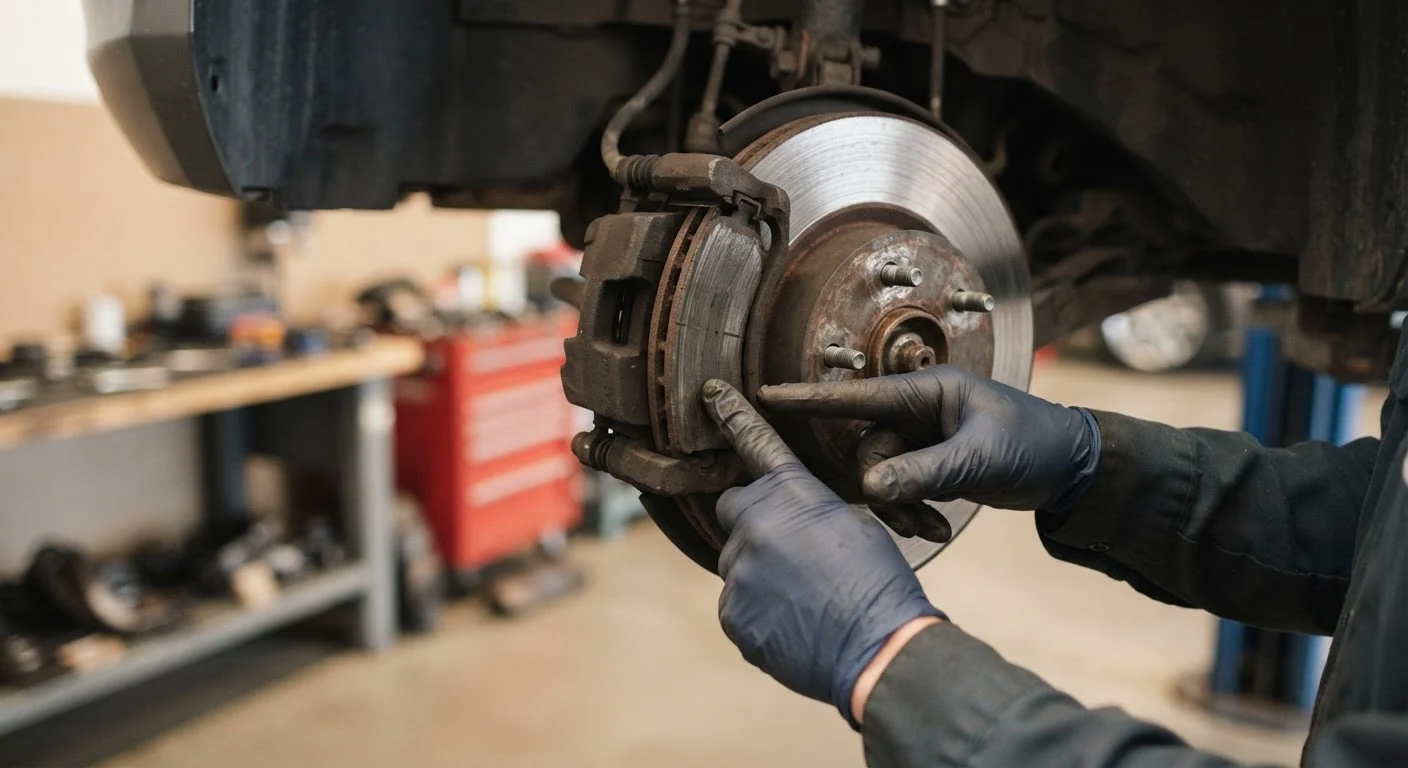
Brakes are a non-negotiable safety system. Worn brake pads that go unreplaced eventually contact the rotor metal-to-metal, scoring and damaging the rotor - turning a relatively inexpensive pad replacement into a much costlier pad-and-rotor job. Ignoring brakes long enough can compromise stopping ability entirely.
You don't need a mechanic visit to get a basic read on brake condition. Most modern vehicles have brake pad wear indicators - small metal tabs that contact the rotor when pads are low, producing a high-pitched squealing sound. A grinding noise typically means pads are gone and metal-on-metal contact is happening. Either sound warrants prompt attention.
Many tire shops and quick-service garages will inspect brakes for free as part of a tire rotation. Take advantage of those checks to get an honest read on how much life remains - then budget accordingly rather than waiting for a warning sound.
Replacing pads before they're fully worn almost always costs less than replacing both pads and damaged rotors.
Checking other critical fluids
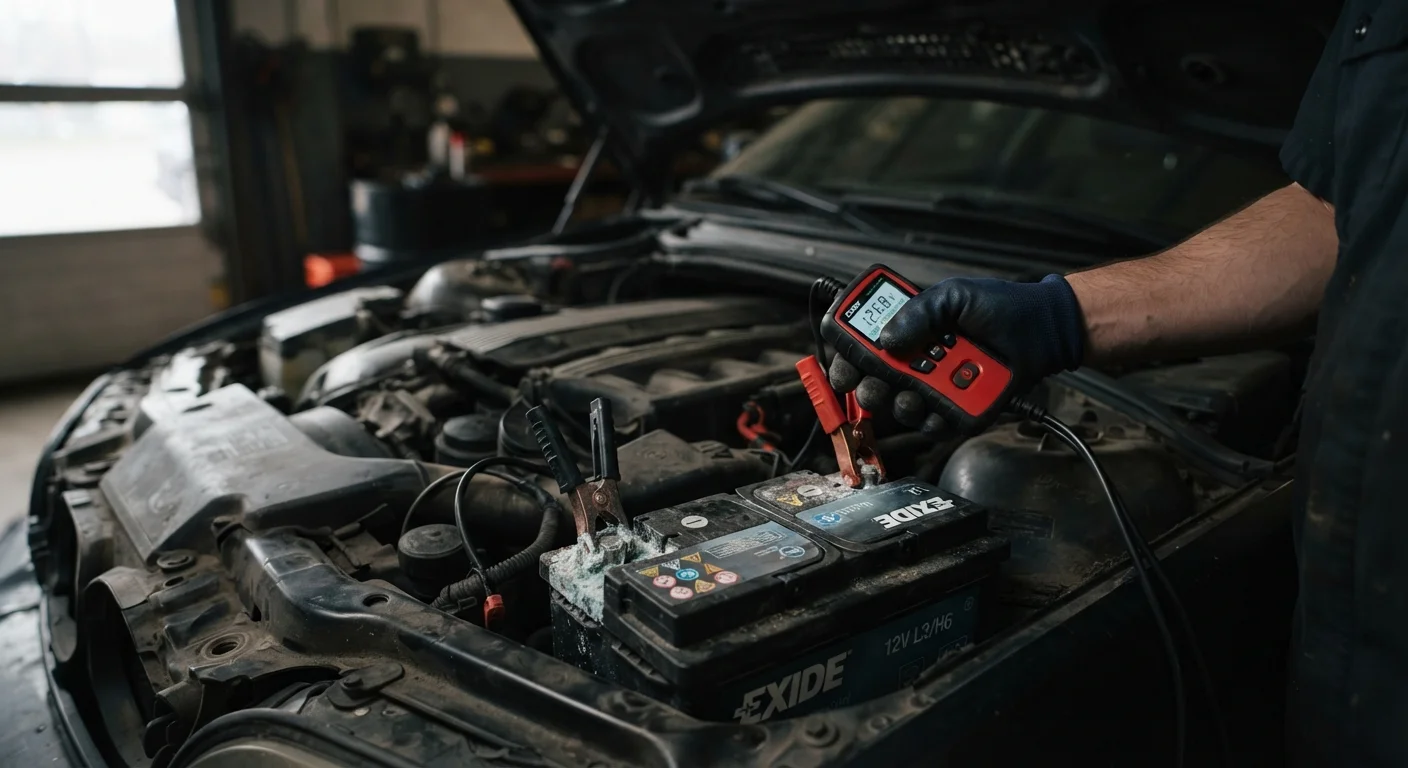
Beyond engine oil and coolant, several other fluids keep your vehicle safe and functional. Brake fluid, power steering fluid, transmission fluid, and windshield washer fluid each serve distinct roles. Letting any of the first three fall critically low - or degrade without replacement - can lead to system failures that are expensive and, in the case of brakes, dangerous.
Checking these reservoirs under the hood takes only a few minutes and is something most drivers can do themselves. Our fluid check walkthrough covers what each reservoir looks like, where to find it, and what healthy fluid looks like versus fluid that needs attention.
On a tight budget, knowledge is leverage. A driver who catches a brake fluid leak early has options; one who ignores warning signs until the pedal goes soft does not.
A driver who catches a fluid problem early has options - one who waits until a system fails does not.
What can safely wait - and what's often oversold
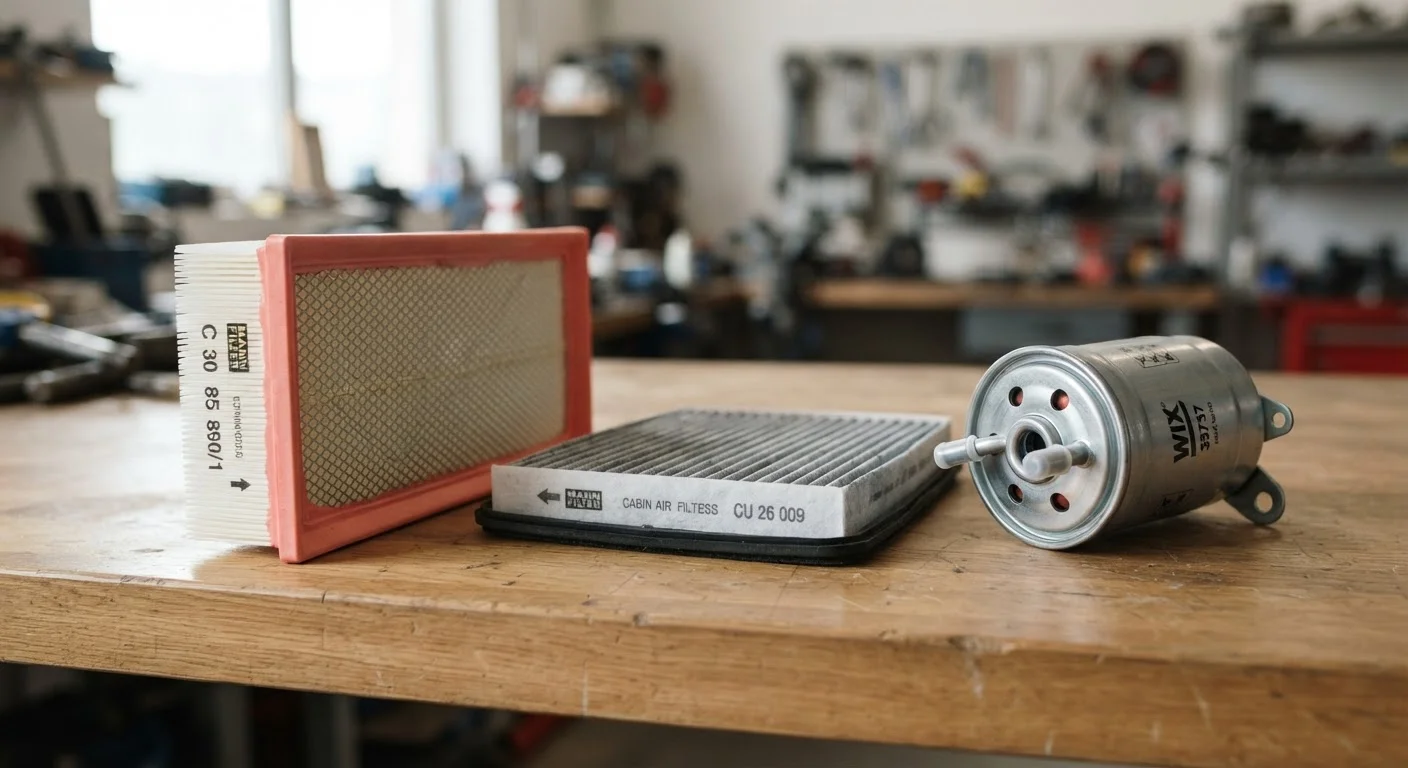
Not every service interval is equally urgent. Cabin air filters, for example, affect the quality of air inside your car but have no bearing on engine health or safety. Many dealerships suggest replacement every 12,000-15,000 miles; in reality, a lightly used vehicle in a clean-air environment may go considerably longer. Pull yours out and look at it - the condition is obvious visually.
Similarly, engine air filters matter (a severely clogged one reduces performance and efficiency), but the genuine replacement interval for most drivers is longer than upsell pressure at quick-lube shops implies. Your guide to all three filter types explains how each works and when replacement is genuinely warranted.
Fuel injector cleaning, transmission flushes on low-mileage vehicles, and throttle body services are among the services most commonly added to repair orders without strong evidence of need. None of them are harmful if done - but if budget is tight, prioritize the items on this list first.
Cabin air filter condition is easy to assess visually - pull it out and look before paying for a replacement.
Build a Simple Maintenance Log
Keep a small notebook or note on your phone recording the date, mileage, and service performed each time you handle any maintenance. This takes less than a minute per entry and gives you a clear picture of what's due next - preventing both over-servicing (spending money you don't need to) and under-servicing (missing something important). It also adds documented value if you ever sell the vehicle.
Spending Smart on Car Care
Prioritizing vehicle maintenance on a limited budget is ultimately a cost-avoidance strategy. The services at the top of this list are inexpensive relative to the failures they prevent. An oil change that costs $40-$80 at a shop protects an engine that would cost thousands to rebuild or replace. Tires rotated on schedule last longer than those ignored - deferring the rotation saves nothing if it means replacing two tires early.
If you're working to stretch every dollar across multiple obligations, the same discipline that applies to building savings on a tight budget applies here: small, consistent actions prevent large, disruptive expenses. Treat the items on this list as fixed line items in your budget rather than optional spending.
For a deeper look at how deferred maintenance compounds costs over time - whether in a vehicle or a home - see our related piece on the hidden costs of putting off routine upkeep. The financial logic is identical regardless of what you're maintaining.
This article is intended as general automotive information and education. Always consult a qualified mechanic for diagnosis, repairs, or when you're uncertain about a vehicle's condition.