What the Light Actually Represents
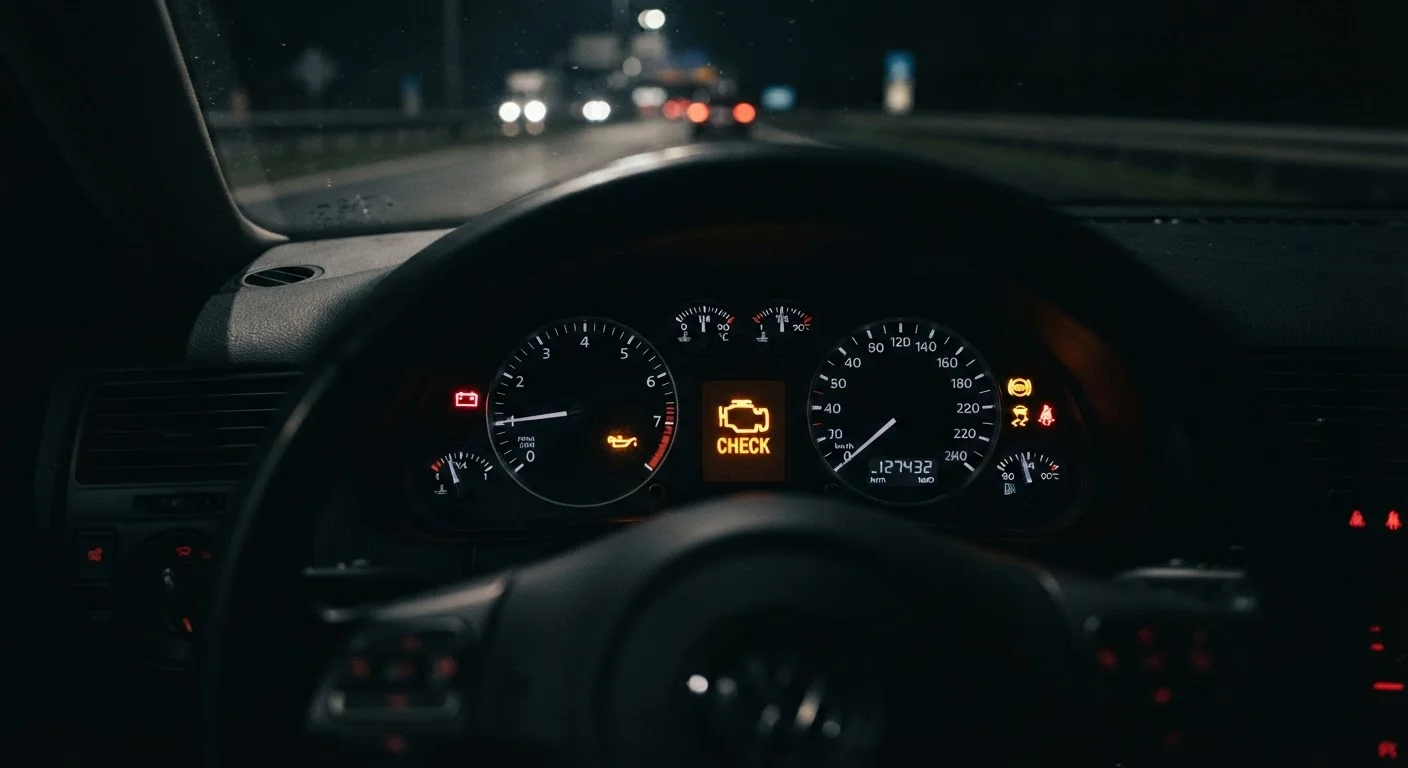
Your car's check engine light is the visible face of a much deeper system. Since 1996, all vehicles sold in the U.S. have been required to include OBD-II - a standardized self-diagnostic system that continuously monitors hundreds of sensors across your engine, transmission, and emissions equipment. When any reading falls outside acceptable parameters, the system logs a Diagnostic Trouble Code (DTC) and illuminates the check engine light to alert you.
The light itself carries no specific diagnosis. Think of it as a notification badge: it tells you a message exists, but you have to open it to understand what it says. That's why reading the stored code is always the first step. For a broader look at what other dashboard symbols mean, see our plain-English dashboard warning light glossary.
The Light Doesn't Always Mean Engine Trouble
Despite being called the 'check engine' light, the MIL can be triggered by faults in the transmission system, evaporative emissions system, or even certain body control modules - not just the engine itself. The name is somewhat misleading, which is one reason reading the actual code is so important before drawing conclusions.
Steady vs. Flashing: The Urgency Signal
Not all check engine lights behave the same way, and the difference matters significantly.
- Steady light: Indicates a fault has been detected, but the engine is not in immediate danger. Common causes include a faulty oxygen sensor, evaporative emissions leak, or worn spark plugs. Schedule a diagnostic appointment within a few days.
- Flashing light: Signals an active engine misfire - unburned fuel is entering and potentially damaging your catalytic converter in real time. This is a genuine urgency situation. Reduce your speed, avoid heavy acceleration, and have the vehicle inspected as soon as possible.
If your light is flashing and you also notice rough running, a strong smell of fuel, or smoke, treat it as a breakdown situation rather than a service appointment.
Know Before You Go to the Shop
Reading your own OBD-II code before visiting a mechanic gives you context for the conversation and helps you verify the diagnosis. Basic Bluetooth OBD-II adapters are widely available and work with free smartphone apps. Knowing the code won't replace a professional diagnosis, but it ensures you're an informed participant in the repair process.
Common Causes: From Minor to Serious
Over 200 DTCs can trigger the check engine light. The most frequently encountered range from simple fixes to issues that require professional attention:
- Loose or faulty gas cap - triggers an evaporative emissions leak code (P0440 range)
- Faulty oxygen (O2) sensor - affects fuel economy and emissions; common in higher-mileage vehicles
- Worn spark plugs or ignition coils - cause misfires, rough idle, and reduced power
- Mass airflow (MAF) sensor failure - affects the air-fuel mixture and engine efficiency
- Catalytic converter degradation - typically a downstream consequence of ignored upstream faults
- Exhaust gas recirculation (EGR) valve issues - affect emissions and engine smoothness
Many of these issues show early warning signs before the light appears. Subtle signals your car gives before something goes seriously wrong can help you catch problems earlier.
~40%
Check engine lights caused by O2 sensor faults
Oxygen sensor failures are widely cited by automotive diagnostic data as one of the leading causes of check engine light illumination in the U.S.
200+
Possible OBD-II diagnostic trouble codes
The OBD-II standard covers a broad range of fault codes spanning engine, transmission, and emissions systems.
$200-$800
Typical catalytic converter replacement cost range
Delaying repair of misfires or sensor faults can accelerate catalytic converter failure, one of the more expensive downstream consequences of an ignored check engine light.
What To Do When the Light Comes On
Follow a logical sequence rather than panicking or ignoring it entirely:
- Check your gas cap first. Remove it, reseat it firmly, and continue driving. If that was the cause, the light should clear within a day or two.
- Get the code read. Most auto parts retailers offer free OBD-II code scanning. Alternatively, a basic Bluetooth OBD-II adapter lets you read codes via a smartphone app. Knowing the code before visiting a shop puts you in a more informed position.
- Evaluate the urgency. A steady light with normal vehicle behavior typically allows you time to schedule service. A flashing light, or any accompanying symptoms, warrants immediate attention.
- Have a qualified mechanic diagnose and repair the fault. A code points to a system or circuit, not always a single component - a professional diagnosis confirms the root cause before parts are replaced.
Your owner's manual may also include guidance specific to your vehicle's warning light behavior, which is worth reviewing. For a complete picture of proactive vehicle care, explore our car maintenance hub.