What the Job Actually Involves
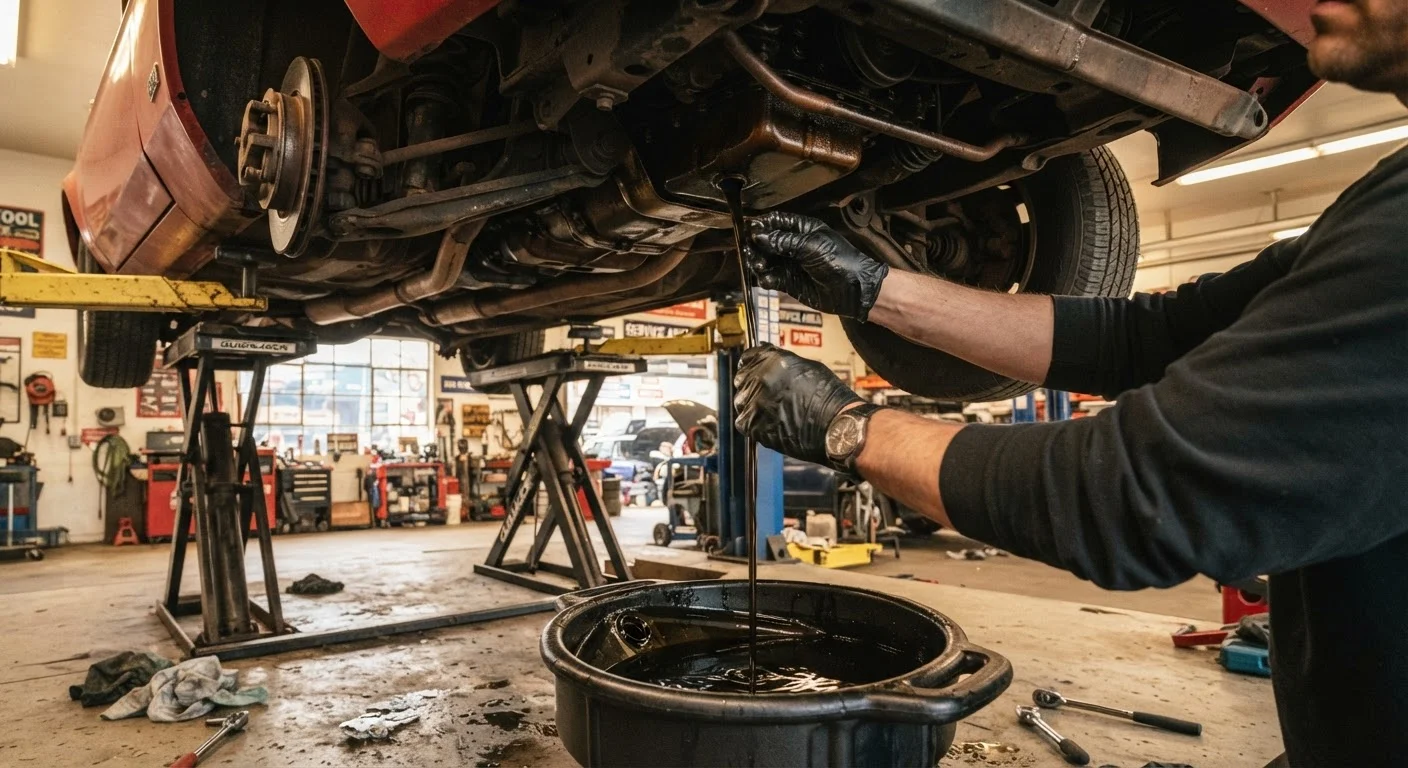
An oil change sounds simple: drain old oil, swap the filter, pour in fresh oil. And at its core, that's accurate. But the full picture includes lifting the vehicle safely with a floor jack and jack stands (or ramps), locating the correct drain plug and oil filter, torquing the drain plug to spec, selecting the right oil grade and quantity, and then responsibly disposing of the used oil - which cannot legally be poured down a drain or into the trash in most U.S. states.
A professional shop handles all of this as a routine workflow, with the lift, tools, and disposal systems already in place. For a first-time DIYer, each of those steps requires research and some investment. Understanding that scope upfront helps you make a realistic choice.
For guidance on which oil type is right for your engine, see our overview of synthetic vs. conventional motor oil.
The Case for Doing It Yourself
Lower recurring cost per oil change
Once you own the basic tools, you generally pay only for oil and a filter - often less than half the price of a shop visit for the same spec oil.
Choose your own oil brand and specification
You control exactly what goes into the engine, which matters if your vehicle requires a specific viscosity or additive package.
Builds hands-on knowledge of your vehicle
Regular under-car access helps you spot developing issues - leaks, worn components, or loose hardware - before they escalate.
Work on your own schedule
No appointment necessary and no waiting room - you can complete the job at a time that genuinely suits you.
Beyond the line items above, DIY gives you something less tangible: direct familiarity with your vehicle. Crawling under a car regularly means you'll notice a fresh oil leak, a cracked boot, or loose hardware well before it becomes a roadside emergency. Many experienced home mechanics consider that awareness as valuable as any dollar savings.
If you're thinking about keeping car maintenance costs manageable on a tight budget, doing your own oil changes is one of the most accessible starting points.
The Case for Using a Professional Shop
Requires tool investment and storage space
A floor jack, jack stands, drain pan, filter wrench, and funnel are the minimum kit - an upfront cost that erases early savings.
Used oil disposal requires a separate trip
Used motor oil cannot be thrown away or poured down a drain; it must be taken to an authorized recycling location, adding a step to every change.
Mistakes carry real consequences
A cross-threaded drain plug, an incorrectly seated filter, or the wrong oil quantity can cause engine damage that far outweighs any savings.
No built-in documentation or professional accountability
DIY changes don't automatically generate a service record, which can complicate warranty claims or reduce buyer confidence when selling the vehicle.
Time commitment, especially for beginners
A professional technician may complete the job in 15-20 minutes; a first-time DIYer should budget an hour or more, including setup and cleanup.
When a Shop Visit Adds Real Value
Some shops include complementary inspections of tire pressure, fluid levels, and brake wear as part of a routine oil change. While these aren't substitutes for dedicated inspections, they can catch developing issues a DIYer might miss without specifically looking for them. It's worth asking what a shop's service includes before you book.
Shops also provide a paper trail. A service record documenting each oil change can matter when selling a vehicle or making a warranty-related claim. Keeping those receipts organized is a small habit with potential long-term payoff.
Honest Cost Comparison
~$25-$50
Typical DIY oil and filter cost
General market pricing for conventional or synthetic oil plus a filter for a typical passenger car, excluding tool costs.
$70-$130+
Average professional full-synthetic oil change
Pricing varies by region, vehicle, and shop type; trucks, SUVs, and European vehicles often fall at the higher end.
~5,000-10,000 miles
Recommended oil change interval (modern vehicles)
Many newer vehicles with full synthetic oil and an oil life monitor can safely go longer than the old 3,000-mile rule; always follow the owner's manual.
The tool investment is the key variable most online comparisons understate. A reliable floor jack, a set of jack stands, a drain pan, a filter wrench, and a torque wrench can easily total $150-$300 if you don't already own them. Those costs spread out over dozens of future oil changes, but they make the first DIY change more expensive than any shop visit. After that break-even point - typically reached after several changes - ongoing savings are real.
It's also worth noting that shop pricing varies considerably by region, vehicle type, and oil specification. Trucks and SUVs with higher oil capacities, or vehicles requiring full synthetic oil, often cost more to service professionally. Check current local pricing rather than relying on national averages.
Safety and Legal Considerations
Working under a vehicle is not inherently dangerous - but it demands respect for the risks. A car supported only by a floor jack (without jack stands) is not safe to work under. Always use properly rated jack stands or drive-on ramps on a flat, solid surface. Never improvise with makeshift supports.
Used motor oil is classified as a hazardous waste in the United States. Most auto parts retailers and some municipal facilities accept used oil at no charge. Plan your disposal method before you start the job - storing large quantities of used oil at home creates its own fire and environmental hazard.
If you overfill, underfill, install the filter incorrectly, or fail to reseat the drain plug fully, the consequences can range from minor mess to serious engine damage. When in doubt on any step, consult your vehicle's owner's manual or have the job verified by a qualified mechanic.