Why Weather Demands a Different Mindset
Most driving skills are learned and practiced in calm, dry conditions - which means adverse weather exposes gaps that don't exist on a clear summer afternoon. Rain reduces tire grip, increases stopping distances, and can cause hydroplaning (when a tire rides on a film of water rather than the road surface) at speeds as low as 35 mph. Snow and ice reduce friction so dramatically that braking distances can increase by four to ten times compared to dry pavement. Fog compresses the visual field, shrinking the time you have to respond to hazards ahead.
The underlying principle across all these conditions is the same: the environment reduces the margins that normally keep driving forgiving. Reducing speed, increasing distance, and eliminating distractions restores those margins. Understanding why these adjustments work - not just that they're recommended - makes drivers more likely to apply them consistently.
For a realistic look at how your vehicle's drive system affects traction in these conditions, understanding how AWD, 4WD, and FWD differ is worth reading before winter arrives. And because vehicle condition matters as much as driver behavior, the seasonal car prep guide covers how to ready your vehicle for temperature extremes.
Prepare Before You Leave
Before any trip in challenging weather, run through a quick vehicle check - tires, wipers, lights, and defroster function. Our pre-drive safety checklist walks through the essentials in under five minutes and can catch problems before they become road hazards.
Condition-by-Condition Driving Adjustments
Each weather type presents a distinct combination of hazards, and a few targeted adjustments go a long way.
Rain
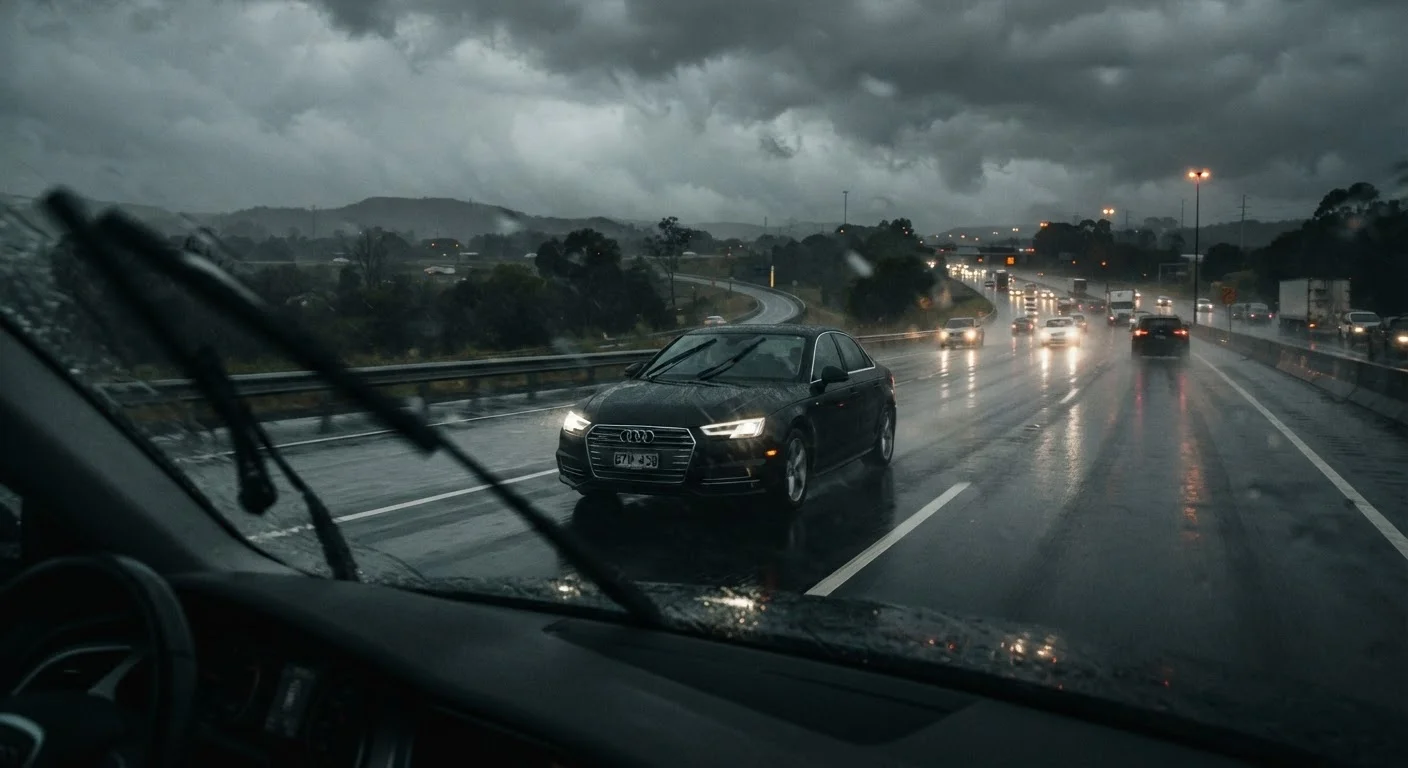
Turn on headlights, reduce speed, and increase following distance. If the steering feels light or unresponsive, you may be hydroplaning - ease off the gas gradually and avoid braking until traction returns. Avoid puddles of unknown depth near curbs, which can cause a sudden pull on the steering wheel.
Snow and Slush
Accelerate and decelerate slowly. Give yourself far more stopping distance than feels necessary, because the required distance increases significantly on packed snow. Clear all accumulated snow from the vehicle before driving - not just the windshield. Bridges and overpasses freeze first because cold air circulates underneath them as well as above.
Ice
The most dangerous condition, because it may not be obvious until you're already on it.
Black Ice Is Nearly Invisible
Black ice is a thin, transparent glaze that forms on pavement and is extremely difficult to see. It most commonly appears on bridges, overpasses, and shaded stretches of road where temperatures drop fastest. If you notice the road surface looks unusually shiny or polished, treat it as potentially iced over and reduce speed immediately.
Fog
Use low-beam headlights. Reduce speed until your stopping distance fits within your visible range - a principle sometimes called driving within your headlights. Be alert for slower or stopped vehicles ahead. If conditions are severe, pull fully off the roadway and wait. For comparison, nighttime driving presents similar visibility challenges with different causes and solutions worth understanding separately.
AWD Is Not a Safety Guarantee
All-wheel drive and four-wheel drive systems help a vehicle accelerate on slippery surfaces, but they provide little advantage when braking or cornering on ice. Drivers with AWD or 4WD vehicles should not assume they can maintain normal speeds in wintry conditions. See our full breakdown of drive system differences for a realistic picture of what each system can and cannot do.
What you will need
All-Season or Winter Tires
Provide adequate grip on wet, slushy, or icy surfaces - winter tires specifically are compounded to remain pliable in temperatures below 45°F.
Ice Scraper and Snow Brush
Used to clear snow and ice from all windows, mirrors, and lights before driving in winter conditions.
Emergency Road Kit
Contains items such as a flashlight, jumper cables, blanket, and flares in case you become stranded in adverse weather.
Windshield Washer Fluid (Winter-Rated)
Prevents the washer fluid reservoir and lines from freezing and ensures visibility during winter driving.
Check Conditions Before You Drive
Before starting the vehicle, check local weather and road condition reports. Many state departments of transportation provide real-time road condition maps. If a winter storm warning, freezing rain advisory, or dense fog advisory is in effect, assess honestly whether the trip is necessary. Delaying by even an hour can mean the difference between driving in a storm and driving after road crews have treated the surface.
Prepare the Vehicle Completely
Clear all snow and ice from every window, all mirrors, the hood, and the roof before moving. Snow left on the roof can slide onto your windshield or into the path of other drivers. Check that headlights, taillights, and turn signals are uncovered and working. Confirm wiper blades are clearing cleanly and that washer fluid is topped off with a winter-rated formula.
Reduce Speed and Increase Following Distance
Speed is the most critical variable in adverse weather. On wet roads, reduce speed by at least 10-15 mph below the posted limit and increase your following distance from the standard 3-second rule to a minimum of 6 seconds. On snow, ice, or in dense fog, extend that gap further - 8 to 10 seconds gives you the reaction time and braking room these surfaces demand. Remember that posted speed limits reflect ideal dry conditions.
Adjust Headlight Use for the Condition
In rain and snow, turn headlights on regardless of the time of day - many states require this by law when wipers are in use. In fog, use low-beam headlights only. High beams reflect off suspended moisture particles and create glare that reduces your own visibility while blinding oncoming drivers. If your vehicle has dedicated fog lights, use them. Hazard lights while moving are generally not recommended in most states during fog, as they can confuse other drivers about your intentions.
Brake Smoothly and Steer with Care
On slippery surfaces, abrupt inputs - hard braking, sharp steering, or sudden acceleration - are the primary causes of skids and loss of control. Apply brakes gradually and well in advance of stops. If your vehicle has ABS, press the brake pedal firmly and hold it; ABS will pulse automatically to prevent wheel lockup. If your vehicle does not have ABS, apply steady, moderate pressure. When cornering, slow down before the curve rather than during it.
Recognize and Respond to a Skid
If the rear of the vehicle slides out (oversteer), steer gently in the direction of the skid - this is commonly called 'steering into the skid' - and ease off the accelerator without braking sharply. If the front wheels lose grip (understeer), ease off the gas and allow speed to reduce naturally; avoid sharp steering inputs. In both cases, smooth, measured corrections outperform panicked reactions. Practice familiarity with your specific vehicle's behavior in a safe, empty environment if possible.
Know When to Pull Over or Turn Back
If visibility drops to the point where you cannot see clearly ahead, pull off the road safely - beyond the white fog line, lights on - and wait for conditions to improve. If road conditions deteriorate beyond what your vehicle and tires can handle, find a safe place to turn around or stop. No destination is worth the risk of a serious collision. See the broader safe driving resource for additional context on risk assessment while driving.