What Alignment Actually Controls
Your car's suspension system connects the wheels to the chassis through a network of arms, joints, and linkages. Wheel alignment describes the precise angles those components create - angles that determine how each tire sits against the road surface. The manufacturer calculates specific values for each angle based on the vehicle's intended handling characteristics and tire wear expectations.
Three angles matter most. Camber is the inward or outward tilt of the tire when viewed from the front of the car. Toe describes whether the fronts of the tires point slightly toward each other (toe-in) or away (toe-out) when seen from above. Caster is the angle of the steering axis, which influences straight-line stability and steering feel. When any of these drift outside the manufacturer's specified range, problems follow.
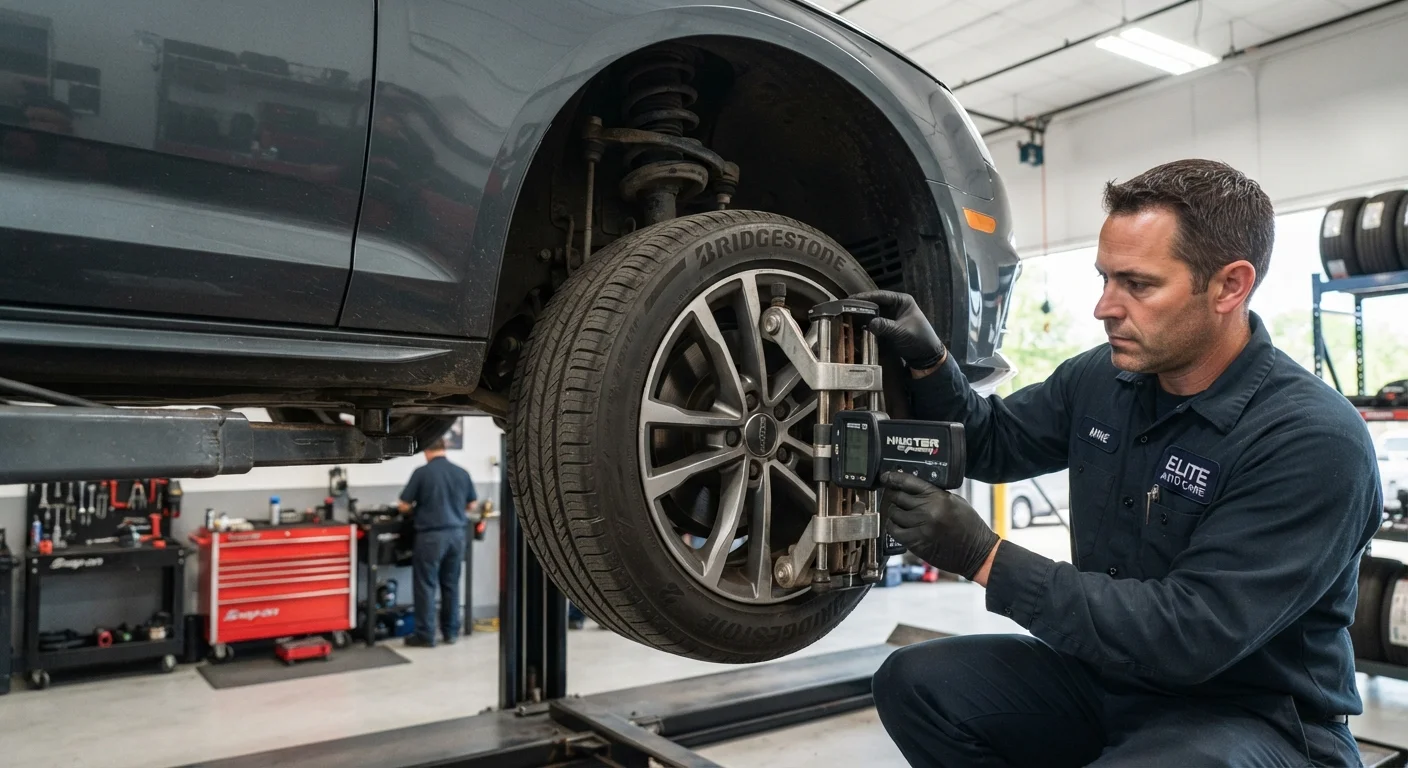
It's worth noting that alignment doesn't mean physically moving the wheel - it means adjusting the suspension hardware that positions it. A technician uses a computerized alignment rack to measure current angles and then makes small but precise adjustments to bring everything back into spec. For more context on how suspension components connect, see the parts of your car you should actually know by name.
What Causes Alignment to Go Out
Alignment rarely drifts on its own under normal driving. Most misalignment has a specific cause:
- Impact events: Hitting a pothole, curb, or road debris transfers sudden force directly through the wheel into the suspension. Even a moderate impact can shift alignment angles enough to cause measurable problems.
- Worn suspension components: Ball joints, tie rod ends, and control arm bushings all wear over time. As they develop play or slop, they allow alignment angles to shift gradually - often without any obvious single incident.
- Ride height changes: Lowering or lifting a vehicle without a corresponding alignment adjustment almost always puts angles outside of spec. Even replacing springs or struts can affect alignment.
- Accumulated minor impacts: Years of ordinary driving on rough roads, railroad crossings, and speed bumps can gradually push alignment out of range, even without a single dramatic event.
Front vs. Rear Alignment Sensitivity
Front-wheel-drive vehicles are generally more sensitive to toe misalignment because the front tires handle both steering and power delivery. Rear-wheel-drive and all-wheel-drive vehicles can develop their own rear alignment issues, particularly if the rear axle or independent rear suspension components are disturbed. A four-wheel alignment check covers all four corners and is more comprehensive than a front-only alignment.
Front-wheel-drive vehicles are generally more sensitive to toe misalignment because the front tires handle both steering and power delivery. Rear-wheel-drive vehicles can develop their own rear alignment issues, particularly if the rear axle or independent rear suspension components are disturbed.
Warning Signs to Watch For
~$100-$150
Typical cost of a four-wheel alignment
General industry estimates; actual prices vary by region, vehicle type, and shop. Costs are generally modest compared to premature tire replacement.
Up to 25%
Potential reduction in tire lifespan from misalignment
Significant misalignment can accelerate uneven tread wear, potentially removing thousands of miles from a tire's useful life.
Alignment problems usually announce themselves in predictable ways. Knowing what to look for can help you catch issues before they cause significant tire wear or handling degradation.
- Pulling to one side: If the car consistently drifts left or right when you're holding the wheel straight on a level road, alignment is a likely culprit. Note that a flat or underinflated tire can mimic this symptom, so check your tire pressure first. Our article on tire pressure and safety explains how pressure affects handling.
- Off-center steering wheel: If the steering wheel isn't centered when driving straight, the alignment angles are unequal side to side.
- Uneven tire wear: Feathering (a sawtooth pattern across the tread), excessive wear on one shoulder, or dramatically different wear between front and rear can all signal alignment issues. Routine tire rotations help reveal these patterns early.
- Handling feels loose or wandering: Poor caster alignment can make the car feel vague or require constant minor steering corrections to stay in a lane.
Check Alignment After Any Suspension Work
Any time a suspension or steering component is replaced - struts, control arms, tie rods - the alignment should be checked and reset afterward. Even if the car drove fine before the repair, installing new parts can change the angles. A post-repair alignment ensures everything is set to manufacturer spec, not just mechanically functional.
Why It's Worth Addressing Promptly
Misalignment is a compounding problem. The longer it goes uncorrected, the more tire tread is consumed unevenly - and tires are one of the more significant recurring costs of vehicle ownership. A set of tires that should last 50,000 miles can wear out considerably faster if alignment is consistently off.
Beyond tires, sustained misalignment puts abnormal stress on steering and suspension components. Tie rod ends, ball joints, and wheel bearings all work harder when alignment forces them to compensate for incorrect angles, potentially shortening their service life.
Fuel economy can also take a small but real hit. When tires aren't rolling in their intended direction, they create additional rolling resistance that the engine has to overcome. The effect is modest on any given tank, but it adds up over time.
Alignment checks are typically straightforward and relatively quick at a qualified shop. If you've recently experienced a significant road impact or notice any of the warning signs described above, having alignment inspected is a practical first step before the problem works its way into your tires or suspension components.