Why Tire Rotation Actually Matters
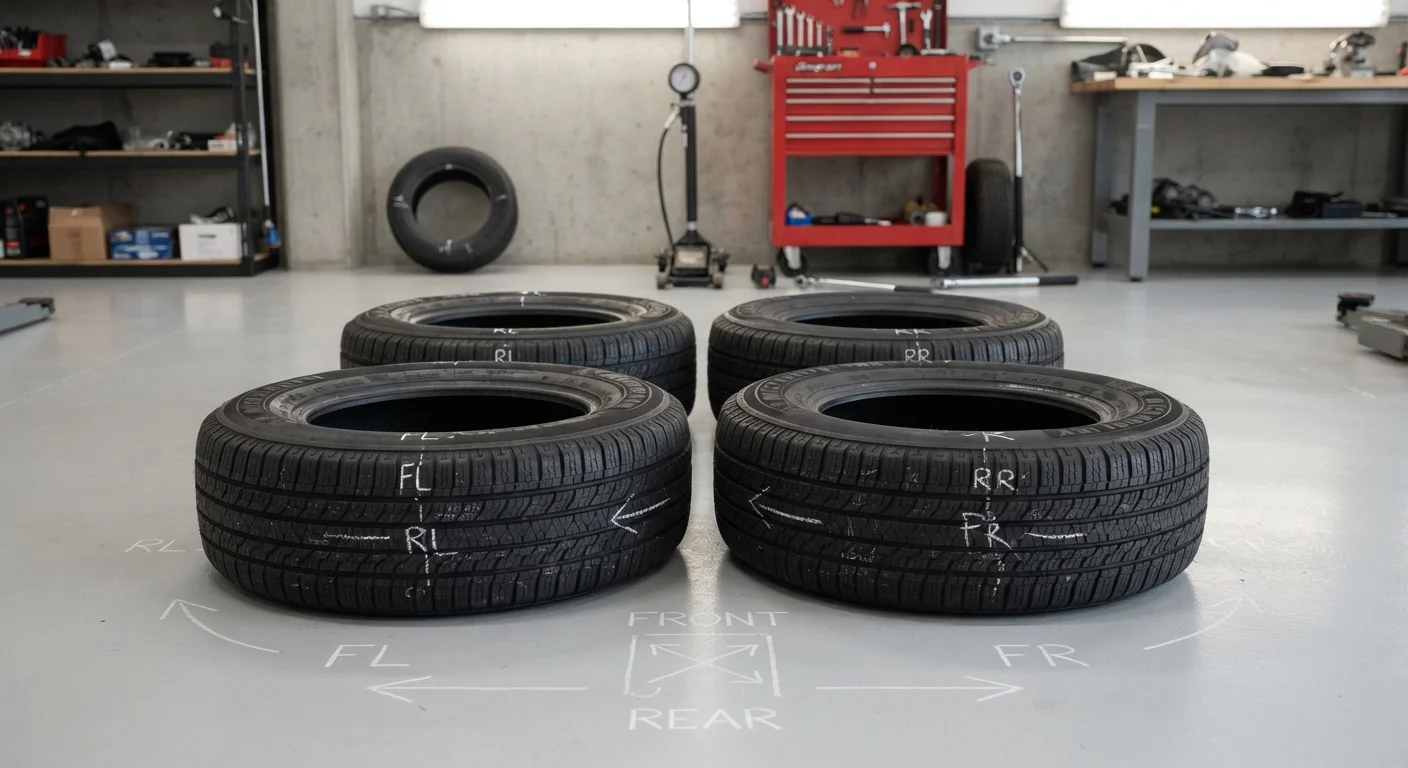
Tire rotation - moving each tire to a different wheel position on a set schedule - exists for one straightforward reason: tires on different axles and corners of your vehicle wear at different rates. Front tires handle steering and, on front-wheel-drive vehicles, acceleration as well. That concentrated workload wears their tread faster than the rears. Without periodic rotation, you end up replacing two tires far ahead of the other two, or buying a full set earlier than necessary.
The financial case is simple: a rotation typically costs between $20 and $50. A single replacement tire can run $100 to $250 or more, depending on size and type. Skipping a few rotations to save time or money is a classic case of short-term thinking leading to larger expenses - similar to the pattern described in the hidden costs of deferred maintenance.
Beyond cost, uneven tread wear has real safety consequences. Tires with mismatched depths across axles behave differently under hard braking, particularly on wet roads. The handling imbalance can develop well before any tire visually appears low.
~$20-$50
Typical cost of a professional tire rotation
Industry service data consistently places tire rotation among the most cost-effective routine maintenance services available to drivers.
Up to 20%
Potential reduction in tire lifespan without rotation
Tire industry guidance suggests irregular or absent rotation can measurably shorten usable tread life, pushing replacement costs forward unnecessarily.
Common Mistakes Drivers Make With Tire Rotation
Most drivers understand that tire rotation is on the maintenance checklist - the problem is how easily it slips through the cracks. Below are the most frequent errors that lead to premature wear, unexpected costs, and compromised road safety.
Waiting until tires look worn before scheduling a rotation.
Why it happens: Tread wear is gradual and uneven wear patterns often aren't visible at a glance, so drivers assume everything is fine until a tire looks obviously low.
Skipping rotation on all-wheel-drive vehicles because "all wheels are driven equally."
Why it happens: Drivers assume AWD systems distribute wear evenly, but front tires still handle most steering load and wear faster in many driving conditions.
Rotating tires without checking air pressure at the same time.
Why it happens: Drivers see rotation and inflation as separate tasks and often defer pressure checks to another day - which can negate some of rotation's benefits.
Ignoring wheel alignment when uneven wear is already present.
Why it happens: Drivers rotate tires hoping rotation alone will fix the wear pattern, not realizing that a misaligned axle will simply continue wearing tires unevenly regardless of rotation.
Assuming rotation isn't worth it on tires that are already partway worn.
Why it happens: Some drivers believe rotating tires at 30,000 or 40,000 miles is "too late" to matter, so they skip it until the next set.
Uneven Wear Affects Braking Safety
Tires with significantly different tread depths across axles can cause uneven braking forces, increasing stopping distances - particularly on wet or slippery roads. If your front tires are noticeably more worn than your rears (or vice versa), have a qualified technician assess them before your next long drive.
If budget constraints are forcing you to triage your maintenance schedule, rotation should stay near the top of the list. Our guide to car maintenance on a tight budget offers a practical framework for deciding what can wait and what can't.
AWD Vehicles Face Higher Risk
All-wheel-drive systems require all four tires to maintain nearly identical rolling circumferences. Tires with significantly different tread depths force the drivetrain to compensate constantly, which can damage the center differential - a repair that costs far more than a set of tires. Follow your owner's manual rotation intervals closely if you drive an AWD vehicle.
It's also worth noting that rotation works best as part of a broader tire care routine. Proper inflation, correct alignment, and regular visual inspections all reinforce each other. A worn or cupped tire may also signal a brake-related issue - brake wear facts versus common myths is worth reading alongside this guide.