How Each System Creates Stopping Power
Every brake system works on the same principle: converting the kinetic energy of a moving vehicle into heat through friction. What differs between disc and drum brakes is the geometry of that friction - and that geometry has real consequences for performance, maintenance, and heat management.
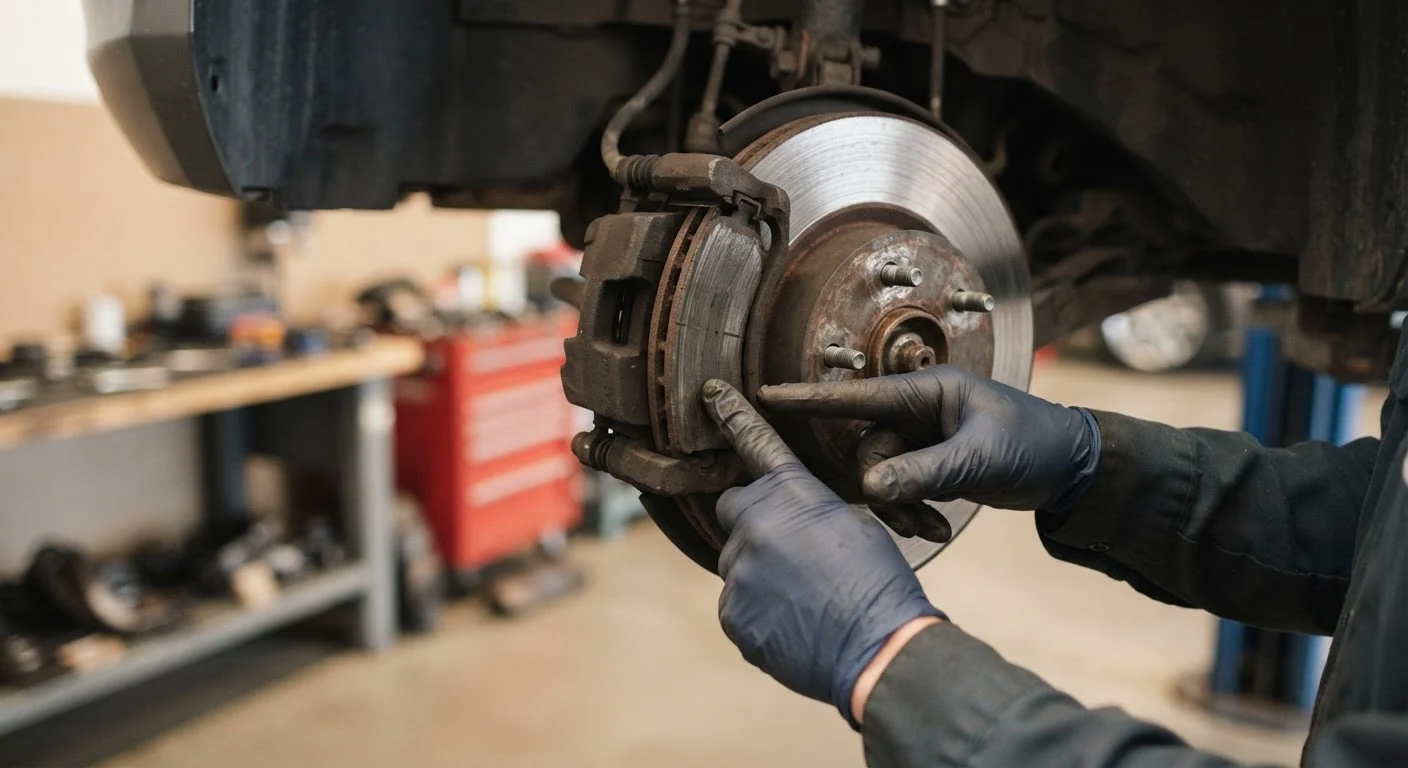
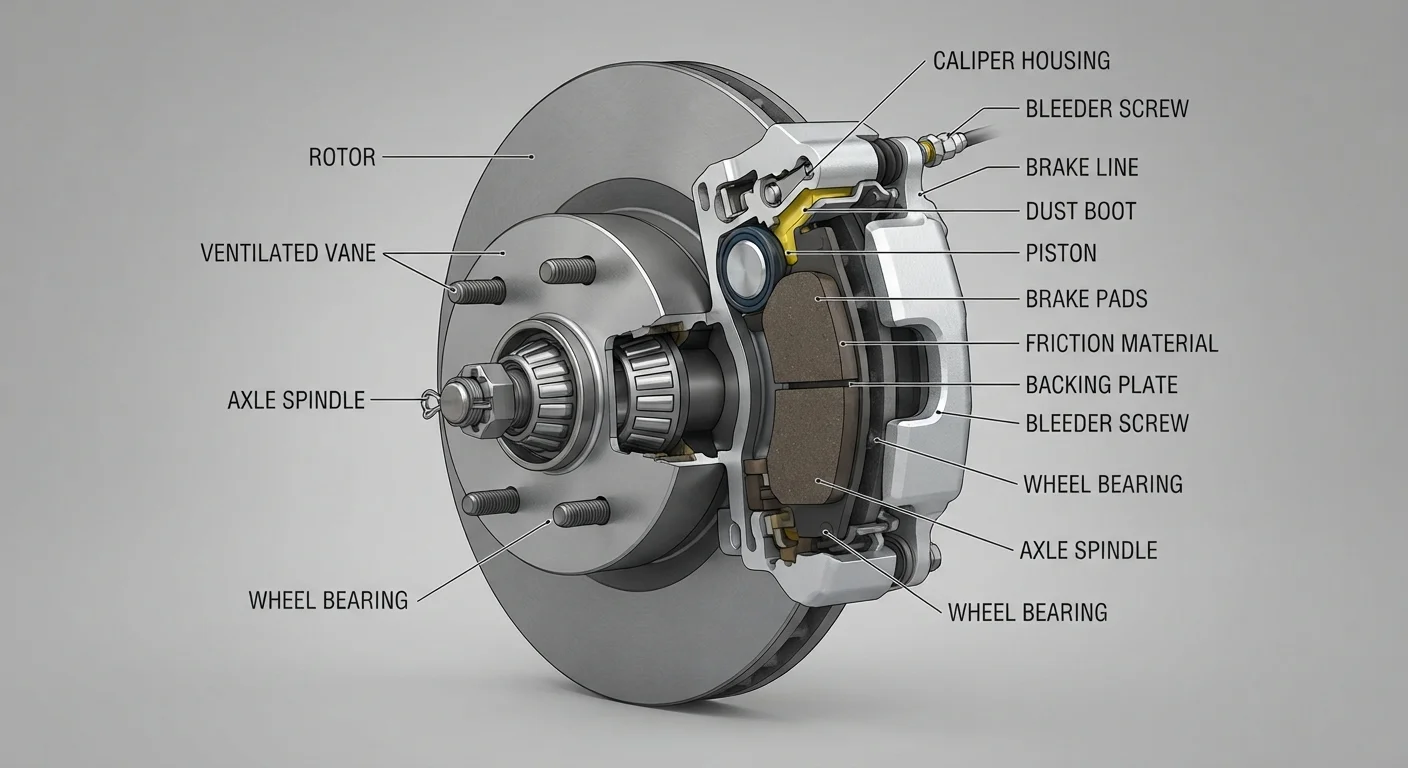
Disc brakes consist of a flat, circular metal rotor that spins with the wheel. A hydraulic caliper - a clamping device straddling the rotor - squeezes flat friction pads against both faces of the rotor when you press the brake pedal. Because the rotor is exposed to open air, heat radiates away quickly. The result is a system that performs consistently even after repeated hard stops.
Drum brakes use a hollow metal drum that also rotates with the wheel. Inside the drum, curved friction linings called brake shoes are pushed outward by a hydraulic wheel cylinder, pressing against the inner surface of the drum. The enclosed design means heat has fewer escape routes, which can cause the friction material to lose effectiveness - a phenomenon known as brake fade - under sustained or aggressive braking.
Understanding these mechanical basics helps you make sense of the repair and replacement conversations you'll have with your mechanic. For a broader look at how car components work together, see our guide to the car parts you should know by name.
| Criterion | Disc Brakes | Drum Brakes |
|---|---|---|
| Friction mechanism | Pads clamp flat rotor | Shoes press drum interior |
| Heat dissipation | Excellent - open design | Limited - enclosed drum |
| Brake fade resistance | High | Lower under heavy use |
| Typical placement | Front; all four on newer cars | Rear on many economy models |
| Parking brake integration | Requires separate mechanism | Integrates naturally with shoes |
| Inspection ease | Pads often visible without removal | Requires drum removal |
| Manufacturing cost | Higher | Lower |
Performance, Heat, and Real-World Trade-Offs
The open-face design of disc brakes is their defining advantage. Heat is the enemy of braking consistency, and rotors - especially vented rotors, which have internal cooling channels - dissipate thermal energy far more effectively than enclosed drums. This is why front brakes, which handle the majority of stopping force during a deceleration (weight transfer pushes the nose down), are almost universally disc-based on modern vehicles.
70-80%
Share of braking done by front axle
Weight transfer under deceleration shifts load forward, meaning front brakes do the majority of stopping work on most passenger vehicles.
4-wheel disc
Brake configuration on most new U.S. passenger cars
Four-wheel disc brake systems have become standard on the majority of new passenger cars sold in the United States, though drums remain common on rear axles of many economy models.
Drum brakes, despite their heat disadvantage, are not obsolete. On the rear axle of lighter vehicles, they still perform adequately because the rear brakes handle a smaller share of total stopping work. Their enclosed design also makes them naturally resistant to debris and moisture contamination in certain configurations. Perhaps most practically, the geometry of drum brake shoes lends itself to a simple mechanical parking brake: cables can hold the shoes against the drum without any hydraulic pressure. Many vehicles fitted with rear disc brakes actually include a small secondary drum mechanism solely for the parking brake.
One maintenance nuance worth noting: drum brake hardware - springs, adjusters, and wheel cylinders - is housed inside the drum and less accessible than disc brake components. Inspections typically require wheel removal and drum disassembly, which can add labor time compared to inspecting disc setups where pad thickness is often visible without disassembly.
Anti-Lock Brakes Work with Both Systems
ABS (Anti-lock Braking System) is a separate electronic safety system that prevents wheel lockup during hard stops. It can be paired with either disc or drum brakes. ABS uses wheel-speed sensors and a hydraulic modulator to pulse brake pressure rapidly, helping drivers maintain steering control during emergency braking. Its presence does not change the underlying disc-or-drum architecture of your brakes.
Braking systems also interact with the drivetrain layout of your vehicle. How your car delivers power to the wheels affects weight distribution, which in turn influences braking balance. Learn how AWD, 4WD, and FWD differ and what each means for how your vehicle handles and stops.