What Personal Style Actually Means
Personal style is often confused with fashion — but they're genuinely different things. Fashion is what's happening in the industry at any given moment. Personal style is what happens when you filter that through your own identity, lifestyle, and values. It's the consistent visual language you develop over time that communicates something true about who you are.
The good news: personal style has no prerequisites. You don't need a big budget, a particular body type, or a background in fashion to develop one. What you do need is a willingness to pay attention to what genuinely resonates with you — and a little patience while you work it out.
Think of your style as a living document rather than a fixed destination. It can deepen, shift, and surprise you. That's not instability — that's growth. For a deeper look at the specific elements that give a look its cohesive quality, explore our guide on style touchstones.
Start With Curiosity, Not Rules
There's no single correct way to develop a personal style — the frameworks in this guide are tools, not mandates. Begin by simply paying closer attention to what you reach for repeatedly and what makes you feel most like yourself. That honest self-observation is the foundation everything else is built on.
Identifying Your Aesthetic Anchors
Before you can build a wardrobe that feels like you, it helps to understand what you're actually drawn to. Aesthetic anchors are the recurring themes, textures, silhouettes, and moods that show up consistently in what you love — whether or not you've consciously named them before.
One practical way to start: spend a few weeks saving images of outfits, interiors, artwork, or even nature that genuinely appeal to you. After a while, patterns emerge. Maybe you keep gravitating toward structured shapes and earthy neutrals. Maybe it's always something slightly oversized and relaxed. Those patterns are your anchors.
- Silhouette: Do you prefer fitted or relaxed? Tailored or flowing? This is often the most consistent preference people have.
- Texture: Are you drawn to matte, soft fabrics or something with more sheen and structure?
- Mood: Think of words that describe how you want to feel when dressed — polished, effortless, playful, powerful.
- Occasion reality: Where do you actually spend your time? Your style should work for your real life, not an aspirational one.
When auditing inspiration images, look for the word that describes the feeling — not just the look. If you find yourself writing 'calm' or 'grounded' repeatedly, that emotional quality is actually the core of your aesthetic.
Aesthetics are rooted in emotional response, not just visual preference. Naming the feeling helps you translate it across different garments and contexts consistently.
Before buying anything new, check whether it works with at least three things already in your wardrobe. If it doesn't, it's a statement piece — and those require a stronger justification.
Versatility is the hallmark of an intentional wardrobe. Items that don't connect to existing pieces tend to become the unworn outliers that create clutter and decision fatigue.
Once you've identified your anchors, you have a reliable filter for every future purchase and styling decision.
Building a Wardrobe With Intention
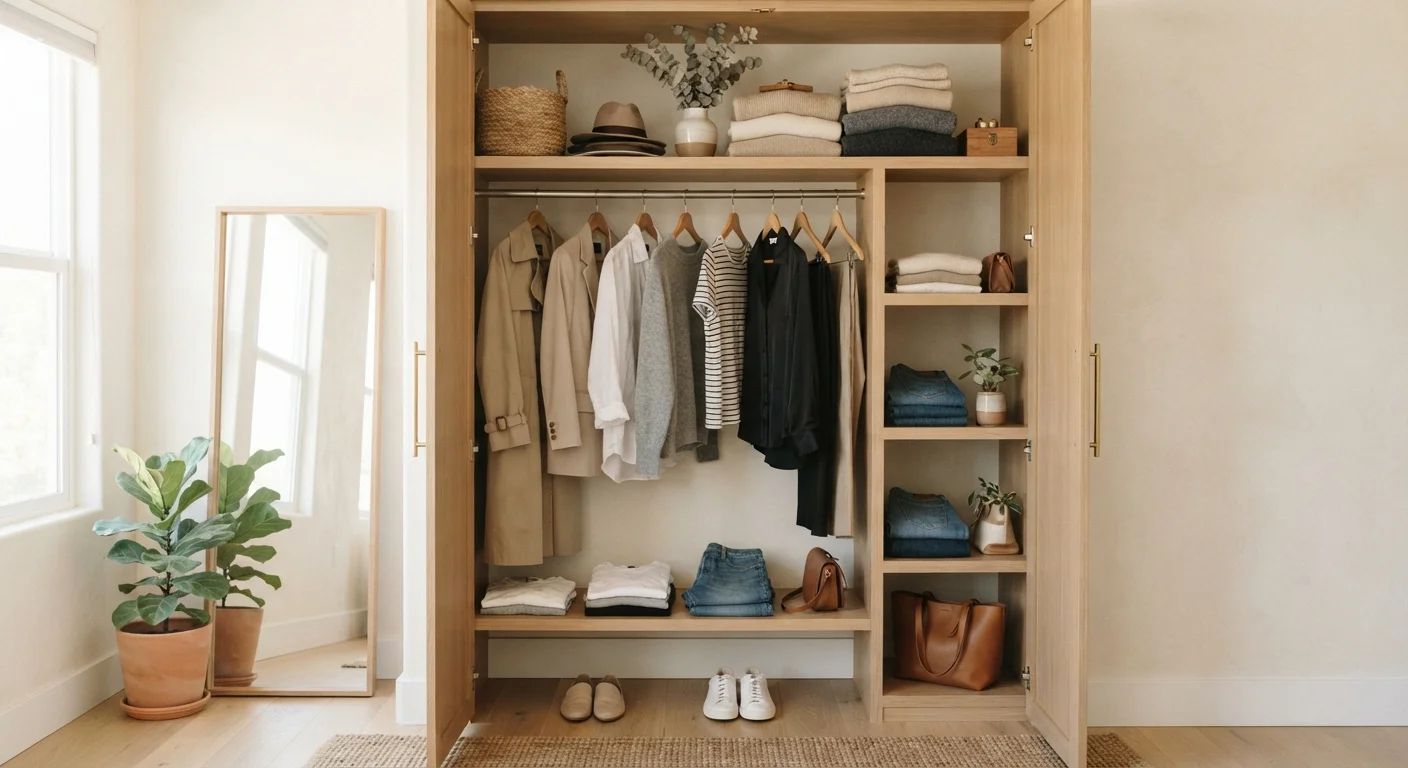
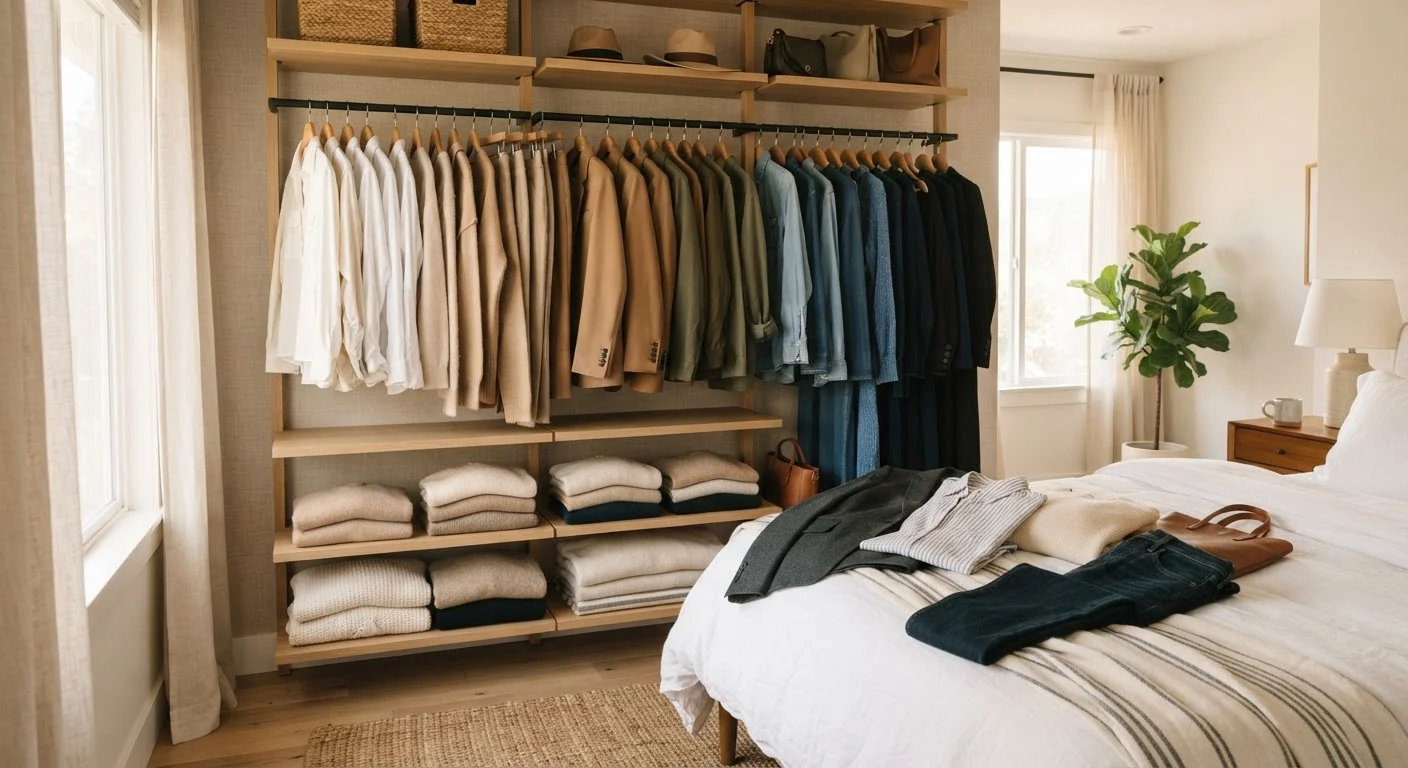
A wardrobe built with intention is one where most pieces work together and each item genuinely serves your life. The goal isn't minimalism for its own sake — it's coherence. When everything in your closet reflects your aesthetic anchors, getting dressed becomes far simpler and more satisfying.
80%
Clothes worn only 20% of the time
Research on consumer wardrobe habits consistently suggests that most people wear a small fraction of their clothing regularly — often cited as the 80/20 rule of wardrobes.
3–5
Core colors in a cohesive palette
Style editors and wardrobe consultants commonly recommend limiting a personal color palette to three to five tones to maximize outfit combinations and coherence.
Start with an honest audit. Pull out everything you own and ask: Does this fit? Does this reflect who I am now? Have I worn this in the past year? Items that fail all three questions are candidates for removal. What remains is your actual wardrobe baseline.
From there, identify gaps — not by trend, but by function. If you consistently reach for something that isn't there (a versatile layer, a go-to bottom in a neutral you love), that's a genuine gap worth filling. Check out the fashion basics hub for grounded guidance on core pieces that work across styles.
A note on budget: building an intentional wardrobe doesn't require spending more — it often means spending less, but more deliberately. For broader strategies on managing discretionary spending, the saving and debt hub offers clear, practical guidance.
Avoid the 'Aspirational Purchase' Trap
One of the most common wardrobe mistakes is buying for a life you wish you had rather than the one you actually live. Pieces purchased for an imagined occasion, a future version of yourself, or a lifestyle that isn't yours tend to go unworn and create guilt and clutter. Ground every wardrobe decision in your real, current life.
Understanding Color, Fit, and Proportion
Of all the tools in personal style, fit is the most powerful and the most frequently overlooked. A well-fitting garment in a basic fabric will almost always look more intentional than an ill-fitting one in an expensive material. Fit doesn't mean tight — it means the garment drapes and moves in a way that's deliberate rather than accidental.
Proportion refers to how the different parts of an outfit relate to each other in scale. A voluminous top pairs naturally with a slimmer silhouette below; a relaxed, wide-leg trouser balances a more fitted or cropped upper half. These relationships create visual harmony without requiring any specific body type to pull off.
Color is where many people either overthink or underthink. A few practical principles:
- A cohesive color palette — typically three to five tones you return to consistently — makes mixing and matching effortless.
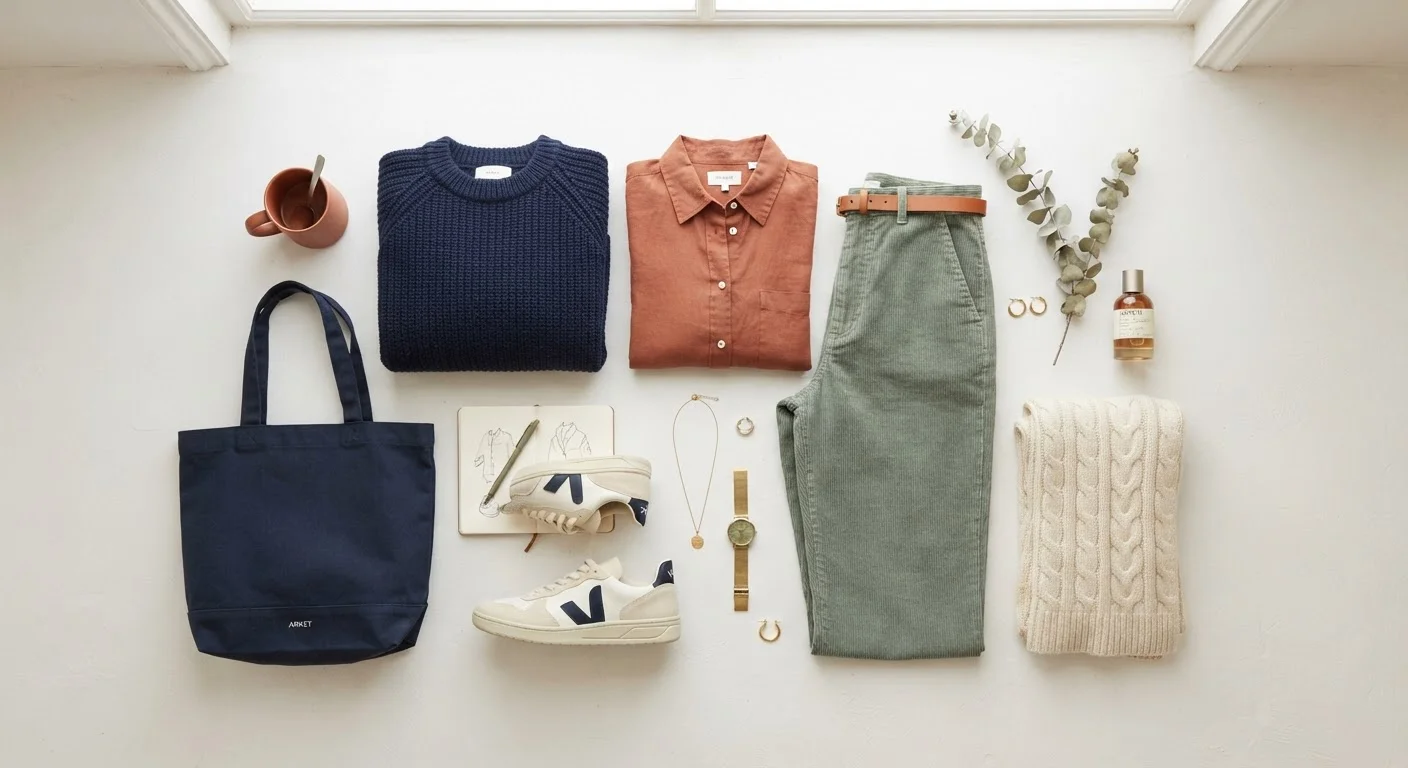
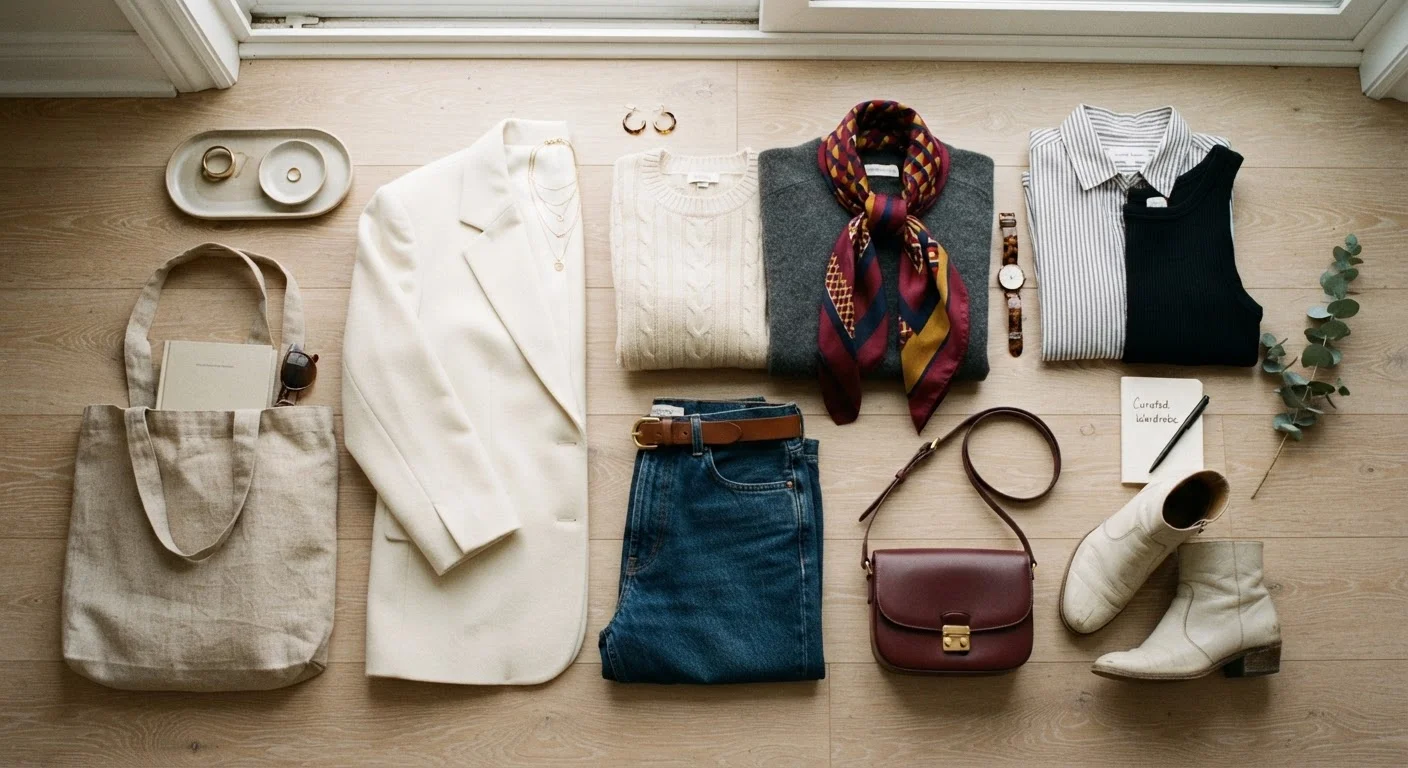
- Neutral bases (think warm beiges, cool grays, navy, white, black) give you flexibility; one or two accent colors keep things personal.
- You don't have to follow seasonal color rules — wear what makes you feel alive.
“Style is a way to say who you are without having to speak.”
— Rachel Zoe, Fashion designer and style authority
Understanding these fundamentals gives you the confidence to experiment freely, because you know what to return to when something doesn't quite land.
Evolving Your Style Over Time
Personal style is not a problem you solve once and move on from. Life changes — careers, relationships, geography, age, values — and your aesthetic will naturally shift alongside those changes. That's not a failure of consistency; it's evidence that your style is genuinely connected to who you are.
The key is to distinguish between evolution and drift. Evolution feels intentional — you're adding new influences, refining your palette, or adapting your wardrobe to a new chapter. Drift feels disconnected — you're buying reactively, chasing trends without filtering them, or wearing things that no longer feel true. Regular reflection (even just a seasonal closet review) helps you stay on the intentional side of that line.
Major life transitions — a new job, a move, a shift in identity — are often the moments that prompt the deepest style reconsideration. Our article on personal style across life transitions walks through exactly how to navigate those moments without losing your sense of self.
Style Doesn't Have to Be Consistent Across Every Context
It's completely normal to dress differently for work, weekends, and special occasions — and that doesn't mean you lack a personal style. What ties it together is a consistent underlying sensibility: the colors, textures, and proportions you gravitate toward regardless of the dress code. Context shapes expression; it doesn't erase identity.
Ultimately, a lasting personal style is one that keeps pace with a full, changing life — not one that freezes you in a single moment of taste. Trust the process, stay curious, and keep wearing what genuinely feels like you.