
Why Order Actually Matters in Skincare
You can own the most thoughtfully chosen products on the market, but if they're going on in the wrong sequence, you're likely undermining a lot of the work they're supposed to do. Skincare layering isn't about ritual for ritual's sake — it's rooted in how skin actually absorbs ingredients.
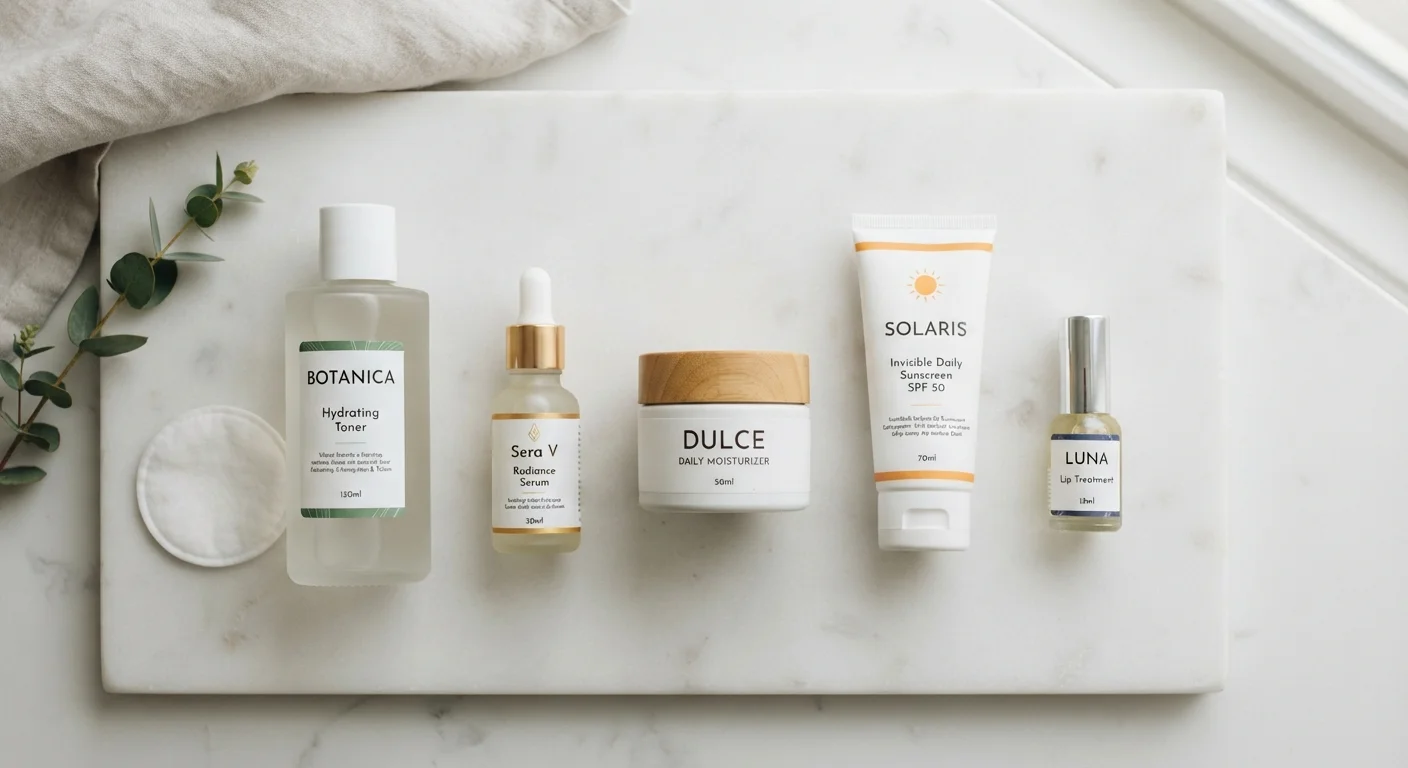
The general principle is straightforward: go from thinnest to thickest. Water-based, lightweight formulas like toners and serums need direct contact with skin to penetrate effectively. When a heavy moisturizer or facial oil goes on first, it creates a barrier that can physically prevent those active ingredients from reaching deeper skin layers. Think of it like trying to water a plant through a plastic bag.
Understanding this logic makes the whole routine click. If you're just starting out, our beginner-friendly routine guide walks through each step and why it lands where it does. And if your skin reacts unpredictably to products, the sensitive skin guide covers how to build a gentler approach from the ground up.
The Most Common Layering Mistakes (And How to Fix Them)
Most layering errors come from a handful of recurring habits. Here's what tends to go wrong — and what to do instead.
Applying serum after moisturizer, blocking it from absorbing into skin.
Why it happens: Moisturizer feels like the foundational step, so it gets applied first intuitively. But its thicker texture creates a film that prevents lightweight serums from penetrating.
Layering a facial oil before a water-based serum or moisturizer.
Why it happens: Oils feel nourishing and skin-conditioning, leading many people to apply them early in a routine. However, oils are occlusive — they seal whatever is beneath them.
Mixing incompatible actives — such as retinol and vitamin C — in the same routine step.
Why it happens: Both ingredients are valued for their skin-improving properties, so using them together seems efficient. Most product labels don't warn against specific combinations.
Skipping wait time between layers, reducing absorption of each product.
Why it happens: Routines can feel time-consuming, and it's tempting to move through steps quickly. The benefit of pausing between products isn't immediately visible.
Applying toner before cleansing, or skipping it altogether when it would help prep skin.
Why it happens: Toner's role in a routine is often misunderstood — many people see it as optional or treat it as a cleanser substitute.
Active Ingredients That Don't Play Well Together
One of the trickier areas of skincare layering involves active ingredients — the functional components like retinol, vitamin C, and chemical exfoliants that do the heavy lifting. Applying two incompatible actives at the same time or in the wrong sequence can neutralize their effectiveness or, worse, trigger irritation.
Retinol and vitamin C are a classic mismatch. They work best at different pH levels, and layering them together can reduce the potency of both while increasing the chance of redness. The common workaround is to use vitamin C in the morning and retinol at night — which also aligns with how each ingredient behaves in relation to sunlight. For a deeper look at how your AM and PM routines should actually differ, see morning vs. night skincare.
Chemical exfoliants — AHAs, BHAs, and PHAs — are another area where layering order matters. Using them under or directly over retinol amplifies irritation risk considerably. Understanding how AHAs, BHAs, and PHAs differ can help you decide which exfoliant fits your routine without stacking too much on your skin at once.
Don't Stack Too Many Actives at Once
Using multiple active ingredients in a single routine — especially retinol, exfoliating acids, and vitamin C together — is one of the most common causes of unexpected skin irritation and barrier damage. If your skin is reacting with redness, peeling, or increased sensitivity, overloading on actives is often the culprit. Introduce one active at a time and give your skin several weeks to adjust before adding another.
Your skin's barrier is the underlying factor that determines how well it tolerates any layering routine. A compromised barrier amplifies sensitivity to almost everything. Skin Barrier 101 is a solid place to understand what keeps that barrier healthy.
The One Step Most People Misplace: Sunscreen
Sunscreen is consistently the most misapplied step in a morning routine. It belongs at the very end — after moisturizer, never before it or mixed into other products on the go. Applying moisturizer on top of SPF dilutes the sunscreen film and disrupts the even coverage that gives it protective value.
Sunscreen Goes On Last — Always
Applying anything on top of your sunscreen after it's been spread disrupts the protective film it forms on skin. Moisturizer, facial oils, or makeup should only go on top if your sunscreen is the designated final skincare step. Mixing SPF products mid-routine significantly reduces their effectiveness and can leave you with uneven, unreliable coverage.
Some people also skip sunscreen on overcast days or when they're mostly indoors, but UV rays penetrate clouds and windows. Daily SPF use is one of the most evidence-supported habits in skincare. The science behind daily SPF explains what the research actually shows and how to read those SPF numbers correctly.
This article is for general informational purposes only and is not a substitute for professional dermatological or medical advice. Consult a qualified skincare professional or dermatologist for guidance tailored to your skin type or concerns.