
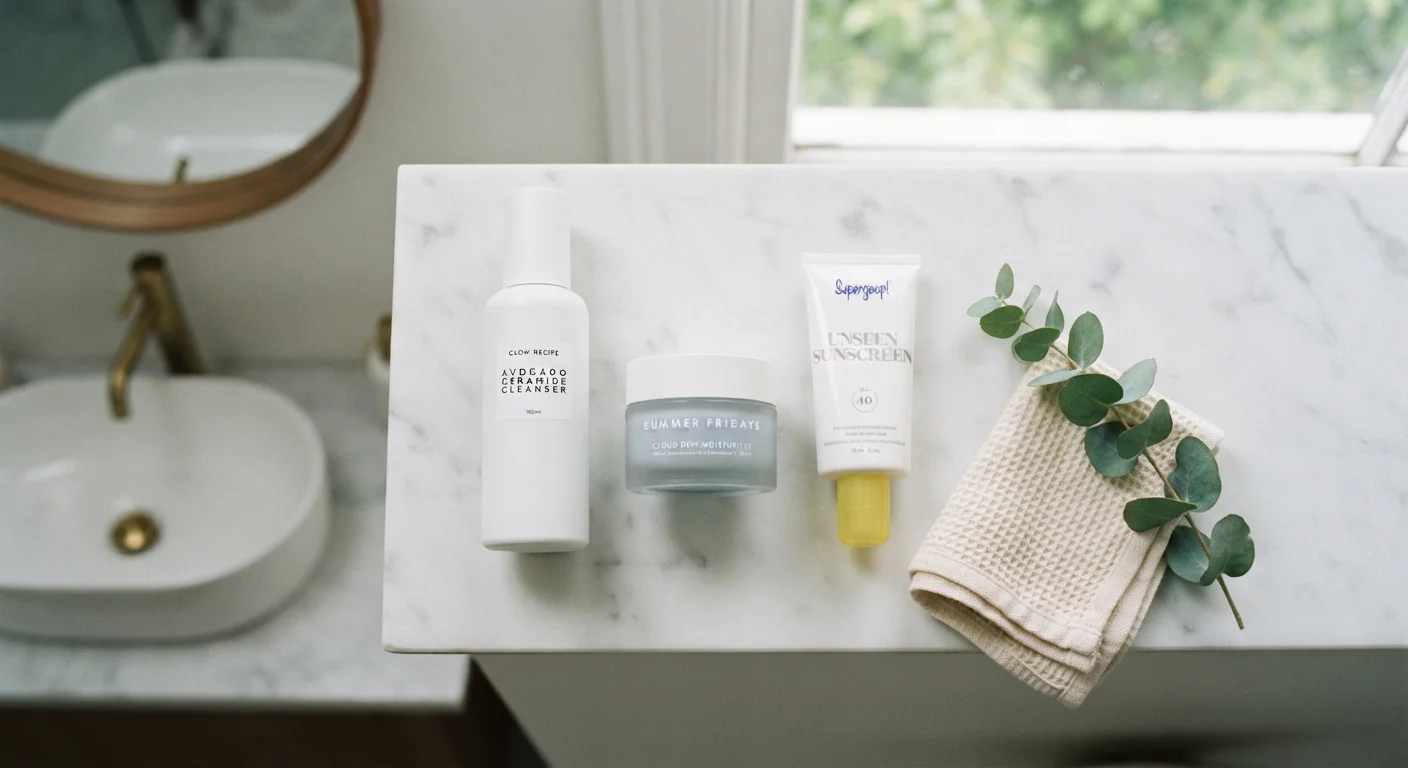
Why a Simple Routine Beats a Complex One
Walk down any beauty aisle and you'll encounter serums, essences, toners, mists, oils, and exfoliants — enough to make anyone's head spin. Here's the truth: more products do not automatically mean better skin. For beginners, a pared-down routine almost always performs better than a complex one, because you can actually tell what's helping and what isn't.
Skin also needs time to adjust whenever something new is introduced. Piling on five products at once makes it nearly impossible to identify the source of a breakout, redness, or dryness. Starting simple protects your skin barrier — the outermost layer that keeps moisture in and irritants out. Understanding your skin barrier is one of the most useful things you can do before building any routine.
Start With One Routine, Not Two
If the idea of both a morning and evening routine feels like too much, begin with just a nighttime routine. Cleansing and moisturizing before bed is one of the highest-value habits you can build. Add a morning SPF step once the evening routine feels automatic.
The Core Three Steps Every Beginner Needs
Forget the ten-step routines for now. These three steps form a complete, functional foundation:
Skin barrier
The outermost layer of skin that acts as a protective shield, keeping moisture in and environmental irritants out. A healthy barrier is the foundation of any good routine.
Broad-spectrum SPF
Sunscreen that protects against both UVA rays (linked to aging and pigmentation) and UVB rays (linked to burning). The term 'broad-spectrum' on a label confirms it covers both.
Moisturizer
A product that helps the skin retain water and stay hydrated. Different formulas (gel, lotion, cream) suit different skin types and climates.
Patch test
Applying a small amount of a new product to a small area of skin and waiting 24–48 hours to check for reactions before using it on your entire face.
Active ingredient
A skincare ingredient included at a concentration intended to produce a specific result, such as retinol for cell turnover or salicylic acid for clearing pores.
Hyperpigmentation
Darker patches of skin caused by excess melanin production, often triggered by sun exposure, acne, or inflammation. Daily SPF is one of the most effective ways to prevent it.
- Cleanse. A gentle, non-stripping cleanser removes dirt, oil, and anything your skin has accumulated during the day or overnight. Look for formulas labeled "gentle" or "for sensitive skin" as a starting point — they tend to work well across most skin types. Avoid anything that leaves your face feeling tight or squeaky after rinsing.
- Moisturize. Every skin type benefits from moisturizer, including oily skin. The key is matching the texture to your skin: lightweight gel formulas suit oilier complexions, while richer creams work better for dry or combination skin. Moisturizer supports your skin barrier and helps maintain healthy hydration throughout the day and night.
- Protect (SPF, mornings only). Sunscreen is the most evidence-backed step in any skincare routine. Daily broad-spectrum SPF — meaning protection against both UVA and UVB rays — helps prevent premature aging, hyperpigmentation, and sun damage. Apply it as your final morning step, after moisturizer.
What Order Do Products Go In?
The general rule for layering skincare is simple: thinnest to thickest. Lightweight products absorb best when applied to clean skin before heavier ones create a barrier on top. Here's what a beginner's morning routine looks like in practice:
- Cleanser (rinse off)
- Moisturizer
- Sunscreen
At night, drop the sunscreen and your routine is just two steps: cleanse, then moisturize.
Getting this order right matters more than it might seem. Applying products in the wrong sequence can reduce their effectiveness or even cause irritation — something worth understanding before you add anything extra to your lineup.
What to Skip (For Now)
Once your basic routine feels easy and your skin feels comfortable, you might be tempted to level up. That's completely valid — but timing matters. Here's what to hold off on until your foundation is solid:
- Retinol and retinoids. Powerful anti-aging ingredients that require careful introduction. They can cause peeling and sensitivity if used too soon or too frequently.
- Exfoliating acids (AHAs, BHAs). Chemical exfoliants like glycolic or salicylic acid are effective for texture and breakouts, but unnecessary — and potentially irritating — in a beginner routine.
- Vitamin C serums. Brightening and beneficial, but can destabilize and react with other products if layering isn't done thoughtfully.
- Toners, essences, and mists. Potentially useful additions down the road, but not foundational — and easy to misuse without a baseline understanding of your skin.
If you have reactive or sensitive skin, building your routine with extra care is especially worthwhile before exploring actives.
Don't Mix Actives Without Research
Certain ingredient combinations — like retinol with AHAs, or vitamin C with niacinamide in some formulations — can cause irritation or reduce effectiveness. Before adding any active ingredient to your routine, look into how it interacts with what you're already using. Introducing one new product at a time, two to four weeks apart, makes it much easier to spot problems.
Building a Habit That Actually Sticks
The best skincare routine is one you'll realistically do every day. A two-step habit you never skip will outperform a seven-step routine you abandon by Wednesday. A few approaches that genuinely help:
- Stack it onto something existing. Do your routine immediately after brushing your teeth — borrowing an existing habit makes the new one easier to remember.
- Keep products visible. Out of sight often means out of mind. A small tray on the bathroom counter is more effective than a drawer.
- Give it six weeks before judging. Skin renews itself gradually. Real change takes time, and quitting early is the most common reason routines feel like they're "not working."
Once daily care becomes second nature, you can explore what a weekly skincare reset might add to your results. But that comes later — for now, just show up every day with your three steps.
This article is for general informational purposes only and does not constitute medical or dermatological advice. If you have a skin condition, persistent irritation, or concerns about your skin health, consult a qualified healthcare professional or board-certified dermatologist.