
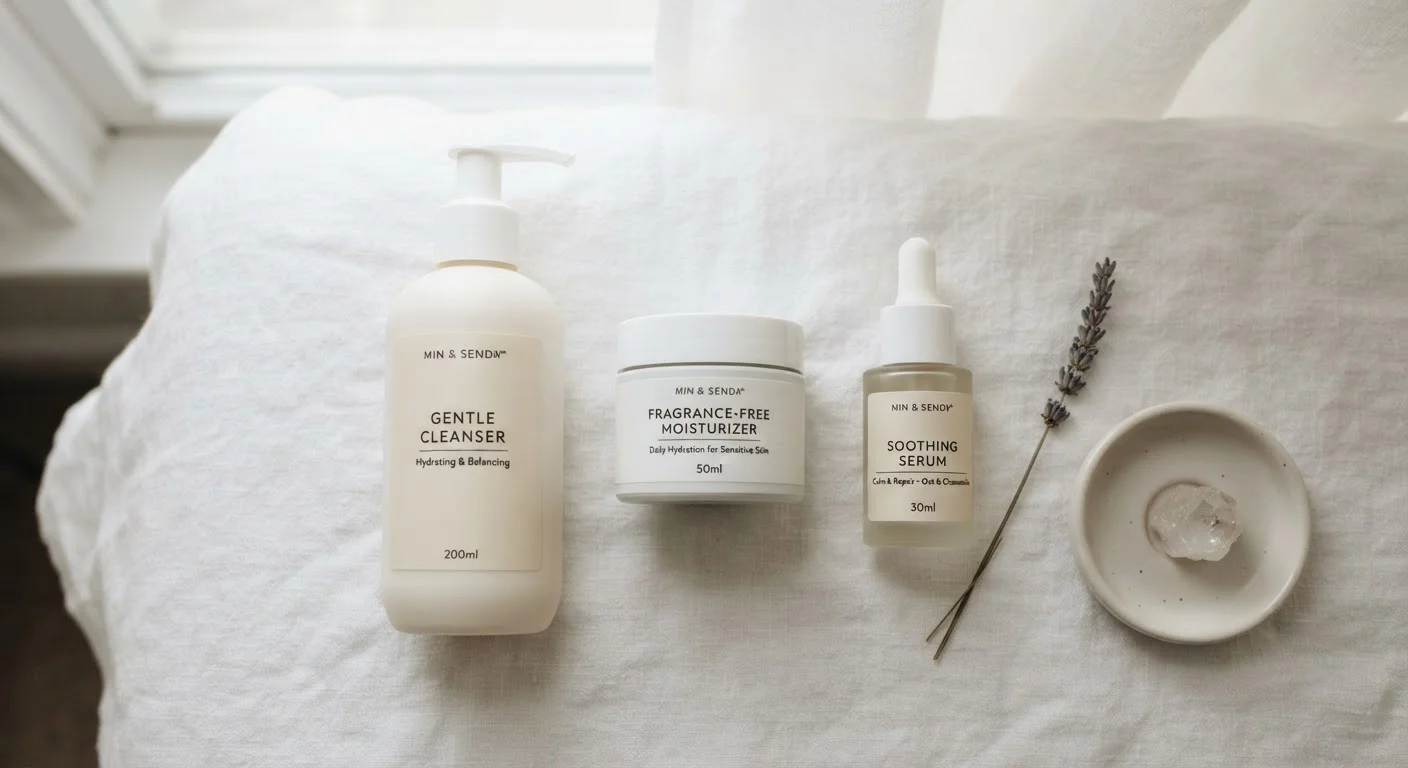
What Makes Skin Sensitive in the First Place
Sensitive skin isn't a single condition — it's a pattern of reactivity that can stem from several underlying causes. For many people, the root issue is a weakened skin barrier. When the outermost layer of skin (the stratum corneum) is compromised, it allows irritants, allergens, and environmental aggressors to penetrate more easily than they should. The result: redness, stinging, tightness, or breakouts after using products that others tolerate without issue.
Other contributors include genetic predispositions, underlying conditions like rosacea or eczema, and even over-exfoliation from a well-intentioned but overly aggressive routine. Understanding what the skin barrier does and why it matters is genuinely foundational before introducing any new products.
~60–70%
Adults who self-report sensitive skin
Multiple consumer surveys across the U.S. and Europe consistently find a majority of adults describe their skin as sensitive or very sensitive.
Top 5
Fragrance ranks among leading contact allergens
Dermatological patch test data consistently places fragrance mixtures among the most common causes of allergic contact dermatitis in the general population.
Ingredients to Approach with Caution
Not every ingredient that triggers a reaction is inherently harmful — but for sensitive skin types, certain categories deserve extra scrutiny before use.
- Fragrance (synthetic and natural): One of the most frequently cited sensitizers in skincare. Essential oils count as fragrance here too. See our deeper look at why fragrance shows up in so many products and what the research says.
- Alcohol (denatured/SD alcohol): Can disrupt the skin barrier over time, particularly with repeated use in high concentrations.
- Strong exfoliating acids: AHAs and BHAs like glycolic and salicylic acid are powerful actives. At higher concentrations or frequencies, they can overwhelm reactive skin.
- Retinoids: Effective but potentially irritating during the adjustment period. If you're curious, sorting retinol facts from fear is worth reading before you start.
- Preservatives like methylisothiazolinone (MI): Known contact allergens flagged by dermatological research communities for causing reactions in sensitized individuals.
"Natural" Doesn't Mean Non-Irritating
Plant-derived and essential-oil-based ingredients are frequently marketed as gentler alternatives, but many botanical extracts are potent sensitizers. Citrus oils, lavender, tea tree, and others appear regularly on dermatologists' lists of common contact allergens. Treat natural fragrance ingredients with the same caution as synthetic ones.
The goal isn't necessarily to avoid every active ingredient forever — it's to introduce them thoughtfully and one at a time so your skin can tell you clearly what it thinks.
Patch Testing: The Step Most People Skip
Patch testing is unglamorous but genuinely useful. The process is straightforward: apply a small amount of a new product to an inconspicuous area — the inner forearm or behind the ear are common choices — and leave it undisturbed for 24 to 48 hours. If you notice redness, itching, swelling, or any unusual sensation, that's important information before the product goes anywhere near your face.
When patch testing a new moisturizer or serum, wait the full 48 hours — not just overnight. Some delayed reactions don't appear until day two.
Allergic contact dermatitis can involve a delayed immune response (Type IV hypersensitivity), meaning reactions sometimes peak 48–72 hours after initial exposure rather than immediately.
Keep a short log when introducing new products — note the date, product name, and any skin changes you notice. It turns vague impressions into useful data.
Skin reactions can be subtle and easy to dismiss or misattribute. A simple record helps identify patterns, especially when reactions are mild or intermittent.
A few practical notes: test one product at a time, not several simultaneously. If you're adding multiple new items, stagger their introduction by at least a week so any reaction can be traced to its source. And don't patch test on broken, sunburned, or actively irritated skin — the results won't be reliable and could make things worse.
Building a Gentle Daily Routine
For sensitive skin, simplicity isn't a compromise — it's a strategy. A core routine of three to four steps is typically more sustainable and less reactive than a ten-step lineup. Here's a structure that tends to work well:
- Cleanser: Look for a low-pH, sulfate-free formula without added fragrance. Cleansing once daily (evenings) is often sufficient for sensitive skin that doesn't tolerate frequent washing.
- Moisturizer: Ceramides, glycerin, and hyaluronic acid are generally well-tolerated humectants and barrier-supporting ingredients. Applying to slightly damp skin can improve absorption.
- SPF (morning): Sun protection is non-negotiable, and mineral filters (zinc oxide, titanium dioxide) tend to be better tolerated than chemical UV filters by sensitive skin types.
Application order matters more than many people realize. Layering products in the wrong sequence can reduce effectiveness or increase irritation risk.
Less Really Is More Here
When building a sensitive-skin routine, resist the urge to add products to solve problems — often, stripping back first reveals which single step is causing trouble. Start with just cleanser, moisturizer, and SPF for two full weeks before adding anything new. Your skin will communicate clearly once the noise is reduced.
Once your daily routine feels stable, you might consider adding a weekly skincare reset to keep skin clear without overloading it daily. If your schedule is packed, the principles in building a routine when you're short on time translate directly to sensitive-skin care.
When to Involve a Dermatologist
A thoughtful routine can resolve a lot — but not everything. If you experience persistent redness that doesn't calm down between uses, burning sensations even with fragrance-free basics, recurring rash-like reactions, or significant skin changes that seem unrelated to product use, those are signals worth discussing with a board-certified dermatologist.
Self-Diagnosing Skin Conditions Has Real Limits
What reads as "sensitive skin" can sometimes be an undiagnosed condition requiring specific clinical treatment — not just a gentler cleanser. Attempting to manage conditions like rosacea or eczema through product swaps alone may delay appropriate care and worsen the underlying issue over time. A dermatologist visit is the most efficient path when symptoms are persistent, severe, or worsening.
Conditions like rosacea, contact dermatitis, perioral dermatitis, and eczema can all present as generalized «sensitivity» and each responds to different clinical approaches. A professional diagnosis shapes a far more targeted (and effective) path forward than product trial and error alone.
This article is for informational and educational purposes only and is not a substitute for professional medical or dermatological advice. If you have persistent or worsening skin concerns, consult a qualified healthcare provider.