
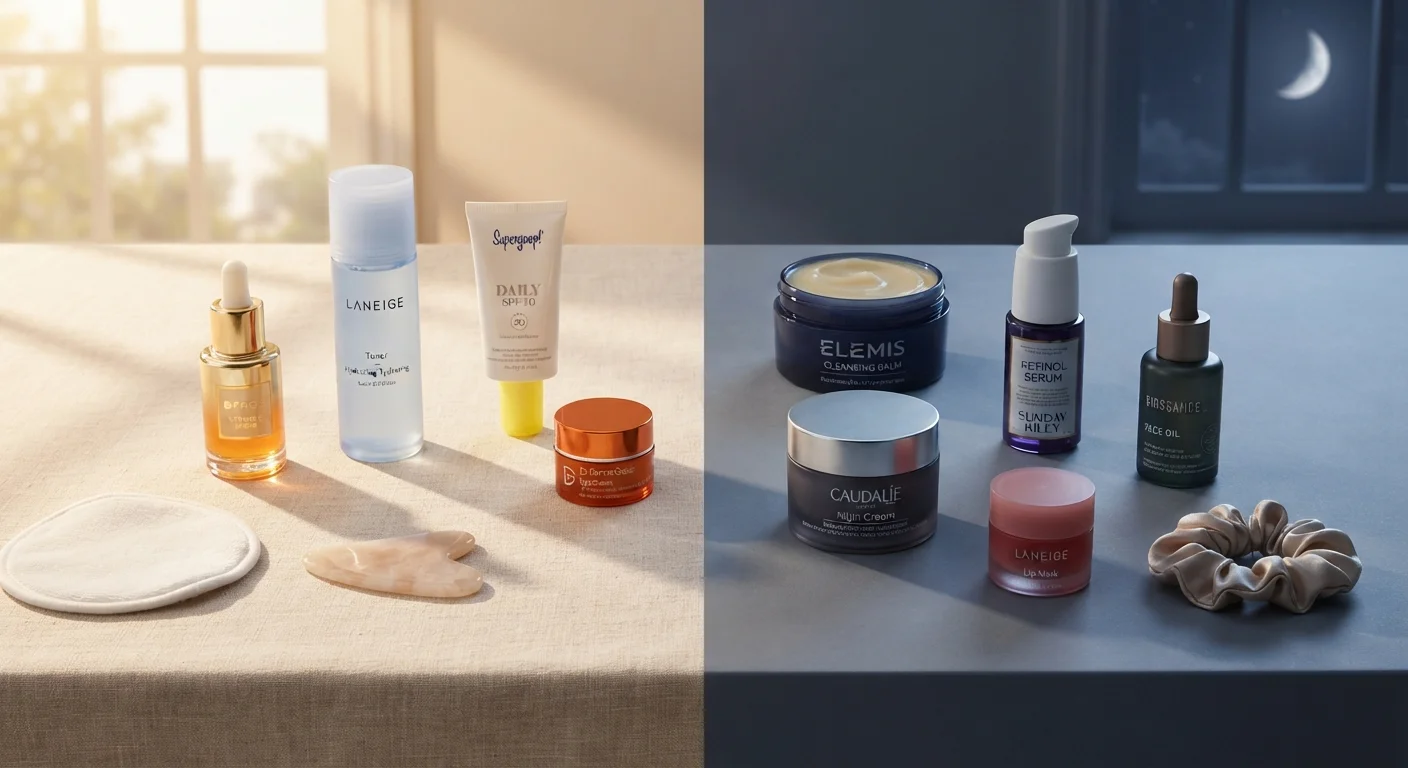
Why Your Skin Doesn't Work the Same Way Around the Clock
Skin isn't static — it operates on a biological rhythm called the circadian cycle, which means its behavior, needs, and vulnerabilities genuinely shift between day and night. This isn't a marketing concept invented to sell you more products. Dermatological research has established that skin cell turnover accelerates at night, while sebum (oil) production tends to peak in the early afternoon. The skin barrier, which acts as your body's first line of defense, also shows different permeability levels at different hours.
In the daytime, skin faces an onslaught: UV radiation, pollution, blue light, and physical contact all put stress on the outermost layers. At night, with those external threats removed, skin shifts into a more receptive, regenerative state. Understanding this helps explain why certain ingredients work better at specific times — and why the morning-vs-night question has a genuinely useful answer. For a deeper look at how the barrier fits into all of this, see Skin Barrier 101.
Morning Routine: Your Skin's Defense Strategy
Think of your morning routine as suiting up for battle. The goal isn't deep treatment — it's protection and preparation. A solid morning routine typically involves a gentle cleanse (or just a water rinse if your skin isn't oily), a lightweight moisturizer, and — this is non-negotiable — a broad-spectrum SPF of at least 30.
Antioxidants, such as vitamin C serums, are a smart morning addition because they help neutralize free radicals generated by UV exposure and pollution. They work synergistically with sunscreen rather than replacing it. What you generally want to avoid in the morning: potent exfoliants like AHAs or BHAs, which can temporarily increase photosensitivity, and retinoids, which degrade in sunlight and become less effective.
| Criterion | Morning Routine | Night Routine |
|---|---|---|
| Primary goal | Protection from UV and pollution | Repair and regeneration |
| Must-have step | Broad-spectrum SPF 30+ | Moisturizer or barrier support |
| Best active ingredient window | Antioxidants (vitamin C) | Retinoids, AHAs, BHAs |
| Cleanser intensity | Gentle or water rinse only | Full cleanse to remove makeup/SPF |
| Moisturizer weight | Lightweight, non-greasy | Richer or occlusive formulas |
| Skin barrier permeability | More defended | More receptive |
| Routine length | Typically shorter | Can accommodate more steps |
If you're juggling a packed schedule, a time-efficient grooming strategy can help you keep this routine realistic rather than aspirational.
Night Routine: When Skin Does Its Best Work
Nighttime is skin's golden hour. Cell regeneration ramps up, the barrier is less guarded, and without sun exposure in the equation, you can safely use ingredients that would otherwise cause sensitivity or degrade before they do their job.
This is when retinoids (vitamin A derivatives that support cell turnover), chemical exfoliants like glycolic acid or salicylic acid, and richer barrier-repair ingredients earn their place in your routine. A heavier moisturizer or an occlusive — a product that forms a seal over the skin to reduce moisture loss — is also better suited to night use, when it won't sit underneath makeup or SPF.
~11 PM–4 AM
Peak window for skin cell renewal
Research in chronobiology suggests skin cell division is most active during late-night hours, supporting the case for nighttime actives.
90%+
Of visible skin aging attributed to UV exposure
Dermatologists broadly cite photoaging from cumulative sun damage as the leading environmental cause of lines, spots, and texture changes.
The order in which you apply these products matters more than most people realize. If you're stacking multiple actives, layering them correctly is what determines whether they actually work. And if you want to go beyond the daily routine, a weekly skincare reset is worth building in once you've got the basics down.
A Note on Skin Sensitivity and New Actives
If you're introducing a new active ingredient — especially retinoids or exfoliating acids — start slowly: two to three nights per week before building frequency. Everyone's skin has a different tolerance threshold, and more isn't always better. This article provides general skincare education and is not a substitute for personalized advice from a dermatologist, particularly if you have a skin condition or are pregnant.
What Can (and Can't) Be Shared Across Both Routines
Not everything needs a day-and-night duplicate. A gentle, non-stripping cleanser works fine morning and night. A basic hydrating moisturizer can pull double duty. However, some products are genuinely time-specific and shouldn't be cross-used without thought.
- Sunscreen: Morning only — applying SPF at night is harmless but unnecessary.
- Retinoids: Night only — UV exposure degrades retinoids and increases skin sensitivity to sunlight.
- Vitamin C (ascorbic acid): Morning preferred — boosts antioxidant defense during daylight hours.
- AHAs and BHAs: Night preferred — reduces risk of photosensitivity. For a full breakdown, see our guide to chemical exfoliants.
- Hydrating serums (hyaluronic acid, niacinamide): Either time — versatile and generally non-sensitizing.
If you're just getting started and want a no-jargon foundation, your first skincare routine is the right place to begin before splitting into AM and PM territory.