
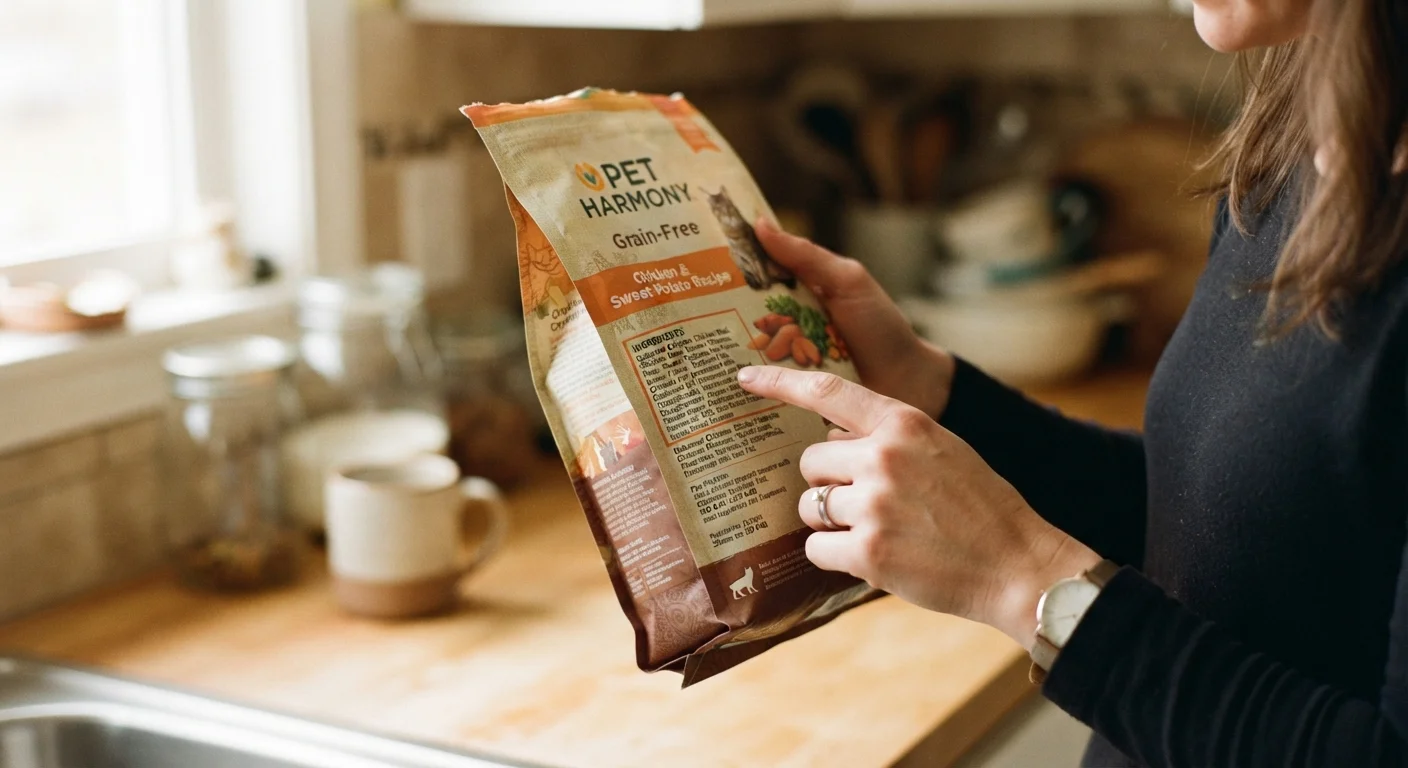
The Ingredient List: What the Order Really Means
Ingredients on a pet food label must be listed in descending order by weight before cooking. This pre-cooking weight standard matters because ingredients with high moisture content — like fresh chicken or beef — weigh significantly more before processing than after. A food listing 'chicken' first may contain less actual chicken protein than one listing 'chicken meal' third, since chicken meal is already dried and concentrated.
This doesn't mean fresh ingredients are inferior, but it does mean the ingredient list alone is an unreliable guide to protein quantity. Ingredient splitting — the practice of listing multiple forms of the same ingredient separately (for example, 'ground corn,' 'corn gluten meal,' and 'corn flour') — can also push individually smaller components further down the list, obscuring their combined contribution to the formula.
Check the Life Stage Before Buying
Always confirm which life stage the AAFCO statement covers before purchasing a pet food. A food formulated for adult maintenance may lack the caloric density, protein levels, or key nutrients required for growing puppies, kittens, or pregnant and nursing animals. When in doubt, ask your veterinarian which life-stage designation is appropriate for your pet.
For a broader look at how format affects your pet's nutrition, see our article on how dry and wet food compare.
The Guaranteed Analysis: Ranges, Not Recipes
The guaranteed analysis panel lists four required values: minimum crude protein, minimum crude fat, maximum crude fiber, and maximum moisture. Note the language — minimums and maximums — not exact figures. A food meeting a minimum of 26% crude protein could contain 26% or substantially more; the label won't tell you which.
Comparing guaranteed analysis values across wet and dry foods also requires a conversion step. Because wet food contains far more moisture (often 75–85%), its protein percentage appears much lower on an as-fed basis than the same food expressed on a dry-matter basis. Without converting both products to a common moisture baseline, the numbers aren't directly comparable.
~40
U.S. states that have adopted AAFCO model regulations
AAFCO reports that the majority of U.S. states use its model pet food regulations as the basis for state-level labeling enforcement.
75–85%
Moisture content typical in wet pet food
This high moisture percentage is why guaranteed analysis protein figures for wet and dry foods cannot be compared directly without a dry-matter conversion.
2
Methods to substantiate an AAFCO adequacy claim
AAFCO allows manufacturers to substantiate nutritional adequacy either through nutrient profile formulation or through a controlled animal feeding trial.
Additional nutrients — calcium, phosphorus, taurine, omega fatty acids — may appear voluntarily, but are not universally required unless a specific claim is made about them.
AAFCO Statements: The Most Important Line on the Label
The nutritional adequacy statement — sometimes called the AAFCO statement — is arguably the most meaningful line on any pet food package. It tells you two things: which life stage the food is designed for, and how that claim was substantiated.
There are two methods a manufacturer can use. The first is formulation: the recipe is calculated to meet AAFCO's established nutrient profiles on paper. The second is a feeding trial: animals were actually fed the diet under controlled conditions to verify the food supports health over time. Feeding-trial-verified foods carry a higher standard of evidence, though both are legally acceptable.
If no AAFCO statement appears, the food may be intended as a treat or supplement — not a complete diet. Always check which life stage is covered; a food adequate for adult maintenance may not meet the higher nutrient demands of a puppy or a pregnant animal.
“The AAFCO statement is the single most useful piece of information on a pet food label. It tells you what life stage the food is designed for and whether that claim was actually tested — not just calculated on paper.”
— Lisa Freeman, Veterinary nutritionist and professor at a leading veterinary school
What Labels Don't Have to Tell You
Regulatory requirements define a floor — not a ceiling — for disclosure. Pet food manufacturers are generally not required to reveal where individual ingredients are sourced, which country specific components come from, or how ingredients are processed. A label listing 'fish meal' doesn't specify species, origin, or whether the meal was rendered from whole fish or byproducts.
Marketing language adds another layer of ambiguity. Terms like 'holistic,' 'premium,' 'human-grade,' and 'ancestral' carry no standardized regulatory definition in the pet food context. They may reflect genuine quality commitments by some manufacturers, but the words themselves are not verified by any oversight body.
The word 'natural' does have an AAFCO working definition — it generally means no artificial flavors, colors, or preservatives — but it says nothing about ingredient sourcing or overall nutritional quality. For context on how similar labeling ambiguity plays out with human nutrition, our overview of reading human nutrition labels shows how differently the two systems are structured.
Common nutrition misconceptions extend to pet food as well. Our piece on pet nutrition myths veterinarians frequently correct addresses several claims that regularly appear in pet food marketing.
When to Involve Your Veterinarian
Label literacy is a useful starting point, but it doesn't replace professional nutritional guidance. If your pet has a diagnosed health condition, food sensitivities, or specific life-stage needs (such as pregnancy, senior age, or recovery from illness), a licensed veterinarian or board-certified veterinary nutritionist can help you evaluate whether a specific food is appropriate. General label information is not a substitute for individualized advice.
This article is for informational purposes only and does not constitute veterinary or medical advice. Consult a licensed veterinarian for guidance specific to your pet's health and dietary needs.