
Why the Nutrition Facts Panel Exists
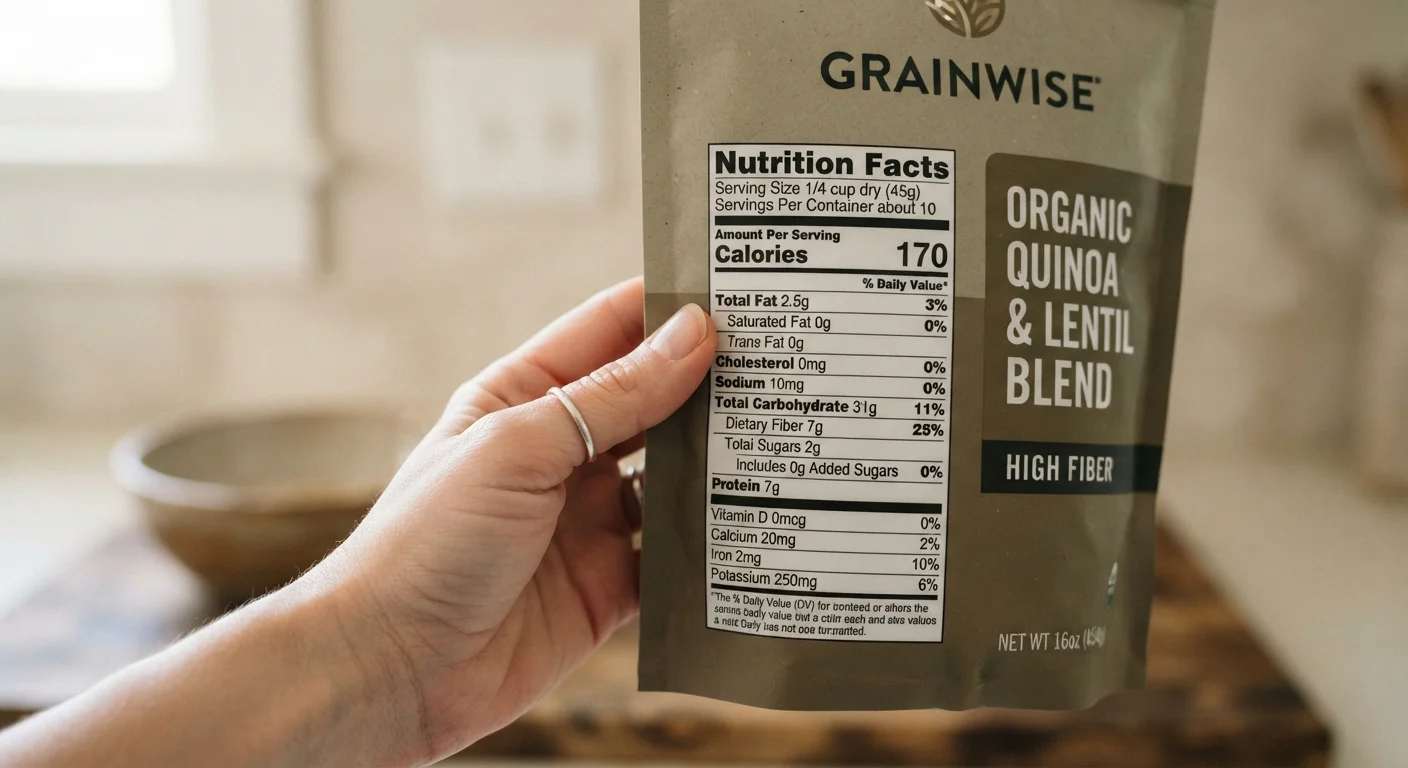
The Nutrition Facts label is a federally mandated tool, regulated by the U.S. Food and Drug Administration (FDA) and required on most packaged foods sold in the United States. Its format was significantly updated in 2016 - with full industry compliance by 2020 - to reflect advances in nutrition science and shift focus toward nutrients most relevant to public health today.
Understanding the label's structure helps you move past marketing language on the front of a package and evaluate what's actually inside. This is general nutritional education; for guidance specific to your health needs, consult a qualified healthcare professional or registered dietitian.
What you will need
Nutrition Facts Panel
The FDA-mandated label on most packaged foods in the US - the primary document you'll be reading and interpreting.
Ingredient List
Listed beneath or alongside the nutrition panel; reveals what's actually in the food and in what relative proportion.
Daily Value Reference Chart
A general reference (available from the FDA) showing standard daily nutrient targets used to calculate % Daily Values on labels.
How to Read a Nutrition Label Step by Step
Working through a nutrition label takes less than a minute once you know the order of operations. Follow the steps below using any packaged food you have on hand.
Start With Serving Size
Every number on a nutrition label is tied to one serving - not necessarily the whole package. The serving size appears at the top of the panel in both a common household measure (e.g., "1 cup") and grams. Directly below it, servings per container tells you how many of those portions are in the package.
If a bag of chips lists 150 calories per serving and contains 3 servings, eating the whole bag means consuming 450 calories. This single step reframes everything else on the label.
Read the Calorie Count in Context
Calories measure the total energy a serving provides. This number is prominently displayed because energy balance matters - but calories alone don't reveal food quality. A 200-calorie serving of almonds and a 200-calorie serving of a sugary snack cake deliver very different nutrients.
For deeper insight into how calorie density affects food choices, see our guide on caloric density and how volume and calories don't always match.
Evaluate Fats, Sodium, and Added Sugars
These three nutrients appear in the upper portion of the nutrient list because most Americans benefit from monitoring them:
- Total fat is broken into saturated fat and trans fat. Saturated fat contributes to LDL cholesterol when consumed in excess; trans fat (largely phased out but still worth checking) raises LDL and lowers HDL cholesterol.
- Sodium is listed in milligrams. A single serving of some processed foods can account for a significant share of the 2,300 mg daily limit recommended by federal dietary guidelines.
- Added sugars are now required to appear as a sub-line under total sugars. This distinction matters because added sugars - syrups, sweeteners, and concentrated fruit juices added during processing - behave differently metabolically than the naturally occurring sugars in whole fruit or dairy. Our article on added sugar vs. natural sugar explains why this distinction matters.
Look for Beneficial Nutrients
Below the line, the label lists nutrients most Americans tend to under-consume: dietary fiber, protein, vitamin D, calcium, iron, and potassium. Higher % Daily Values here are generally a positive sign.
Fiber supports digestive health and cardiovascular function - explore more in our piece on dietary fiber and why most Americans aren't getting enough. Protein supports muscle maintenance and satiety. For a fuller picture of what macronutrients do, see macronutrients explained.
Decode the Ingredient List
Ingredients are listed in descending order by weight. If a refined grain, sugar, or oil appears in the first two or three positions, that ingredient makes up a substantial portion of the product. Conversely, an ingredient near the end of a long list is present in only a small quantity, regardless of how prominently it's featured on the front of the package.
Sugars appear under many names - including cane juice, maltose, dextrose, and high-fructose corn syrup - so scanning the full list helps identify how much sweetener is actually present even when "added sugars" grams look modest per serving.
Use % Daily Value as a Quick Compass
The FDA offers a simple rule of thumb: 5% DV or less per serving is considered low for a nutrient, while 20% DV or more is considered high. Use this to quickly assess whether a food is a meaningful source of something beneficial - or a significant contributor of something you may want to limit.
Labels Are a Guide, Not a Prescription
Nutrition facts panels provide general population reference values, not personalized dietary targets. Individual calorie and nutrient needs vary based on age, sex, activity level, and health status. If you have a specific medical condition or dietary requirement, consult a registered dietitian or your healthcare provider before making significant changes to your diet.
Putting It All Together
No single food makes or breaks a diet - patterns over time matter more than individual items. Use the nutrition label as one input among many: it tells you what's in a serving, how that fits within general daily reference values, and what the product is primarily made of.
Reading labels consistently builds nutritional literacy gradually. Over time, you'll develop an intuitive sense of where common foods fall on key nutrients without needing to scrutinize every number. That habit - more than any specific threshold - is what translates label reading into genuinely healthier eating.
Front-of-Package Claims Can Be Misleading
Terms like "natural," "multigrain," or "low fat" on the front of a package are marketing language, not regulated nutritional guarantees. A "low fat" product may still be high in added sugars or sodium. Always flip to the nutrition facts panel and the ingredient list for the full picture. Our article on popular nutrition claims science doesn't quite support explores this further.
This article provides general nutritional information and is not a substitute for personalized medical or dietary advice. Consult a qualified healthcare provider or registered dietitian for guidance tailored to your individual health needs.