Why the Distinction Matters
Pet owners frequently face a scene that triggers instant anxiety: a flurry of paws, an audible growl, or a sudden chase through the house. The instinct is often to intervene immediately - but separating normal rough play from genuine aggression is critical before reacting. Misreading play as aggression can interrupt healthy social bonding; misreading aggression as play can leave an animal distressed or injured.
Cats and dogs have evolved distinct communication styles, and those differences compound the challenge. A dog's play bow reads as clearly as a neon sign; a cat's equivalent - a loosely curved tail and soft, half-closed eyes - is far subtler. Understanding the baseline behavior of each species is the foundation for accurate interpretation. For owners managing multiple pets, this is especially important, as feline territorial dynamics can make it harder to distinguish conflict from normal social negotiation.
Reading the Body Language: Play vs. Aggression
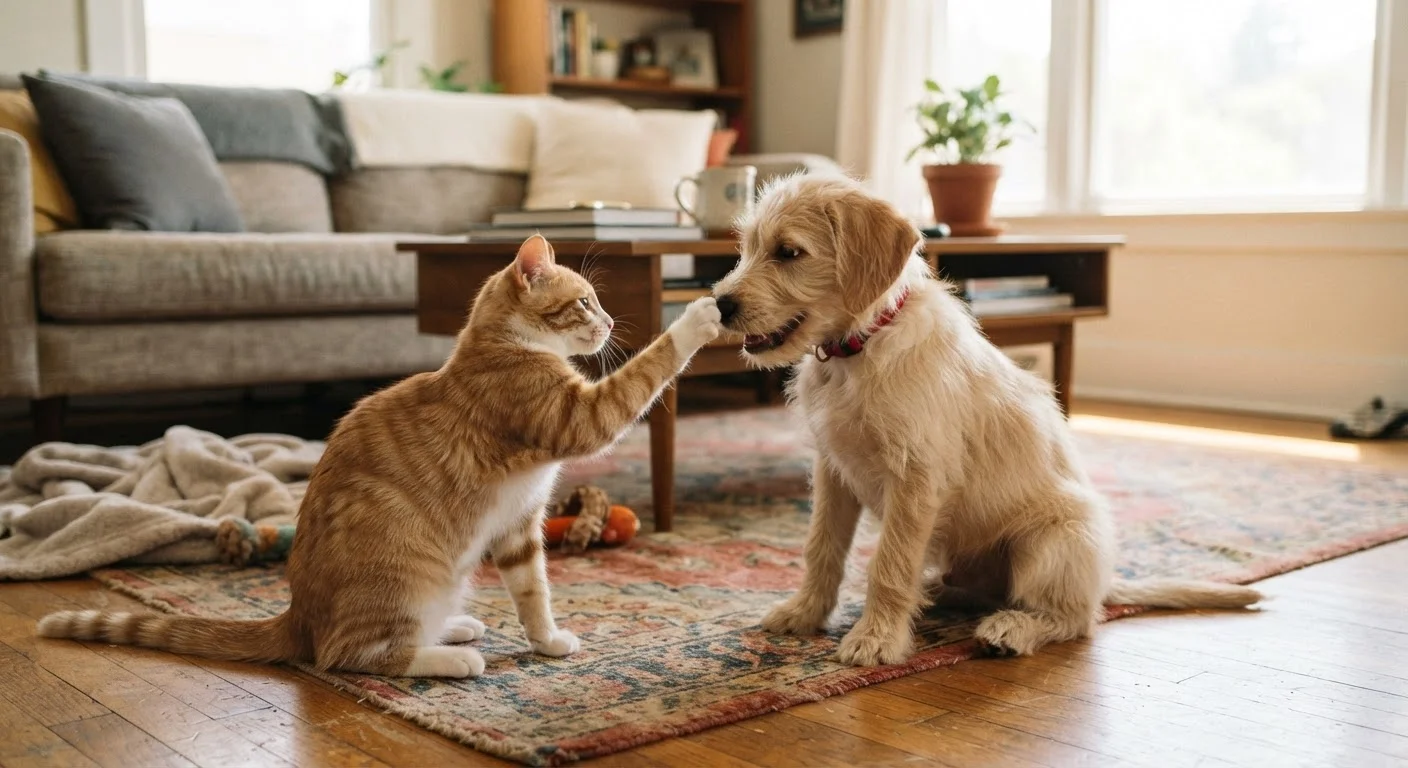
Body language is the single most reliable signal. During genuine play, both dogs and cats display loose, fluid body posture. Dogs bounce, exaggerate movements, and frequently pause. Cats engaged in play show relaxed ears, a curved or gently puffed tail, and will disengage to groom or rest before re-engaging.
Genuine aggression looks different in almost every dimension. Watch for:
- Stiff, rigid posture - the animal freezes or moves with deliberate, controlled tension
- Piloerection (raised hackles in dogs, puffed tail or ridge of fur in cats)
- Direct, unblinking stare combined with a lowered head
- Growls or hisses that do not de-escalate when the other animal backs away
- Flattened ears pressed tightly against the skull
In play, vocalizations are typically brief and do not persist. Sustained, low growling - especially paired with still posture - is a warning signal, not an invitation.
| Criterion | Rough Play | Genuine Aggression |
|---|---|---|
| Body posture | Loose, bouncy, fluid | Stiff, rigid, frozen |
| Ear position | Relaxed or forward | Pinned flat against skull |
| Vocalizations | Brief, intermittent | Sustained growl or hiss |
| Role reversal | Both animals take turns | One animal always pursued |
| Willingness to re-engage | Returns voluntarily after pause | Victim retreats or hides |
| Physical contact outcome | Inhibited, no injury | May cause puncture wounds |
| Post-interaction behavior | Calm, grooming, resting | Hiding, vigilance, stress |
It is also worth noting that stress signals in pets can appear before outright aggression escalates, giving owners an earlier window to de-escalate the situation.
The Role Reversal Test and Other Practical Checks
One of the most practical tools for distinguishing play from aggression is the role reversal test: during genuine play, animals swap the roles of chaser and chasee. If one animal is always the pursuer and the other is always fleeing without any willingness to re-engage, the interaction has likely become one-sided and stressful.
Additional checks that help clarify the picture:
- Pause and re-engage: Playful animals naturally pause, look away, and then willingly return. Aggression rarely features these voluntary breaks.
- Injury assessment: Play bites are inhibited - they make contact but rarely break skin. Genuine bites are often puncture wounds.
- Recovery behavior: After play, both animals typically groom, eat, or rest calmly. After a genuine conflict, at least one animal may remain vigilant, hide, or refuse food.
When Aggression Appears Without Warning
A pet that has never shown aggression and suddenly attacks another animal or a person may be in pain or experiencing a medical event. Conditions such as arthritis, dental disease, hyperthyroidism in cats, or neurological changes can all lower an animal's threshold for aggressive response. Do not attempt behavioral correction without first ruling out a physical cause through a veterinary examination.
When aggression appears suddenly in an animal with no prior history of it, resist the immediate assumption that it is behavioral. Medical causes of behavioral change - including pain, hormonal shifts, and neurological conditions - are common enough that a veterinary evaluation should come first.
How to Respond Safely
If you determine the interaction has crossed into genuine aggression, the priority is safety - yours and the animals'. Do not reach between two animals in an active altercation with your bare hands; this is the most common cause of owner injury. Instead, use a loud noise to interrupt (clapping, a firm verbal cue), or place a physical barrier - a couch cushion, a piece of cardboard - between them.
Once separated, give each animal time to settle in a calm, isolated space before reintroducing them under supervision. Avoid punishing either animal; punishment during or after an aggressive episode does not address the cause and can worsen anxiety-driven aggression.
For cats specifically, changes in behavior that look like aggression can sometimes overlap with illness. The subtle behavioral shifts that signal illness in cats - including increased irritability and reduced tolerance of touch - are worth reviewing if you notice a pattern. If the aggressive behavior is persistent, escalating, or accompanied by other symptoms, consult a veterinarian or a credentialed applied animal behaviorist for a structured assessment.
This article is for general educational purposes only and is not a substitute for professional veterinary or behavioral advice. Always consult a qualified veterinarian if you have concerns about your pet's health or behavior.