Why Two Foods of Equal Size Can Have Very Different Calorie Counts
Picture a cup of raw spinach beside a cup of granola. Both fill the same measuring cup, but their calorie counts are worlds apart - roughly 7 calories for the spinach versus 400 or more for the granola. That gap is caloric density at work.
The core idea is straightforward: calories per gram of food. What drives that number up or down is largely the food's composition. Water adds weight without adding any calories. Fiber adds bulk. Fat, by contrast, is the most calorie-concentrated macronutrient, delivering around 9 kcal per gram. So a food's ratio of water, fiber, and fat largely determines where it falls on the density spectrum.
This matters in everyday eating because our stomachs and hunger signals respond partly to the physical volume and weight of what we consume - not just the calorie total. A meal that takes up more space can feel more satisfying even if it contains the same number of calories as a smaller, denser one.
9 kcal/g
Calories per gram of dietary fat
Fat provides more than twice the calories per gram compared to protein or carbohydrates, which each deliver approximately 4 kcal per gram - a key reason fat-rich foods tend to be calorie-dense.
0 kcal/g
Calories contributed by water in food
Water adds weight and volume to food with zero calorie contribution, which is why foods with high water content - like most vegetables and fruits - tend to fall at the low end of the caloric density spectrum.
~600 kcal
Calories in 100g of mixed nuts
Mixed nuts are among the more calorie-dense whole foods, providing around 600 kcal per 100 g - highlighting how a small serving can represent a significant calorie contribution.
Low vs. High Caloric Density: What Each Looks Like in Practice
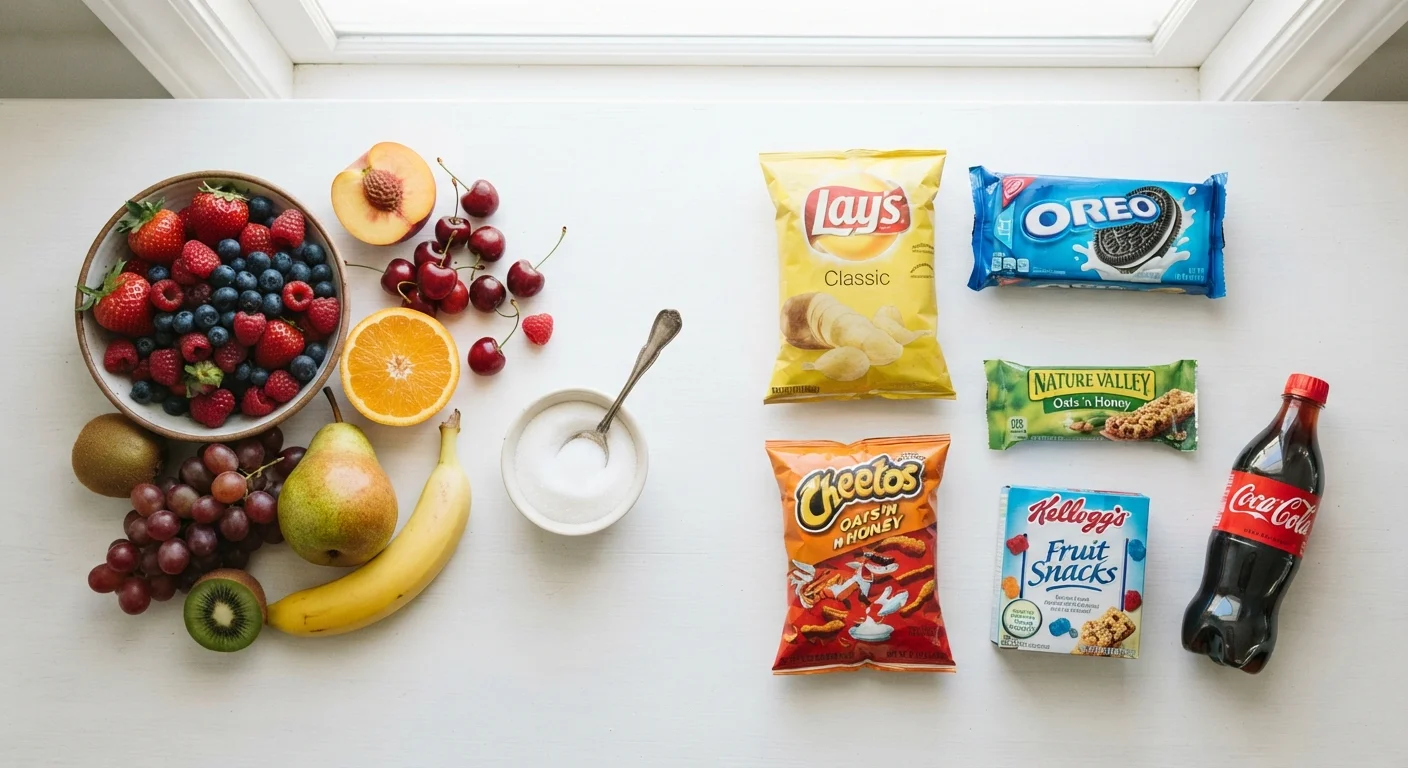
Rather than thinking in rigid categories, it helps to think of caloric density as a spectrum. At the low end sit foods with a high water and fiber content - most raw vegetables, berries, broth-based soups, and plain cooked legumes. At the high end sit oils, nuts, seeds, cheese, and many ultra-processed snack foods.
The middle of the spectrum includes foods like cooked grains, lean proteins, and starchy vegetables - nutritious staples that provide solid calorie fuel alongside meaningful nutrients.
One thing worth emphasizing: position on the density spectrum doesn't determine a food's nutritional value. Almonds and salmon are calorie-dense but rich in healthy fats, protein, and micronutrients. Knowing where a food falls helps you understand portion dynamics, not whether the food is "good" or "bad." For a broader look at how individual foods fit a balanced plate, see our Plate Composition 101 guide.
Using Caloric Density as a Practical Eating Tool
Understanding caloric density doesn't require counting every calorie. Instead, it offers a useful mental model for building meals that feel satisfying and fit within your overall nutrition goals.
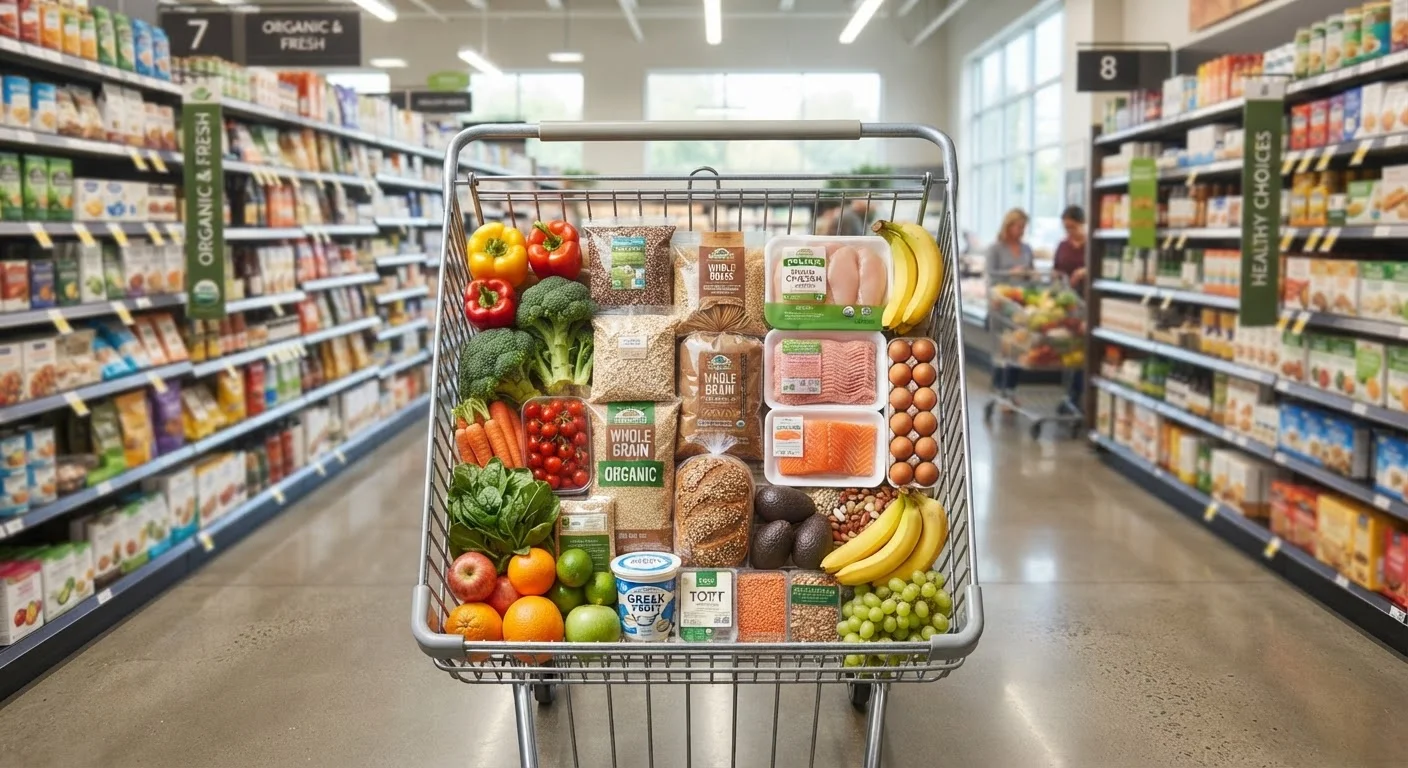
A common practical approach is to anchor meals around lower-density foods - vegetables, fruits, legumes - and then add moderate portions of higher-density ingredients for flavor, satiety, and nutrition. This way, total meal volume stays substantial without the calorie count skyrocketing.
Build Your Plate with Volume in Mind
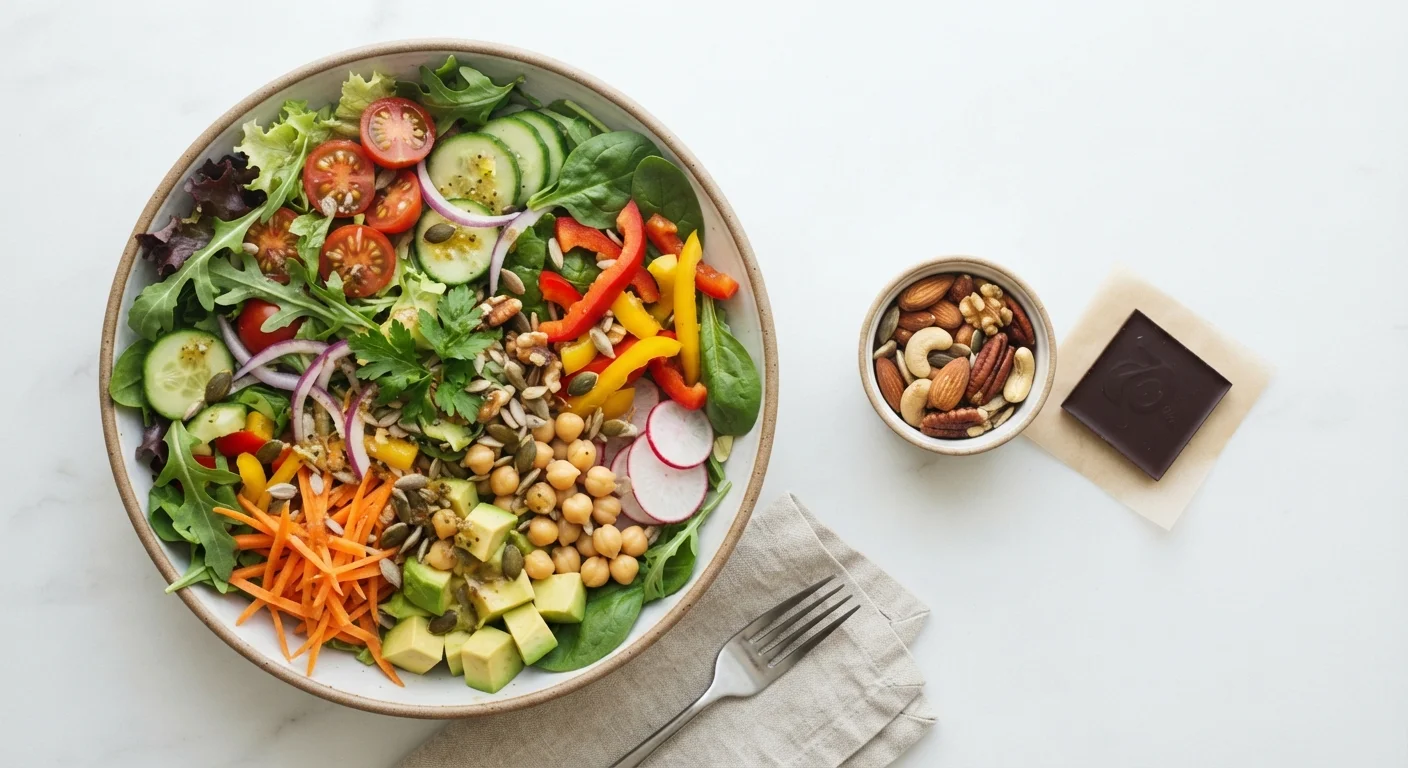
Try filling at least half your plate with non-starchy vegetables or fruit before adding other components. These lower-density foods contribute fiber, water, and micronutrients while keeping your overall calorie count in a reasonable range. This approach doesn't require measuring or tracking - it's a visual shortcut that naturally shifts your meal's caloric density downward.
Caloric density also becomes clearer when you learn to read nutrition labels. The calories-per-serving figure is useful, but comparing calories per 100 grams across similar foods gives you a more apples-to-apples picture. Our guide to reading nutrition labels walks through exactly how to do that.
It's also worth being aware that caloric density can be a hidden factor in otherwise health-conscious routines. Dried fruit, smoothies, and cooking oils can add significant calories to meals that feel light - something our article on common nutrition pitfalls explores in more detail.
This article is for general informational and educational purposes only and does not constitute medical or dietary advice. For guidance tailored to your individual health needs, consult a qualified healthcare provider or registered dietitian.