
What Balanced Eating Actually Means
Balanced eating is one of those phrases used so frequently it can lose its meaning. At its core, it refers to consistently consuming a variety of foods that collectively supply the energy, macronutrients (carbohydrates, protein, and fat), micronutrients (vitamins and minerals), and fiber the body needs to function well.
What it does not mean: eating perfectly at every meal, eliminating food groups, or following a rigid plan. Dietary balance is better understood as a pattern across days and weeks rather than a single-meal achievement. A lunch heavy on refined carbohydrates isn't a nutritional failure if the rest of the day - and week - includes vegetables, protein, and whole grains.
This distinction matters because it removes the all-or-nothing thinking that often derails otherwise reasonable eating habits. Nutrition science consistently supports dietary patterns over isolated food choices as the primary driver of health outcomes.
This article is for informational purposes only and is not a substitute for personalized medical or dietary advice. Consult a qualified healthcare professional or registered dietitian for guidance suited to your individual needs.
The Building Blocks: Nutrients That Should Appear Daily
Before walking through a sample week, it helps to know what a nutritionally sound day actually requires. The following elements form the foundation of strong eating habits:
- Vegetables and fruit: Diverse colors signal diverse phytonutrients and antioxidants. Aiming for a mix across the day - not just one serving - supports immune function, gut health, and chronic disease risk reduction.
- Whole grains: Foods like oats, brown rice, quinoa, and whole-wheat bread provide sustained energy, B vitamins, and fiber that refined grains largely lack.
- Lean or plant-based protein: Protein supports muscle maintenance, satiety, and immune function. Sources include eggs, poultry, fish, legumes, tofu, and low-fat dairy.
- Healthy fats: Unsaturated fats from sources like avocado, nuts, seeds, and olive oil support cardiovascular health and fat-soluble vitamin absorption.
- Fiber: Found in vegetables, fruits, legumes, and whole grains, fiber supports digestive health, helps regulate blood sugar, and contributes to satiety.
- Hydration: Water is often overlooked in nutrition discussions. Adequate fluid intake supports nearly every physiological process.
90%
Americans not meeting vegetable intake recommendations
According to the U.S. Centers for Disease Control and Prevention, roughly 9 in 10 Americans fall short of federal vegetable intake guidelines.
16g
Average daily fiber intake in the U.S.
The American Heart Association notes that Americans average about 16 grams of fiber per day, well below the recommended 25-38 grams.
3x
More nutrients in whole vs. refined grains
Whole grains retain the bran and germ, providing significantly more fiber, B vitamins, and minerals than their refined counterparts, per USDA data.
A Day-by-Day Look at the Week
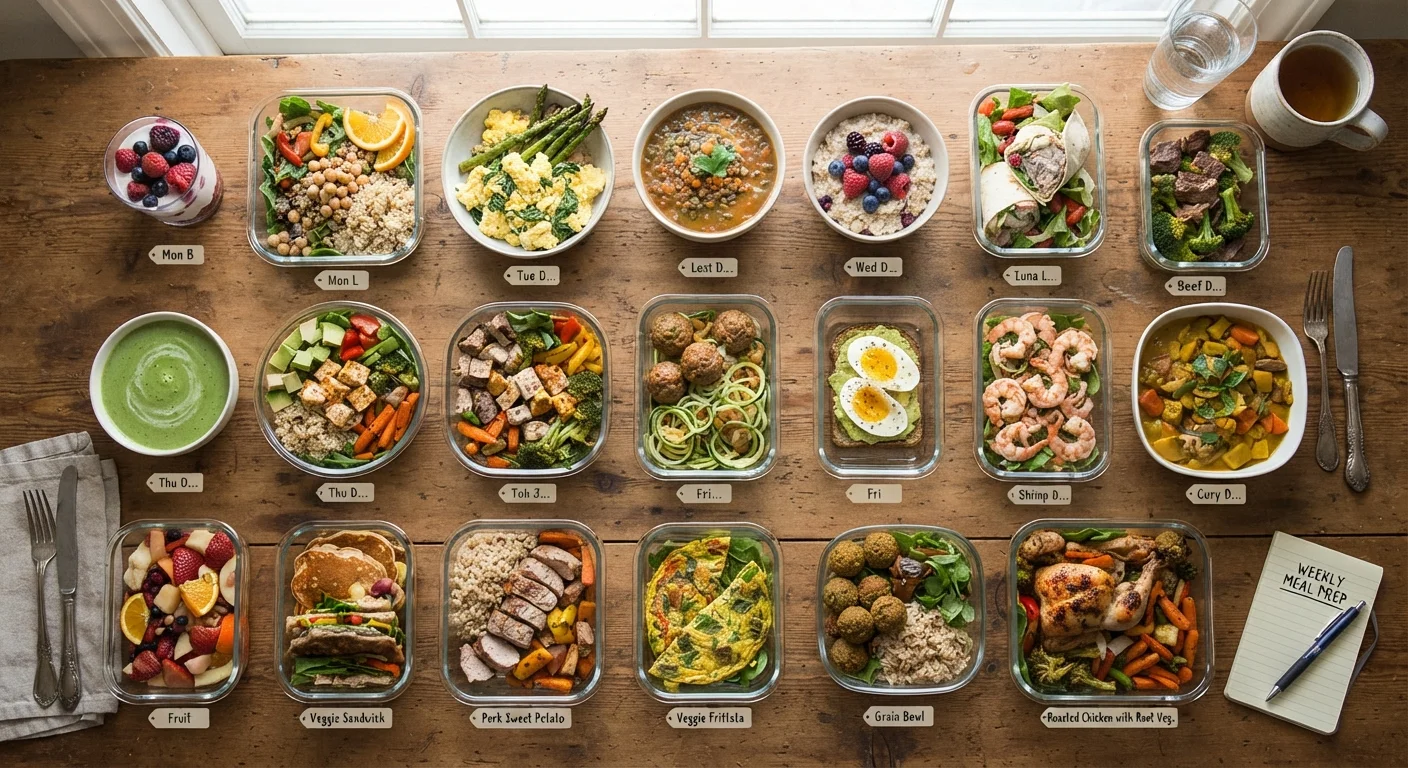
The following is an illustrative example of how balanced eating principles might translate into realistic daily choices. It is not a prescriptive meal plan - individual needs vary based on age, activity level, health status, and other factors.
Monday - Setting the Tone
Breakfast: Oatmeal topped with berries and a handful of walnuts. Lunch: A large salad with leafy greens, chickpeas, cucumber, and a drizzle of olive oil. Dinner: Baked salmon with roasted broccoli and brown rice. The week opens with fiber, omega-3 fats, and plant diversity all present.
Tuesday - Leaning on Convenience Without Sacrificing Quality
Breakfast: Greek yogurt with sliced banana and a sprinkle of ground flaxseed. Lunch: Whole-grain wrap with turkey, spinach, tomato, and hummus. Dinner: Lentil soup with crusty whole-grain bread. Convenience foods like wraps and canned lentils make quality nutrition accessible on busy days.
Wednesday - Mid-Week Reset
Breakfast: Two scrambled eggs with sautéed spinach and a slice of whole-grain toast. Lunch: Leftover lentil soup plus an apple and a small handful of almonds. Dinner: Stir-fried tofu with mixed vegetables and brown rice. Repurposing leftovers reduces both food waste and decision fatigue.
When planning meals, build backward from your vegetable - choose the protein and grain to complement it, not the other way around. This single shift dramatically increases vegetable variety across the week.
Most people plan meals around their protein source, which tends to crowd out vegetables. Reversing the sequence makes plants the anchor, which aligns with dietary patterns associated with better long-term health outcomes.
Keep two or three 'emergency proteins' on hand at all times - canned sardines, hard-boiled eggs, or single-serve Greek yogurt. When the plan falls apart, these prevent a nutritional gap from becoming a pattern.
Convenience is one of the strongest predictors of food choice. Having shelf-stable or ready-to-eat protein options prevents the default to lower-nutrient fast options when time or energy is short.
Thursday - Adding Variety
Breakfast: Smoothie made with unsweetened almond milk, frozen spinach, banana, and nut butter. Lunch: Grain bowl with farro, roasted sweet potato, kale, and tahini dressing. Dinner: Grilled chicken thighs with steamed green beans and quinoa. Rotating grains and protein sources broadens the nutrient profile across the week.
Friday - Social and Flexible
Breakfast: Whole-grain toast with avocado and a poached egg. Lunch: Bean and vegetable chili. Dinner: Shared restaurant meal - a reasonable portion of a pasta dish with a side salad. Social eating and restaurant meals don't undermine balanced nutrition; flexibility is part of the pattern.
Saturday - Higher Energy Day
Breakfast: Whole-grain pancakes with fresh fruit and a side of cottage cheese. Lunch: Large vegetable and bean burrito with salsa. Dinner: Homemade veggie-loaded pizza on a whole-wheat crust. Active weekend days may call for slightly more carbohydrates and calories - listening to hunger cues is appropriate here.
Sunday - Slower Pace, Intentional Prep
Breakfast: Veggie omelet with whole-grain toast and sliced fruit. Lunch: Homemade chicken and vegetable soup. Dinner: Roasted root vegetables, baked cod, and a simple green salad. Sunday often allows time for batch cooking - washing produce, cooking grains, or portioning snacks - which makes the following week significantly easier.
Patterns That Make the Difference
Looking across the week above, several reliable patterns emerge that translate directly into nutritional strength:
- Vegetables appear at most meals, including breakfast, which is where many people have the widest gap.
- Protein is distributed throughout the day rather than concentrated at dinner, which research suggests supports muscle protein synthesis more effectively.
- Whole grains consistently replace refined ones, delivering more fiber and micronutrients with each meal.
- Meals are repeated or repurposed, reducing the mental load of planning while reinforcing good habits.
- One flexible meal doesn't derail the week. Friday dinner at a restaurant is part of a normal, sustainable life - not an exception to manage with guilt.
For a practical tool to evaluate how your own week stacks up, the weekly nutrition self-check offers useful reflection questions to identify gaps without judgment.
Batch Cooking Saves the Week
Cooking a large portion of grains (like brown rice or farro) and roasting a sheet pan of vegetables on Sunday takes under an hour and provides ready ingredients for three to four weekday meals. This single habit reduces the temptation to make less nutritious choices when time is short. Think of it as nutritional infrastructure, not extra effort.
Common Gaps Worth Watching
Even thoughtfully constructed eating patterns can have blind spots. The most common ones nutritionists observe include:
- Insufficient vegetables at breakfast and lunch - most people hit their target only at dinner.
- Over-relying on the same few protein sources, missing the distinct amino acid and micronutrient profiles different foods offer.
- Underestimating liquid calories from sweetened beverages, specialty coffees, and juices, which can quietly add significant sugar and calories.
- Skimping on fiber-rich foods - despite fiber's critical role in gut health and satiety, most Americans fall short of recommended intake.
For a deeper look at how well-intentioned habits can still leave gaps, nutrition pitfalls that sneak into healthy eating routines is worth reviewing alongside any personal diet audit.
Don't Mistake 'Healthy-Sounding' for Nutritious
Foods marketed with terms like 'natural,' 'clean,' or 'high-protein' are not automatically nutrient-dense. Granola bars, flavored yogurts, and smoothie blends often contain added sugars comparable to dessert items. Reading nutrition labels - especially the added sugars and fiber lines - gives a clearer picture than front-of-package claims.
Applying This to Your Own Week
Translating a sample week into your own life doesn't require replicating the meals above. Instead, use the underlying principles as a framework:
- Include a vegetable or fruit at every meal, not just dinner.
- Choose a whole grain over a refined one when the option exists.
- Rotate protein sources across the week - animal and plant-based - to broaden your nutrient intake.
- Plan at least one batch-cooking or prep session to reduce friction during the busier days.
- Allow flexibility without abandoning the pattern entirely.
If cost is a concern, strong nutrition doesn't require expensive ingredients. The principles of eating well on a budget show how whole foods like beans, oats, frozen vegetables, and eggs deliver excellent nutritional value at a low per-serving cost.
And for those who want to pair their nutrition habits with physical activity, movement snacks throughout the day offer a complementary approach that doesn't require a gym or large blocks of time.
This article provides general nutrition information for educational purposes only. It is not intended as personalized dietary or medical advice. Individual nutritional needs vary; consult a registered dietitian or qualified healthcare provider before making significant changes to your diet.