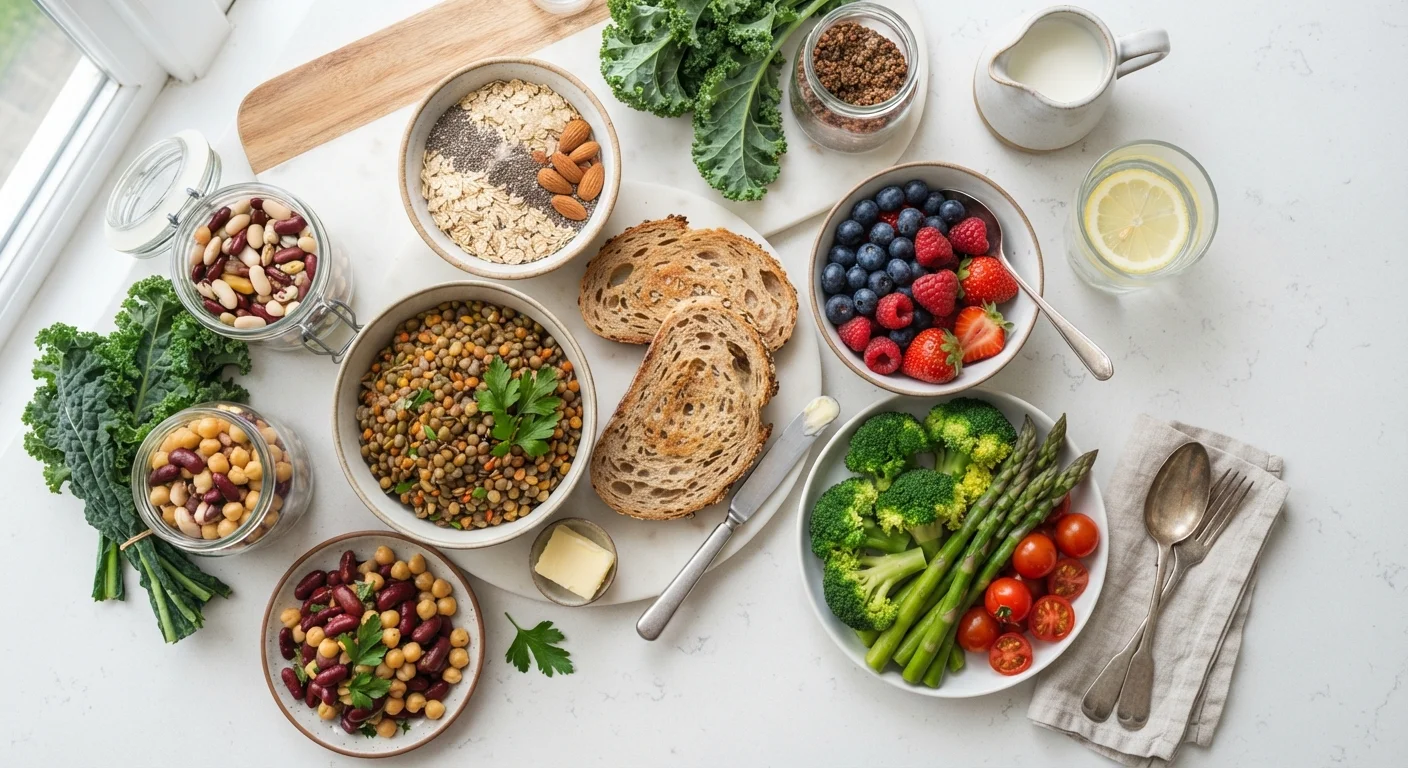
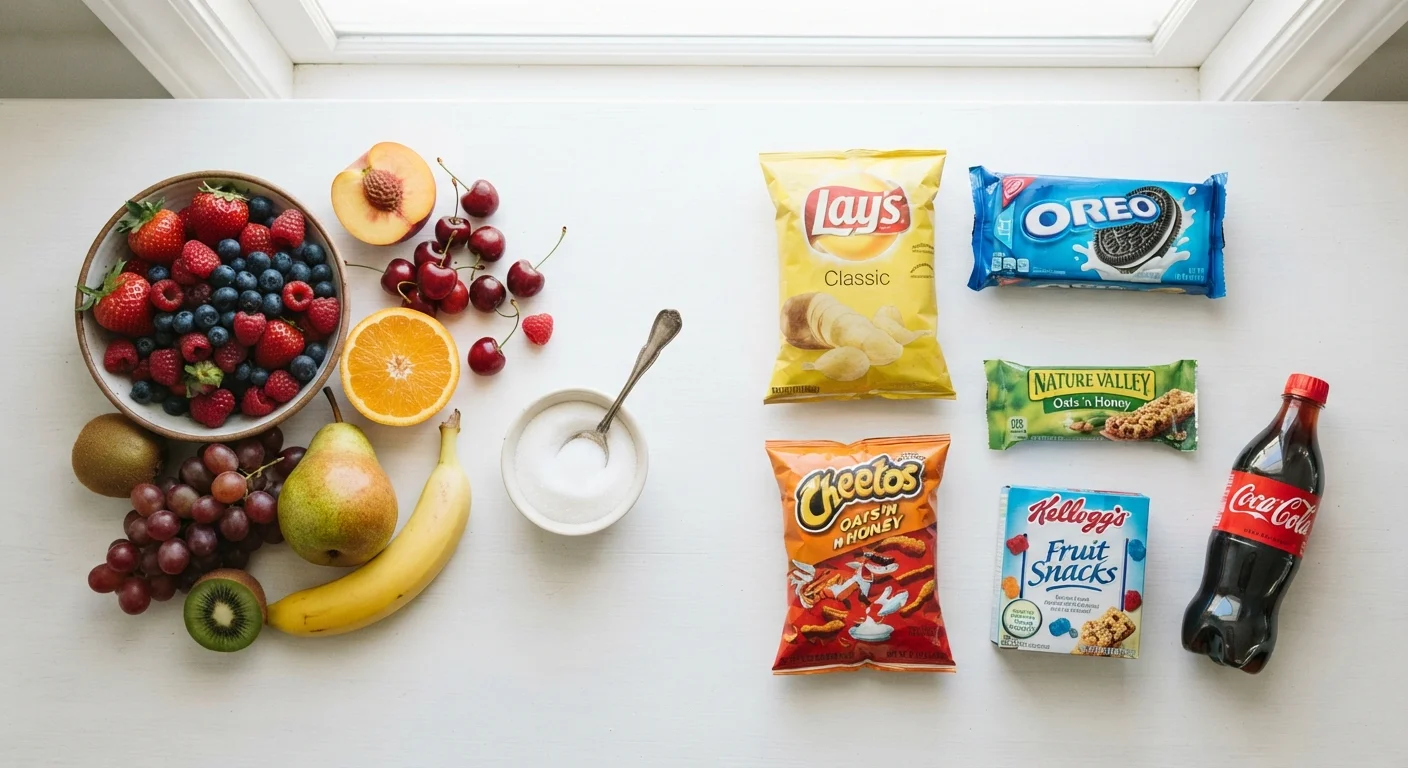
What Makes a Sugar 'Natural' or 'Added'?
The terms natural sugar and added sugar describe the same molecule - sucrose, fructose, or glucose - in very different contexts. Natural sugars are those that exist inherently in a food: fructose in an apple, lactose in milk, or sucrose in a beet pulled straight from the ground. Added sugars, by contrast, are any sugars or syrups incorporated into a food during processing or preparation - think the high-fructose corn syrup in a flavored yogurt or the cane sugar stirred into a salad dressing.
Chemically, your body metabolizes both types using the same pathways. The critical difference lies in what comes along for the ride. Whole foods that contain natural sugars also deliver fiber, water, protein, vitamins, and minerals. That surrounding food matrix changes how quickly sugar is absorbed and how the body responds. Added sugars, stripped of that context, typically enter the bloodstream faster and bring little beyond calories.
The U.S. Food and Drug Administration recognized this distinction when it updated the Nutrition Facts label to require a separate line for added sugars - helping consumers distinguish them from a food's total sugar content. For a deeper look at how to read those labels, see our guide to decoding nutrition labels.
Side-by-Side Comparison
Understanding how these two sugar types stack up across key criteria helps clarify why nutrition guidance focuses almost exclusively on limiting added sugars rather than sugars as a whole category.
| Criterion | Natural Sugar | Added Sugar |
|---|---|---|
| Origin | Occurs inherently in whole foods | Introduced during processing or prep |
| Common sources | Fruit, dairy, some vegetables | Sodas, baked goods, sauces, cereals |
| Nutritional context | Paired with fiber, vitamins, minerals | Little to no accompanying nutrients |
| Blood sugar impact | Generally slower, buffered absorption | Often faster, less buffered absorption |
| Label visibility | Counted in 'Total Sugars' only | Listed separately as 'Added Sugars' |
| Dietary guidance | No specific daily limit for most people | Limit to under 10% of daily calories |
One nuance worth noting: minimally processed foods - such as unsweetened applesauce or plain frozen fruit - retain their natural sugars and most of their nutritional context. Heavily processed versions of the same ingredient, with sugar added, shift squarely into the added-sugar category. Our article on whole foods vs. processed foods explores that spectrum in more detail.
How Each Type Affects the Body
When you eat a piece of fruit, the fiber it contains slows digestion, moderating the rate at which fructose enters the bloodstream. The result is a more gradual rise and fall in blood glucose. Dairy products with lactose similarly come packaged with protein and fat that blunt the glycemic effect.
Added sugars in ultra-processed foods generally lack that buffering. Research published in public health and nutrition literature consistently associates high added-sugar intake with elevated triglycerides, increased risk of type 2 diabetes, tooth decay, and - over time - higher cardiovascular disease risk. The Dietary Guidelines for Americans recommend keeping added sugar below 10 percent of total daily calorie intake; the American Heart Association sets a more conservative threshold for many adults.
17 tsp
Average daily added sugar intake in the US
According to CDC data, American adults consume roughly 17 teaspoons of added sugar per day - well above the recommended maximum.
~37%
Added sugar from beverages
The National Cancer Institute has estimated that sweetened beverages account for approximately 37% of added sugar consumption among U.S. adults.
10%
Recommended added-sugar ceiling
The Dietary Guidelines for Americans recommend that added sugars make up no more than 10 percent of total daily caloric intake.
It's important to state that eating fruit or other whole-food sugar sources is not the same as consuming excess added sugar. For most people, natural sugars from whole foods are not a primary health concern - though individuals managing conditions such as diabetes should always discuss dietary specifics with a qualified healthcare provider rather than relying on general guidance.
This article is for general informational and educational purposes only and is not a substitute for professional medical or nutritional advice. Always consult a qualified healthcare provider before making changes related to your diet or health conditions.
Practical Ways to Apply This Knowledge Daily
Recognizing the distinction between natural and added sugars gives you a sharper tool for everyday food decisions - without requiring you to fear fruit or avoid all sweetness.
- Check the added sugars line on the Nutrition Facts label. The FDA requires this to be listed in grams and as a percentage of the daily value, making comparison straightforward.
- Look for common aliases. Added sugars appear under dozens of names: corn syrup, agave nectar, dextrose, maltose, evaporated cane juice, and more. A long ingredient list with multiple sugar aliases is a signal worth noticing.
- Choose whole-food sweet options first. Fresh or frozen fruit, plain dairy, and whole grains with naturally occurring sugars deliver sweetness alongside genuine nutrition.
- Watch beverages. Sweetened drinks - sodas, flavored coffees, sports drinks, and even some fruit juices - are among the largest single sources of added sugar in the American diet, yet they register little satiety.
- Cook at home when possible. Preparing meals from scratch gives you direct control over how much sugar, if any, is added during preparation.
What About Honey and Maple Syrup?
Despite their natural origins, honey, maple syrup, and agave nectar are classified as added sugars when used in cooking or food manufacturing. The FDA defines added sugars by how they are used - not solely by their source. While these alternatives may carry trace minerals or antioxidants, the amounts are nutritionally small. From a metabolic standpoint, using them in large quantities produces effects similar to other added sugars.