The Anatomy of a Tire Code
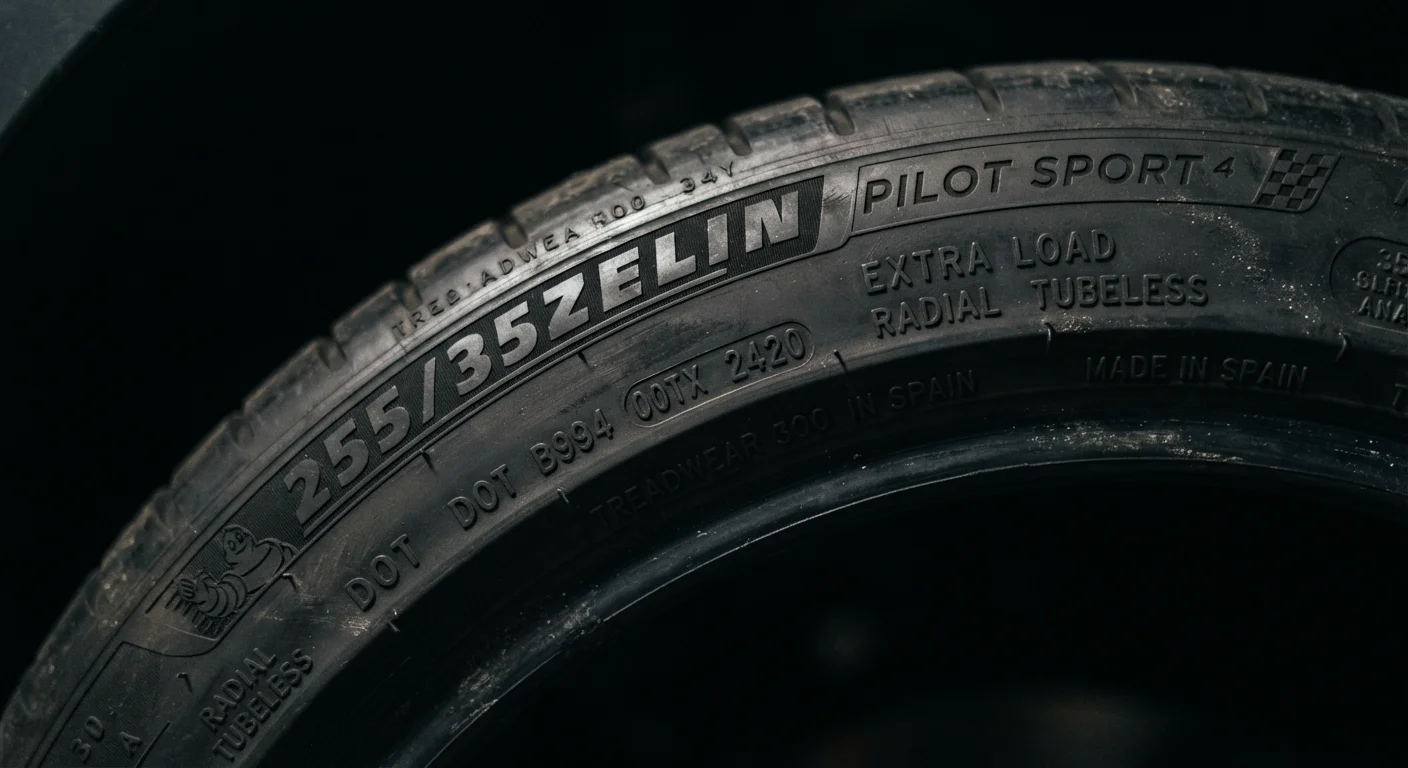
That string of characters molded into your tire's sidewall - something like P215/65R17 98H - isn't random. It's a standardized code regulated by organizations including the Tire and Rim Association, and every segment carries specific, actionable information about what that tire is designed to do. Knowing how to read it helps you verify you have the right tire for your vehicle and understand what you're replacing when the time comes.
| Example Code | P215/65R17 98H |
| Service Type (P) | Passenger vehicle tire |
| Section Width (215) | 215 millimeters wide |
| Aspect Ratio (65) | Sidewall is 65% of section width |
| Construction (R) | Radial |
| Rim Diameter (17) | Fits a 17-inch wheel |
| Load Index (98) | Supports up to 1,653 lbs. per tire (Tire and Rim Association load index table) |
| Speed Rating (H) | Certified to 130 mph sustained |
Here's how to break down a typical passenger tire code, segment by segment.
Decoding Each Segment
Service Type (the leading letter): The first character - commonly P, LT, or ST - identifies the tire's intended service type. P stands for P-metric, the standard for most cars and crossovers. LT denotes light truck tires, built for heavier loads and towing. ST means special trailer. Some tires carry no letter prefix at all; these are Euro-metric tires, which have slightly different load capacity calculations than P-metric.
Section Width (three-digit number, in millimeters): The number immediately following the service type - 215 in our example - is the tire's section width. This is the distance from sidewall to sidewall measured in millimeters when the tire is mounted on the specified rim width and properly inflated. A wider section width generally provides more contact patch, while narrower tires can reduce rolling resistance.
Aspect Ratio (two-digit number after the slash): The 65 after the slash is the aspect ratio - the tire's sidewall height expressed as a percentage of its section width. A ratio of 65 means the sidewall height is 65% of 215 mm, or about 140 mm. Lower aspect ratios (like 40 or 45) indicate a shorter, sportier sidewall; higher ratios mean more cushion and flexibility, often preferred for comfort or off-road capability.
Construction Type (the letter before rim diameter): The R stands for radial construction, which is nearly universal in modern passenger tires. Radial tires have internal cords arranged perpendicular to the direction of travel, which improves flexibility, heat dissipation, and fuel efficiency compared to older bias-ply designs.
Rim Diameter (two-digit number, in inches): The 17 is the diameter of the wheel the tire is designed to fit, measured in inches. This must match your wheel exactly - a 17-inch tire will not seat correctly on a 16- or 18-inch rim.
Aspect Ratio
The ratio of a tire's sidewall height to its section width, expressed as a percentage. A lower number indicates a shorter sidewall; a higher number means a taller, more flexible sidewall.
Load Index
A standardized numerical code representing the maximum weight a single tire can safely carry when inflated to its rated pressure. Each number corresponds to a specific weight in pounds.
Speed Rating
A letter code indicating the maximum sustained speed a tire is certified to handle under its rated load. Ratings range from L (75 mph) to Y (186 mph).
Section Width
The distance across a tire's tread from one sidewall to the other, measured in millimeters when the tire is mounted and properly inflated.
Radial Construction
A tire design in which the internal cord plies run perpendicular to the direction of travel. Radial tires are standard on modern passenger vehicles for their durability, fuel efficiency, and heat resistance.
DOT Code
A Department of Transportation serial number on the tire sidewall. The final four digits identify the week and year of manufacture, which is used to track tire age.
UTQG
Uniform Tire Quality Grading - a U.S. federal system requiring manufacturers to grade tires on treadwear, traction, and temperature resistance. Grades are useful for comparing tires within a brand.
3PMSF (Three-Peak Mountain Snowflake)
A symbol indicating a tire has met a standardized severe-snow traction test. It is a stronger winter certification than the basic M+S (Mud and Snow) designation.
Load Index (two- or three-digit number): The 98 in the example is the load index - a standardized number representing the maximum weight a single tire can safely support when properly inflated. A load index of 98 corresponds to 1,653 lbs. per tire. Always ensure replacement tires meet or exceed the load index specified by your vehicle manufacturer, which is listed in your owner's manual and often on a placard inside the driver's door jamb.
Speed Rating (the trailing letter): The final letter - H in this case - is the speed rating, indicating the maximum sustained speed the tire is certified to handle under load. H-rated tires are certified to 130 mph. Speed ratings range from L (75 mph) up through Y (186 mph). Mixing speed ratings across an axle is not recommended. See how tire pressure intersects with load and speed performance for the full picture on maintaining your tires correctly.
Other Markings You May See
Beyond the primary size and rating code, sidewalls often carry additional designations worth knowing:
- M+S or M&S: Mud and Snow - indicates the tread pattern meets basic all-season traction criteria, though it does not confirm severe winter service capability.
- Three-Peak Mountain Snowflake (3PMSF): This symbol - a snowflake inside a mountain outline - indicates the tire has passed a standardized severe snow traction test and is certified for true winter conditions.
- DOT Code: A Department of Transportation serial number that includes the tire's manufacturing date. The last four digits indicate the week and year of manufacture (e.g., 2422 means the 24th week of 2022). Tires older than six years should be inspected by a qualified technician regardless of tread depth, and most manufacturers recommend replacement by ten years.
- UTQG Ratings: The Uniform Tire Quality Grading system stamps three ratings - treadwear, traction, and temperature - onto tires sold in the U.S. These are relative grades set by the manufacturer under federal guidelines, useful for comparison within a brand's lineup.
Understanding these markings connects directly to other aspects of vehicle care. Uneven wear patterns visible on the sidewall edge or shoulder, for instance, are often a sign of alignment or inflation issues - something explored in depth in our article on wheel alignment problems and how they show up.
This article is for general informational purposes. Always consult your vehicle owner's manual and a qualified tire technician before purchasing or installing tires.