What Sets Experienced Drivers Apart
Passing a driver's test proves you know the rules. But truly safe driving comes from something harder to test: the deliberate habits built through attention, experience, and honest self-assessment. The difference between an average driver and a careful one usually isn't reflexes - it's pattern recognition, situational awareness, and the consistency to apply good technique even when nothing seems to be going wrong.
The habits below aren't just advice for new drivers. Many experienced motorists have quietly let some of these practices slip. Revisiting them - or building them for the first time - is one of the most practical things any driver can do. For a broader look at how these habits fit into a wider safety framework, see our comprehensive safe driving guide.
Scan intersections actively, even on green
Most intersection crashes involve someone who had the legal right of way. Experienced drivers treat green lights as permission to proceed - not a guarantee that it's safe to do so. Before moving through an intersection, they take a quick left-right scan to confirm crossing traffic has stopped. This habit takes less than a second and can prevent some of the most severe collision types.
This is a core element of defensive driving - anticipating that other drivers may not behave as expected, regardless of what the signals say.
A green light is permission to proceed, not a guarantee the path is clear.
Maintain a full space cushion, not just following distance
Following distance gets most of the attention, but experienced drivers think in terms of a complete space cushion - the buffer around all four sides of their vehicle. That means staying out of other drivers' blind spots, keeping space to the sides when possible, and leaving room ahead to absorb stops gradually rather than abruptly.
At highway speeds, the physics of stopping distance make this especially important. Our article on following distance and stopping science explains why most drivers consistently underestimate how much space they actually need.
Think in terms of a full space cushion on all sides, not just the gap ahead.
Complete a brief pre-drive check before every trip
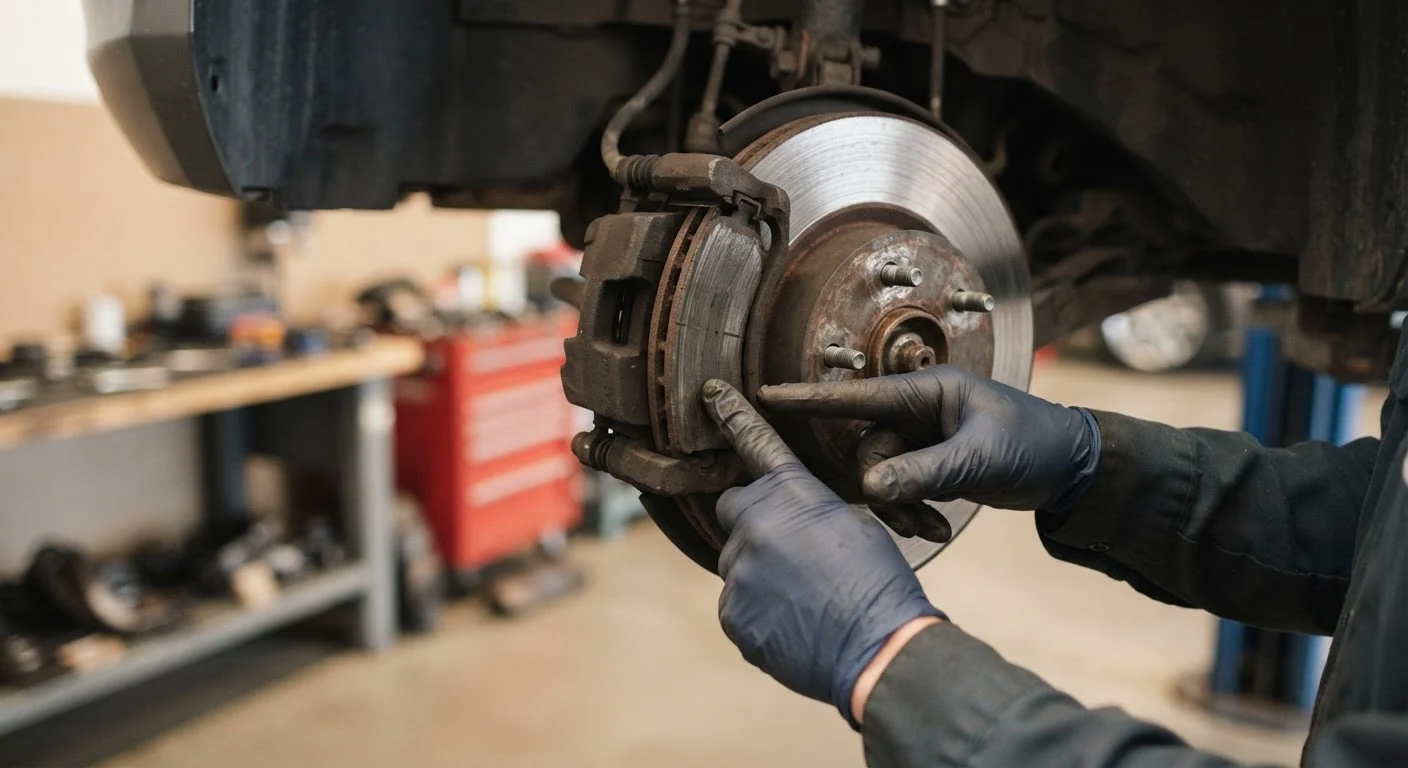
Experienced drivers don't skip the basics just because nothing felt wrong last time. A quick walk-around - glancing at tire condition, checking that lights are working, confirming mirrors are properly set - takes under two minutes and catches problems before they become hazards. Adjusting mirrors and seat position before moving the vehicle, rather than while rolling, eliminates a common source of distraction.
Our pre-drive safety check guide walks through each step in detail for drivers who want a reliable routine to follow.
A two-minute walk-around before driving can catch tire, light, or visibility issues before they matter.
Recognize and respond to their own fatigue
Drowsy driving impairs judgment and reaction time in ways that closely parallel alcohol impairment - yet many drivers don't recognize it in themselves until it's advanced. Experienced drivers learn to notice early warning signs: difficulty maintaining lane position, missing exits, reduced blink rate, or micro-sleeps. When those signals appear, the right response is to pull over safely and rest, not push through.
Understanding what fatigue actually does to driving ability is something every motorist should revisit. Our dedicated piece on driver fatigue and its risks covers the science and the practical signs to watch for.
Drowsy driving can impair judgment as significantly as alcohol - and is just as easy to deny.
Manage distractions deliberately, not just occasionally
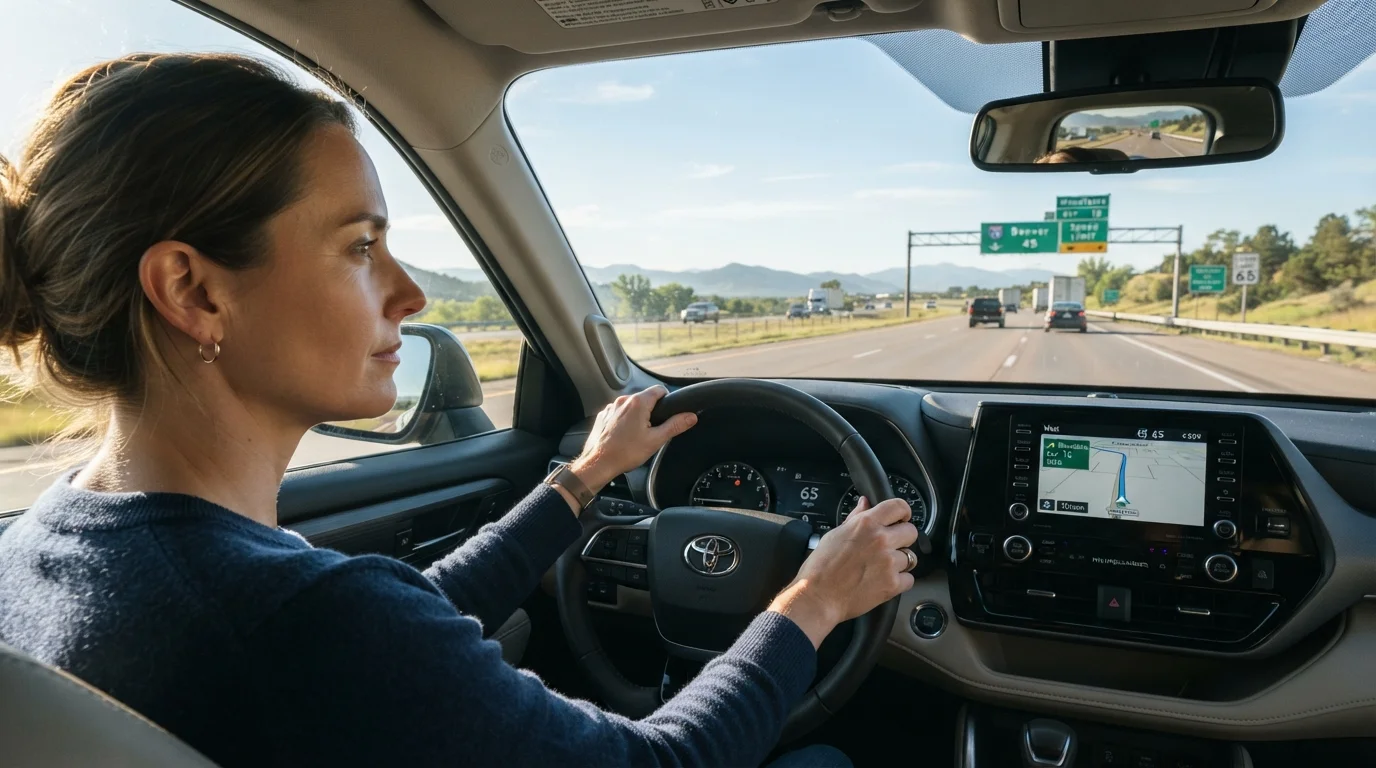
Most drivers know phones are dangerous behind the wheel, but distraction includes far more: adjusting controls, eating, reaching for objects, or getting absorbed in conversation. Experienced drivers set up navigation, climate, and audio before moving, silence notifications, and treat in-vehicle conversations differently while navigating complex traffic. They understand that passengers can meaningfully affect driver risk, and they manage that dynamic rather than ignoring it.
Distraction management is an active, ongoing habit - not a one-time decision to avoid your phone.
Adapt driving style to environment and conditions
Safe speed isn't the posted limit - it's the speed appropriate for current conditions. Experienced drivers reduce speed in rain, fog, construction zones, and unfamiliar areas, and they adjust their following distance accordingly. They also recognize that city and highway driving demand genuinely different habits. The hazards of urban stop-and-go traffic differ substantially from rural two-lane roads. Our comparison of urban and rural driving risks explores exactly how those differences play out - and why the same speed can carry very different levels of risk depending on context.
Safe speed means appropriate for conditions - not simply at or under the posted limit.
Use smooth, predictable inputs
Experienced drivers brake gradually, accelerate smoothly, and signal early and consistently. These aren't just courteous habits - they're practical ones. Abrupt braking gives following drivers less time to react. Late signaling reduces the value of signaling at all. Smooth steering and progressive braking also reduce mechanical wear and give passengers a more stable ride. Predictability is one of the most undervalued safety properties a driver can offer the vehicles around them.
Predictable driving reduces the cognitive load on every other driver sharing the road with you.
Consistency Is the Real Skill
None of these habits are complicated in isolation. The challenge - and the real skill - is applying them consistently, across every trip, regardless of how familiar the route is or how pressed for time you feel. Complacency is one of the most reliable predictors of preventable crashes. Roads that feel routine are still unpredictable.
Make habits automatic, not effortful
The goal with any safety habit is to practice it often enough that it stops requiring deliberate thought. Start by picking one or two habits from this list to focus on for a few weeks before adding others. Habits layered in gradually tend to stick far better than wholesale behavioral changes attempted all at once.
It's also worth recognizing that safe driving and vehicle longevity go hand in hand. Smooth inputs, proper following distance, and attentive scanning all reduce mechanical stress as well as collision risk. Our guide on habits that keep high-mileage cars running explores how driving style directly affects how long a vehicle lasts.
Treat each of these habits as a practice, not a checklist. Over time, they become second nature - and that's exactly when they do the most good.