
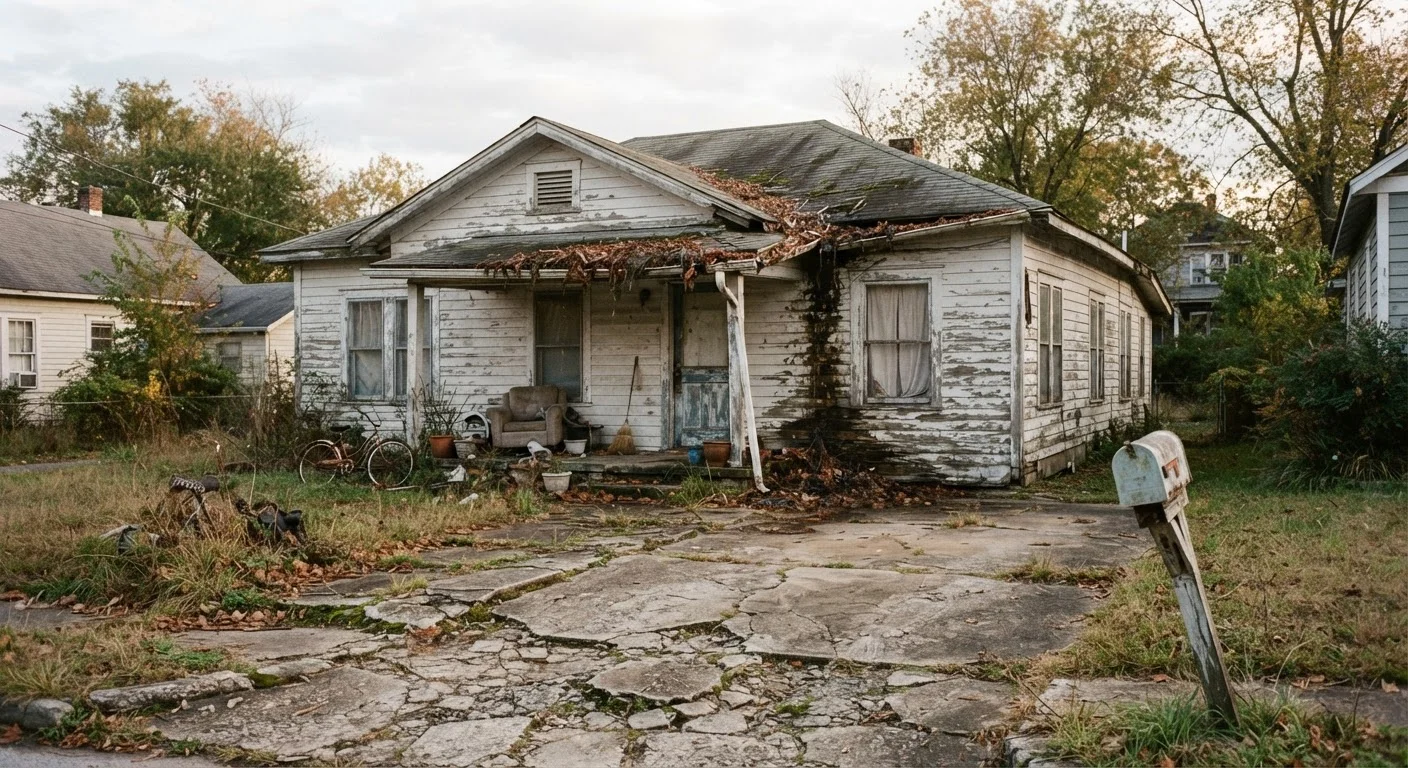
Why "I'll Get to It Later" Is an Expensive Habit
Every homeowner has had the thought: the gutter is sagging, the caulk around the tub is cracking, the furnace filter hasn't been changed in months - but it can wait. Life is busy, money is tight, and nothing seems urgently broken. The problem is that "later" has a price tag, and it tends to grow.
Deferred maintenance doesn't simply pause the cost of a repair. It actively accelerates the deterioration of the system involved, often pulling adjacent materials and structures into the damage. A minor roof leak that costs a few hundred dollars to patch, left unaddressed for one or two seasons, can saturate insulation, rot decking, and damage interior drywall - repairs that can run into the thousands.
This compounding dynamic is what makes deferred maintenance one of the most financially significant habits homeowners can develop - or break. Understanding how neglect translates into expense is the first step toward managing a home more strategically. For a broader look at what home ownership actually demands financially, see the full cost of homeownership beyond the mortgage.
1-3%
Recommended annual maintenance budget as share of home value
This widely cited guideline from housing and financial planning sources helps homeowners set realistic expectations for routine upkeep costs.
~$4,000
Median cost of a major home repair emergency
Estimates from home warranty and contractor industry surveys suggest emergency repairs commonly run into the thousands when maintenance has been deferred.
10x
Potential cost multiplier when minor water damage is ignored
Building industry professionals frequently note that water-related damage remediation can cost ten or more times the original preventive repair if left unaddressed.
How Small Problems Become Major Repairs
The mechanics of deferred maintenance follow a predictable pattern: a protective barrier fails, exposure begins, and degradation accelerates. Consider these common pathways:
- Gutters and water intrusion: Clogged gutters force water against fascia boards and foundations. Over time, this causes wood rot, basement flooding, and in colder climates, ice dams that lift shingles and damage rooflines. A seasonal gutter cleaning costs very little; foundation waterproofing repairs can cost thousands.
- HVAC neglect: An unchanged air filter strains a system's motor and reduces efficiency. A system running harder than it should wears out faster. Replacing a furnace or central air unit can cost several thousand dollars - a stark contrast to the modest cost of annual servicing.
- Sealant and caulking failures: Failed caulk around windows, doors, and wet areas allows moisture to penetrate wall cavities and subfloors, creating conditions for mold growth and structural rot. Recaulking is an inexpensive DIY task; mold remediation is not.
Each of these scenarios illustrates the same principle: the maintenance cost is almost always a fraction of the remediation cost. For a deeper look at how misconceptions drive these decisions, common home maintenance myths are worth understanding before assuming a task can safely wait.
The Financial Logic of Staying Current
Approaching home maintenance as a financial strategy - rather than a chore - changes how homeowners prioritize it. The general rule widely cited in housing guidance is to budget roughly 1-3% of a home's purchase price annually for maintenance. On a $350,000 home, that's $3,500 to $10,500 per year, or roughly $290 to $875 per month set aside proactively.
That figure may feel significant, but it pales against the alternative. A single deferred maintenance emergency - a burst pipe, a failed roof section, a failing HVAC in peak summer - can consume years of that reserve in a single event. And unlike planned maintenance, emergency repairs often require premium pricing for expedited service.
Start a Dedicated Maintenance Fund
Consider opening a separate savings account specifically earmarked for home maintenance. Contributing a fixed monthly amount - even a modest one - prevents maintenance costs from competing directly with other household budget categories. Having funds available also makes it easier to act promptly when issues arise, rather than deferring due to cash flow concerns.
Deferred maintenance also quietly erodes the financial asset a home represents. Just as spending leaks quietly drain household budgets, maintenance neglect can drain home equity in ways that only become visible at inspection or appraisal time. Staying current preserves both the structure and the investment.
Building a Maintenance Habit That Sticks
The most effective defense against deferred maintenance isn't motivation - it's systems. A written seasonal checklist converts an overwhelming mental backlog into a manageable quarterly routine. Typical categories include:
- Spring: Inspect roof for winter damage, clean gutters, service air conditioning, check exterior caulking and paint.
- Summer: Inspect and clean window and door screens, check attic ventilation, test smoke and carbon monoxide detectors.
- Fall: Service heating systems, drain and store hoses, clean gutters again after leaf fall, inspect weatherstripping.
- Winter: Monitor for ice dams, check for drafts, insulate exposed pipes in unconditioned spaces.
Many of these tasks are straightforward for homeowners comfortable with basic upkeep. However, tasks involving electrical panels, gas connections, or structural concerns should always be evaluated by a licensed professional - not approached as DIY projects.
Tracking completed tasks and estimated costs also builds a maintenance history, which is valuable documentation when selling a home and provides evidence that systems have been cared for. Home maintenance, handled consistently, is one of the most reliable ways to protect long-term financial wellbeing as a homeowner.
This article is for general informational purposes only and does not constitute financial, legal, or professional home-repair advice. Consult a licensed contractor or qualified professional before undertaking any significant repairs or improvements.