
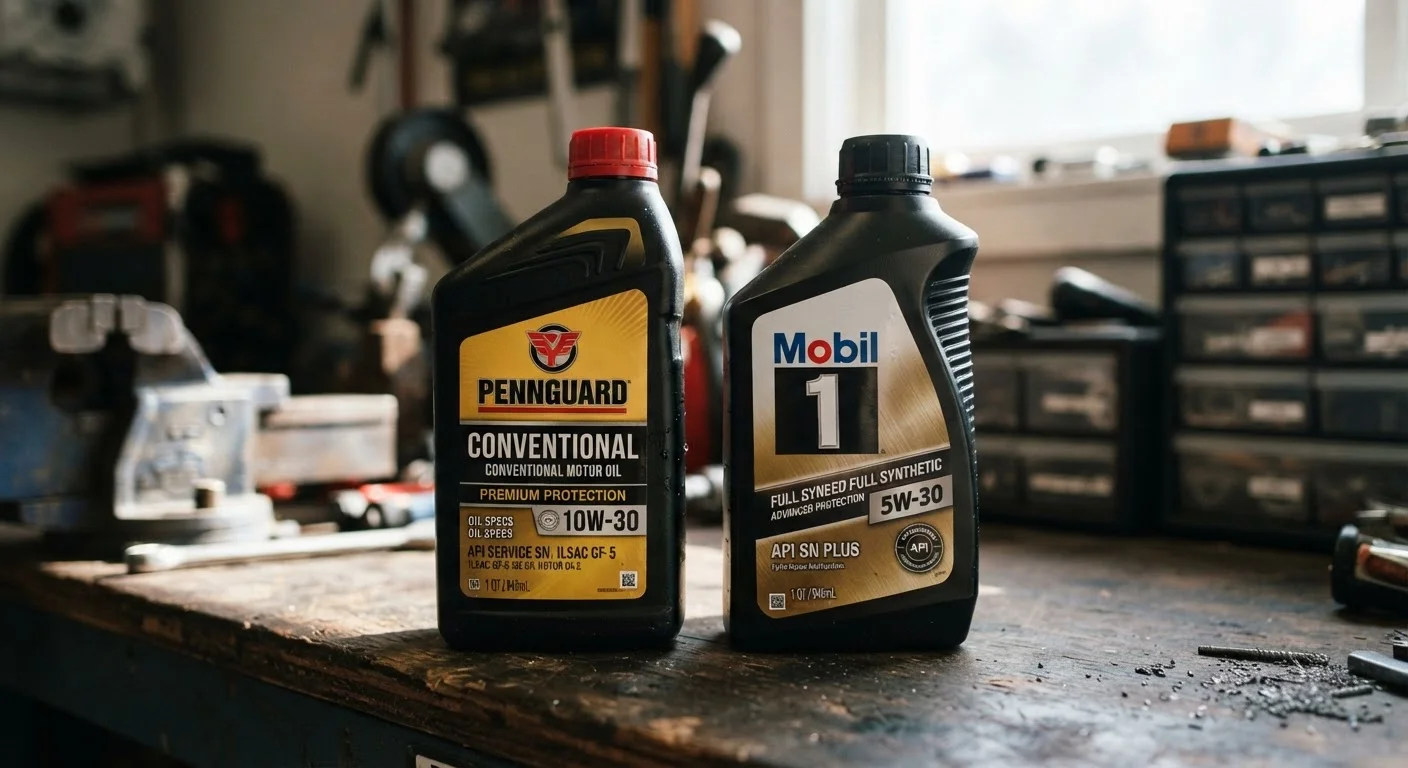
How Each Oil Is Made
The most fundamental difference between synthetic and conventional motor oil lies in their origin. Conventional oil is refined from crude petroleum pumped from the ground. Through distillation and purification, refiners remove many impurities, but the resulting molecules are still irregular in size and shape - a natural consequence of working with a complex organic material.
Synthetic oil, by contrast, is chemically engineered. Manufacturers start with highly refined base stocks - often derived from natural gas or refined petroleum - and then restructure the molecules to be uniform in size and composition. Additives are then blended in precisely controlled ratios to target specific performance properties. This molecular uniformity is what drives most of synthetic oil's performance advantages.
For a broader look at how natural versus engineered materials behave differently, our Understanding Your Car hub covers many of these foundational concepts in plain language.
Performance Differences That Actually Matter
The engineering advantage of synthetic oil shows up most clearly under stress. Three areas stand out:
- Temperature extremes: Synthetic oil flows more readily in cold temperatures, reaching critical engine components faster on startup - when most engine wear actually occurs. At high temperatures, it resists breakdown (oxidation) better than conventional oil, maintaining a protective film longer.
- Shear stability: Under high pressure between moving metal parts, oil molecules can physically break apart - a process called shear degradation. Synthetics' uniform molecular structure resists shearing better, preserving viscosity (the oil's thickness and flow resistance) over time.
- Oil change intervals: Because synthetic oil degrades more slowly, manufacturers often specify longer intervals - commonly 7,500 to 10,000 miles or more, compared to the traditional 3,000-5,000-mile schedule associated with conventional oil. Always defer to your owner's manual over generalized rules.
One persistent automotive myth is that you must change oil every 3,000 miles regardless of oil type. Our article on common car myths addresses this and other long-standing misconceptions worth knowing.
| Criterion | Synthetic Motor Oil | Conventional Motor Oil |
|---|---|---|
| Origin | Chemically engineered base stocks | Refined crude petroleum |
| Molecular uniformity | Highly uniform, by design | Irregular, naturally variable |
| Cold-weather flow | Flows faster at low temps | Thickens more in cold |
| Heat resistance | Higher thermal stability | Breaks down faster at high heat |
| Typical change interval | 7,500-10,000+ miles | 3,000-5,000 miles |
| Cost per quart | Higher (roughly 2-4x) | Lower upfront cost |
| Best engine fit | Modern, turbocharged, tight-tolerance | Older, simpler, naturally aspirated |
When Conventional Oil Still Makes Sense
Synthetic oil's advantages don't automatically make conventional oil obsolete. Many older vehicles - particularly those built before the mid-2000s - were engineered around conventional oil's viscosity characteristics. Their seals, tolerances, and oil pump specifications were designed for it.
For drivers with simple, naturally aspirated (non-turbocharged) engines in temperate climates who change their oil on a disciplined schedule, conventional oil provides adequate protection at a lower cost per quart. It remains widely available and perfectly suitable for many everyday driving situations.
If your vehicle has already accumulated significant mileage on conventional oil without issues, switching to full synthetic is not urgent or necessarily beneficial - though a high-mileage formulation (a blend designed for engines over roughly 75,000 miles) may offer additional seal conditioning benefits.
A Note on Synthetic Blends
Between full synthetic and conventional oil sits a middle category: synthetic blends, which mix conventional base oil with a portion of synthetic. These typically offer improved performance over straight conventional oil - particularly in temperature extremes - at a lower price than full synthetic. They can be a practical compromise for drivers whose vehicles don't require full synthetic but who want added protection for seasonal or towing conditions. As always, check your owner's manual before switching formulations.
Making the Right Call for Your Engine
The clearest guide to your oil choice is your vehicle's owner's manual. Manufacturers specify oil type, viscosity grade (such as 5W-30 or 0W-20), and change intervals based on extensive testing of that specific engine. Deviating from these specs - in either direction - carries real risk.
If your manual calls for synthetic, use synthetic. If it permits conventional, you have more flexibility, though synthetic blends or full synthetic options may extend protection in demanding conditions. Cost is a legitimate factor: synthetic oil typically costs two to four times more per quart, though longer change intervals can partially offset that difference over time.
Once you've decided on an oil type, the next question is whether to handle the change yourself or visit a shop. Our comparison of DIY oil changes versus shop visits walks through the real trade-offs in time, tools, and risk.
~75%
U.S. new-vehicle synthetic oil adoption
Industry estimates suggest the majority of new passenger vehicles sold in the U.S. now leave the factory filled with full synthetic or synthetic-blend oil.
Up to 40%
Engine wear reduction at startup
Engineering studies on oil viscosity indicate that faster cold-flow oils can meaningfully reduce metal-to-metal contact during the critical first seconds after ignition.