Why a Pre-Trip Inspection Matters
Most breakdowns aren't sudden failures - they're the result of deferred maintenance or an unnoticed issue that worsened over miles. A road trip multiplies the stress on your vehicle: sustained highway speeds, heavy loads, unfamiliar terrain, and extended hours all push components harder than a typical commute does.
Taking 30 to 60 minutes to walk through this checklist before you leave gives you a realistic picture of your vehicle's condition and surfaces any problems while you're still close to home and your regular mechanic. It also gives you peace of mind that's hard to put a price on. For a deeper understanding of your vehicle's service intervals and fluid specifications, consult your owner's manual - it's the most accurate source for your specific make and model.
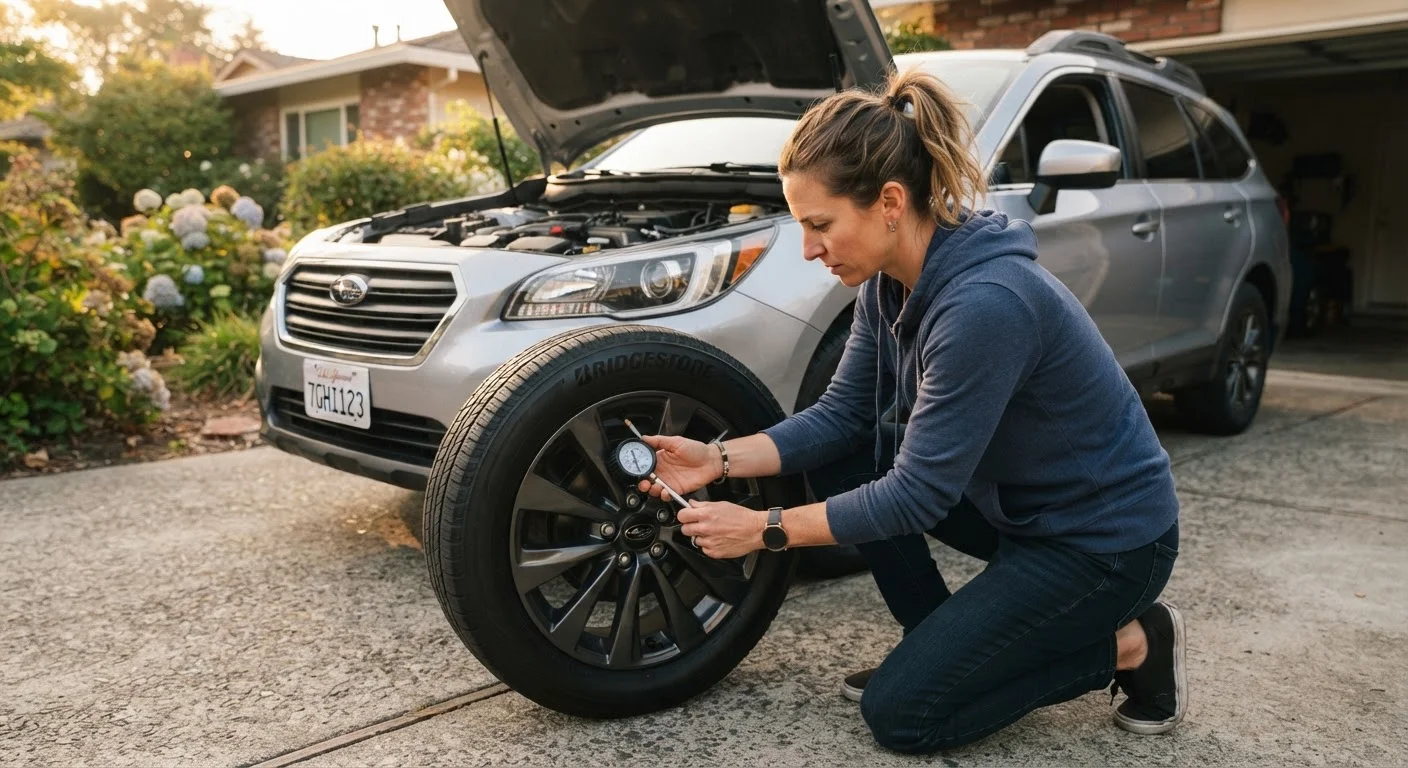
Tires
Fluids
Lights and Visibility
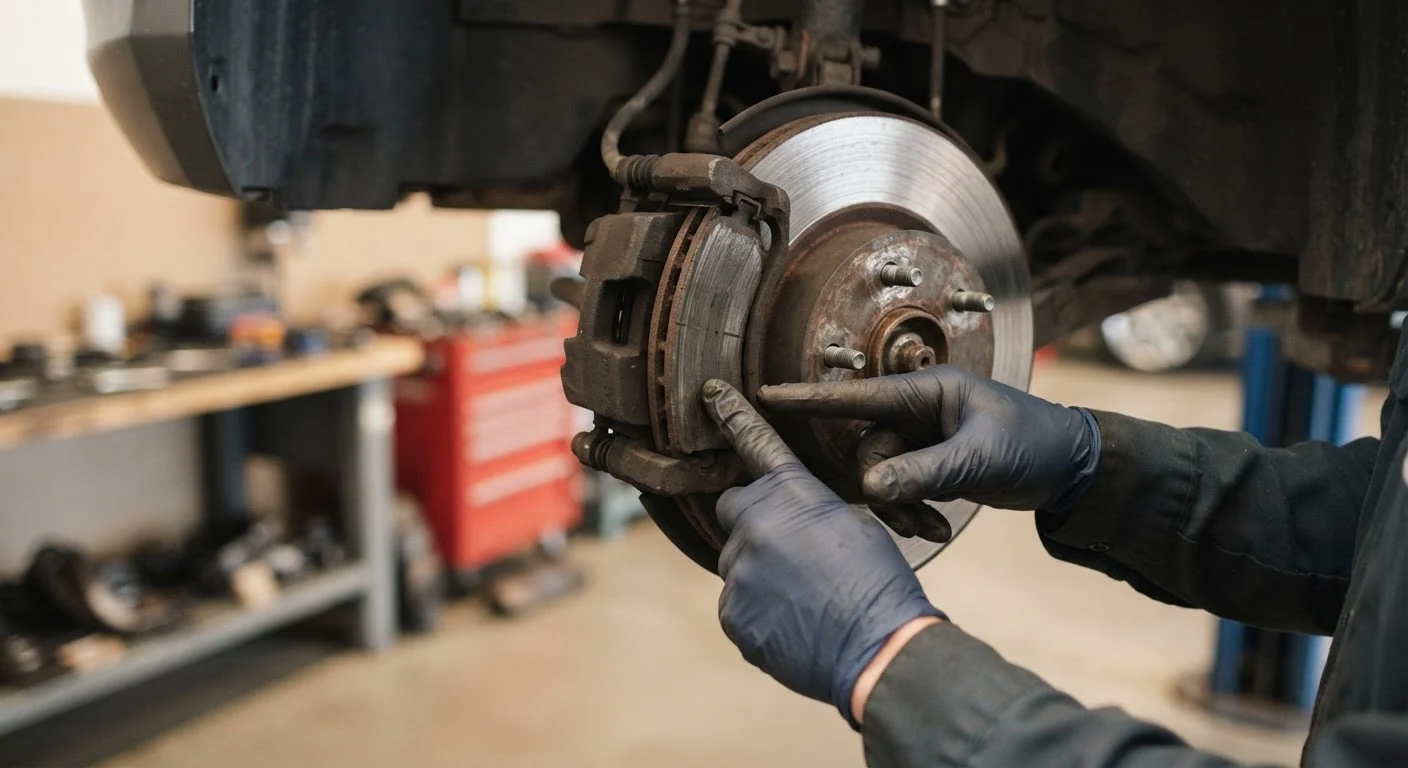
Brakes and Belts
Emergency Kit and Essentials
What You'll Need
Most of this inspection requires only basic tools and a bit of time. Gather these before you start so you can move through the checklist efficiently.
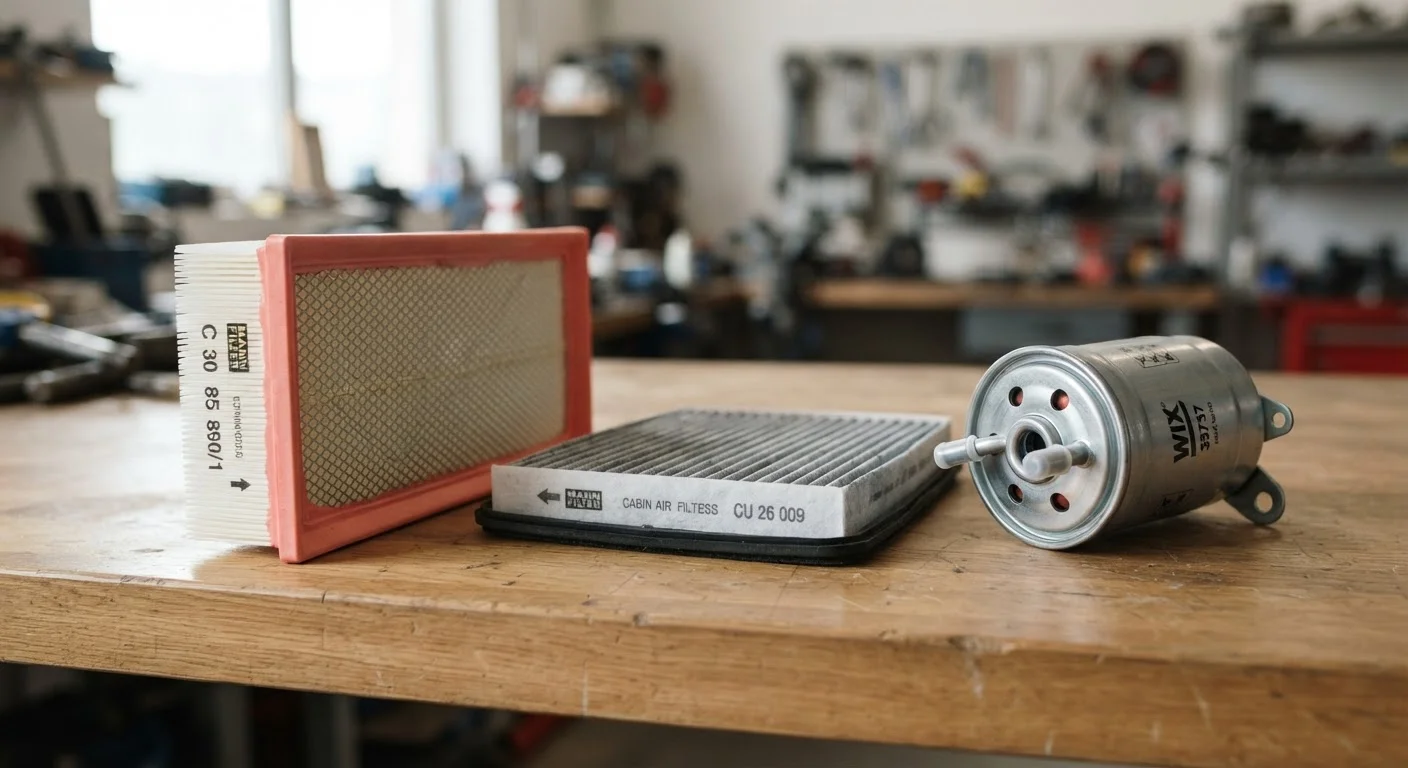
Tire Pressure Gauge
Measures PSI in each tire so you can inflate or deflate to the manufacturer's recommended level.
Penny (or Tread Depth Gauge)
Used to quickly assess whether tire tread meets the minimum safe depth for highway driving.
Flashlight or Work Light
Illuminates the engine bay, tire sidewalls, and undercarriage for a thorough visual inspection.
Portable Air Compressor
Allows you to inflate tires to the correct PSI without a trip to a gas station.
Clean Rags or Shop Towels
Needed for checking dipsticks and wiping off fluid overflow reservoirs for accurate readings.
Owner's Manual
Provides vehicle-specific fluid specifications, service intervals, and component locations.
Before You Back Out of the Driveway
Don't Ignore Active Warning Lights
A dashboard warning light that was present before your trip is not likely to disappear on its own - and highway conditions often accelerate whatever underlying issue triggered it. The check engine, oil pressure, brake, and temperature warning lights in particular should be evaluated by a qualified mechanic before you commit to a long drive. Driving hundreds of miles with an undiagnosed issue can turn a minor repair into a major one.
If any dashboard warning lights - particularly the check engine, oil pressure, brake, or temperature lights - are illuminated when you start the car, do not dismiss them as minor. These signals warrant investigation by a qualified mechanic before a long trip. Pay attention to unusual sounds, smells, or sensations during your driveway and neighborhood test drive as well. Learn to recognize early warning signs so a small issue doesn't become a costly breakdown far from home.
Once you've completed your inspection and addressed any concerns, building these habits into your regular routine - not just before road trips - is one of the most effective things you can do for long-term reliability. The habits that keep high-mileage cars running are largely the same ones that prevent roadside emergencies. Safe travels start before you leave the driveway.
Brake Fluid and Coolant Safety
Never open the radiator cap or coolant reservoir on a hot engine - pressurized coolant can cause serious burns. Similarly, if your brake fluid reservoir is significantly low, resist simply topping it off without investigation: low brake fluid often signals worn brake pads or a fluid leak, both of which require professional attention before a highway trip.
Worn Tires Are a Highway Hazard
Tires that pass a daily commute may not handle the sustained speeds and heat buildup of highway driving. If tread depth is borderline or sidewall damage is present, replace the tires before departure - not after. A blowout at highway speed is a serious safety event that can affect not just your vehicle but other road users.