
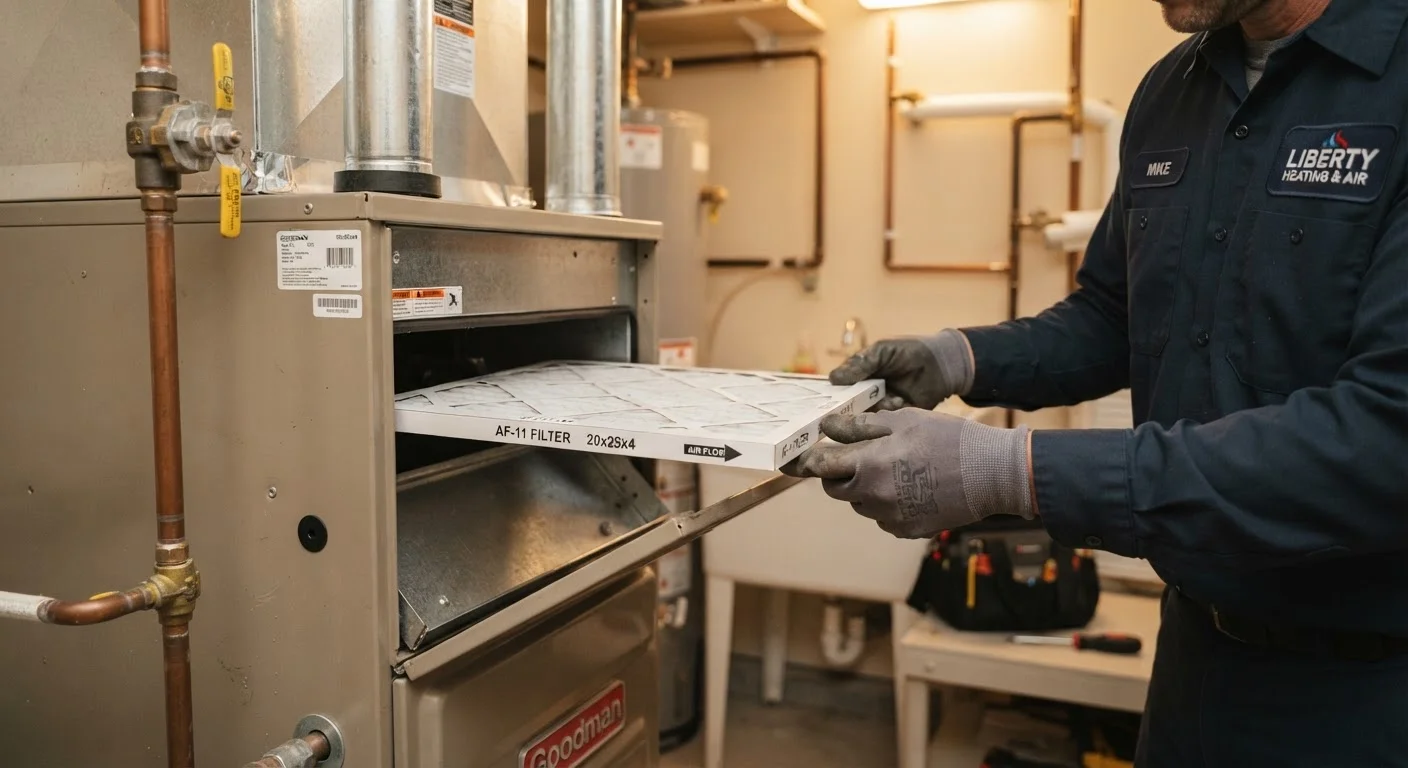
HVAC Filter Replacement: What the Intervals Actually Mean
Air filters are the first line of defense for your HVAC system, trapping dust, pollen, pet dander, and other airborne particles before they reach the blower motor and heat exchanger. But replacement intervals aren't one-size-fits-all - they depend on filter type, household conditions, and how hard your system works.
| Basic fiberglass filter interval | Every 30 days |
| Standard pleated filter interval | Every 60-90 days |
| Thick media filter interval | Every 6-12 months |
| Furnace tune-up frequency | Once per year (pre-heating season) |
| A/C tune-up frequency | Once per year (pre-cooling season) |
| Carbon monoxide detector testing | Monthly recommended |
Here's a practical breakdown by filter type:
- Fiberglass filters (1-inch, low MERV): Replace every 30 days. These are inexpensive but capture only large particles. They clog quickly and provide minimal air quality benefit.
- Pleated filters (1-inch, MERV 8-11): Replace every 60-90 days. The most common choice for residential use, balancing airflow restriction with adequate filtration.
- Thick media filters (4-5 inch, MERV 10-13): Replace every 6-12 months. Typically installed as part of a whole-home air cleaner; requires a compatible filter cabinet.
- HEPA or high-MERV filters (13+): Follow manufacturer guidance closely. These can restrict airflow in systems not rated for them, potentially overworking the blower motor.
Households with pets, allergy sufferers, smokers indoors, or recent renovation activity should replace filters more frequently - often on the shorter end of each range. A quick visual check monthly tells you a lot: if the filter looks gray and clogged, replace it regardless of the calendar. For a broader view of how this fits into your home upkeep routine, see the Home Maintenance Task Tracker.
What a Furnace Tune-Up Actually Involves
A furnace tune-up - formally called a preventive maintenance inspection - is an annual service performed by a licensed HVAC technician before the heating season begins, typically in early fall. It isn't just a visual once-over; a thorough inspection covers the major components that affect both efficiency and safety.
MERV Rating
Minimum Efficiency Reporting Value - a standardized scale from 1 to 16 that measures how effectively an air filter captures particles of different sizes. Higher MERV ratings capture smaller particles but can restrict airflow in systems not designed for them.
Heat Exchanger
A metal component inside a furnace that transfers heat from combustion gases to the air circulated through your home. A cracked heat exchanger is a serious safety hazard because it can allow combustion gases, including carbon monoxide, to mix with household air.
Short Cycling
When an HVAC system turns on and off in rapid, repeated intervals without completing a full heating or cooling cycle. It typically indicates an underlying mechanical or sizing problem and reduces system efficiency while accelerating component wear.
Preventive Maintenance Inspection
An annual professional service visit in which a licensed technician inspects, cleans, and tests furnace or air conditioning components before peak-use seasons. The goal is to catch developing problems early and verify safe, efficient operation.
Refrigerant
The chemical compound circulated through an air conditioning or heat pump system that absorbs and releases heat to move it between indoors and outdoors. Refrigerant levels can only be checked and adjusted by a certified HVAC technician - it is not a DIY task.
A standard tune-up typically includes:
- Inspecting and cleaning the heat exchanger for cracks (a cracked heat exchanger can allow carbon monoxide to enter living spaces - this is a safety-critical check)
- Testing the igniter, flame sensor, and safety controls
- Cleaning the burners and checking combustion efficiency
- Lubricating blower motor bearings and inspecting the belt on older units
- Checking the flue pipe and venting for blockages or damage
- Measuring temperature rise across the heat exchanger
- Verifying thermostat calibration and system cycling
Central air conditioning tune-ups follow a similar logic in spring: technicians check refrigerant levels, clean coils, inspect electrical connections, and test system pressures. Combining furnace and A/C service in a single annual contract with a licensed HVAC company is a common and cost-effective approach for homeowners.
When to Schedule: Timing Is Everything
Book furnace tune-ups in late summer or early fall - before HVAC contractors are swamped with emergency heating calls. For air conditioning, schedule in early spring before the cooling season begins. Waiting until the system is already struggling for the season means longer waits and less leverage in scheduling. Many utility companies and HVAC firms also offer maintenance agreement programs that automate annual scheduling.
This annual rhythm aligns closely with the guidance in Seasonal Home Maintenance Tasks That Protect Long-Term Value, which places HVAC servicing among the highest-priority tasks for avoiding costly repairs.
Signs Your System Needs Attention Now - Not Later
Scheduled maintenance keeps systems running efficiently, but certain warning signs call for prompt professional attention regardless of where you are in the service calendar.
5-15%
Potential energy savings from regular filter changes
The U.S. Department of Energy estimates that replacing a clogged HVAC filter with a clean one can lower a system's energy consumption by 5 to 15 percent.
~$80-$150
Typical annual furnace tune-up cost
Costs vary by region and provider, but most homeowners pay in this range for a single-system preventive maintenance visit; combination furnace-and-AC contracts often offer better value.
- Unusual odors: A burning smell at system startup can indicate dust burn-off (normal after a long off-season), but a persistent burning or chemical smell warrants immediate inspection. A rotten-egg odor may signal a gas leak - leave the home and call your gas utility.
- Short cycling: The system turns on, runs briefly, and shuts off repeatedly without reaching the set temperature. This can point to an oversized system, a failing heat exchanger, a dirty flame sensor, or a refrigerant issue.
- Unusual noises: Banging, rattling, squealing, or grinding sounds during operation typically indicate a mechanical problem - loose panels, worn bearings, or debris in the blower.
- Uneven heating or cooling: Hot and cold spots throughout the house can reflect duct leaks, a failing blower, or a refrigerant charge problem - not just a thermostat issue.
- Spike in energy bills: A system working harder than normal to maintain temperature will show up in utility costs before it fails outright.
Carbon monoxide detectors should be installed on every level of the home and tested regularly. If one alarms, evacuate immediately and call emergency services - never assume it's a false positive. For a month-by-month framework of when to schedule inspections and filter changes, the Seasonal Home Maintenance Calendar is a useful reference.
This article is for general informational purposes only. HVAC work involving gas lines, electrical components, refrigerants, or heat exchangers should be performed by a licensed HVAC professional. Always verify local permit and code requirements with your municipality before undertaking any home mechanical work.