Why Spec Sheets Can Mislead You
Camera marketing leans heavily on big numbers. A phone advertised as having a 200-megapixel camera sounds dramatically superior to one with 50 megapixels — and manufacturers know it. But photography is a system with many interdependent parts, and a single inflated number rarely tells you how good your photos will actually look.
This is a pattern that shows up across tech. Just as internet speed numbers can mislead, camera spec numbers are often chosen to impress rather than inform. Understanding which numbers genuinely affect your photos — and which ones are mostly marketing — helps you evaluate what you already own and make smarter decisions going forward.
Myth
More megapixels always means sharper, better-quality photos.
Fact
Megapixels describe image resolution, not overall quality. Sensor size, aperture, and processing matter far more.
A megapixel is simply one million pixels. Higher counts allow you to crop aggressively or print at very large sizes — but beyond roughly 12 megapixels, most viewers cannot perceive a quality difference on a phone screen or standard print. What degrades photo quality most noticeably is poor light capture, which is determined by sensor size and lens aperture, not pixel count. Packing more pixels onto a small sensor can actually hurt low-light performance by making individual pixels smaller and less light-sensitive.
Myth
A higher zoom number always means you can get clearer close-up shots.
Fact
Only optical zoom preserves image quality. High digital zoom numbers simply enlarge a cropped portion of the frame, reducing sharpness.
Manufacturers sometimes advertise eye-catching zoom figures — 30x, 100x — without distinguishing between optical and digital zoom. Optical zoom uses physical lens movement to bring subjects closer without sacrificing detail. Digital zoom is software-based cropping: convenient, but it amplifies any existing blur or noise. When evaluating zoom capabilities, look specifically for the optical zoom figure and treat digital zoom as a rough tool for quick framing, not fine detail.
Myth
A camera's hardware specs completely determine photo quality.
Fact
Software and image processing algorithms are now equally — and sometimes more — important than hardware in producing the final image.
Computational photography has transformed what cameras can do. Techniques like HDR (high dynamic range) capture, night mode, and AI-driven noise reduction all happen in software after the shutter fires. A phone with average hardware but excellent image processing can produce results that rival devices with superior sensors. This is why camera performance reviews that test real-world photos — rather than just listing specs — tend to be far more useful than spec-sheet comparisons alone.
Myth
A wider aperture (lower f-number) is always better.
Fact
A wide aperture excels in low light but can make precise focusing harder and isn't always ideal for every type of shot.
Wide apertures (like f/1.4 or f/1.8) let in more light and create a shallow depth of field, producing that pleasing blurred background effect. However, they also narrow the zone of sharp focus, which can be tricky for group shots or moving subjects. A narrower aperture (higher f-number) keeps more of the scene sharp, which is preferable for landscapes or situations with plenty of available light. Understanding this trade-off helps you interpret what any given aperture rating will mean for the types of photos you actually take.
The Specs That Actually Shape Your Photos
Once you look past the megapixel race, a handful of specs stand out as genuinely meaningful.
Sensor Size
The physical size of the image sensor — often listed in fractions of an inch or in millimeter dimensions — determines how much light the camera can capture. Larger sensors collect more light, which directly improves detail in shadows, reduces noise in dim conditions, and produces more natural background blur. A camera with a large sensor and modest megapixel count will routinely outperform a small-sensor, high-megapixel competitor in real-world use.
Aperture (f-number)
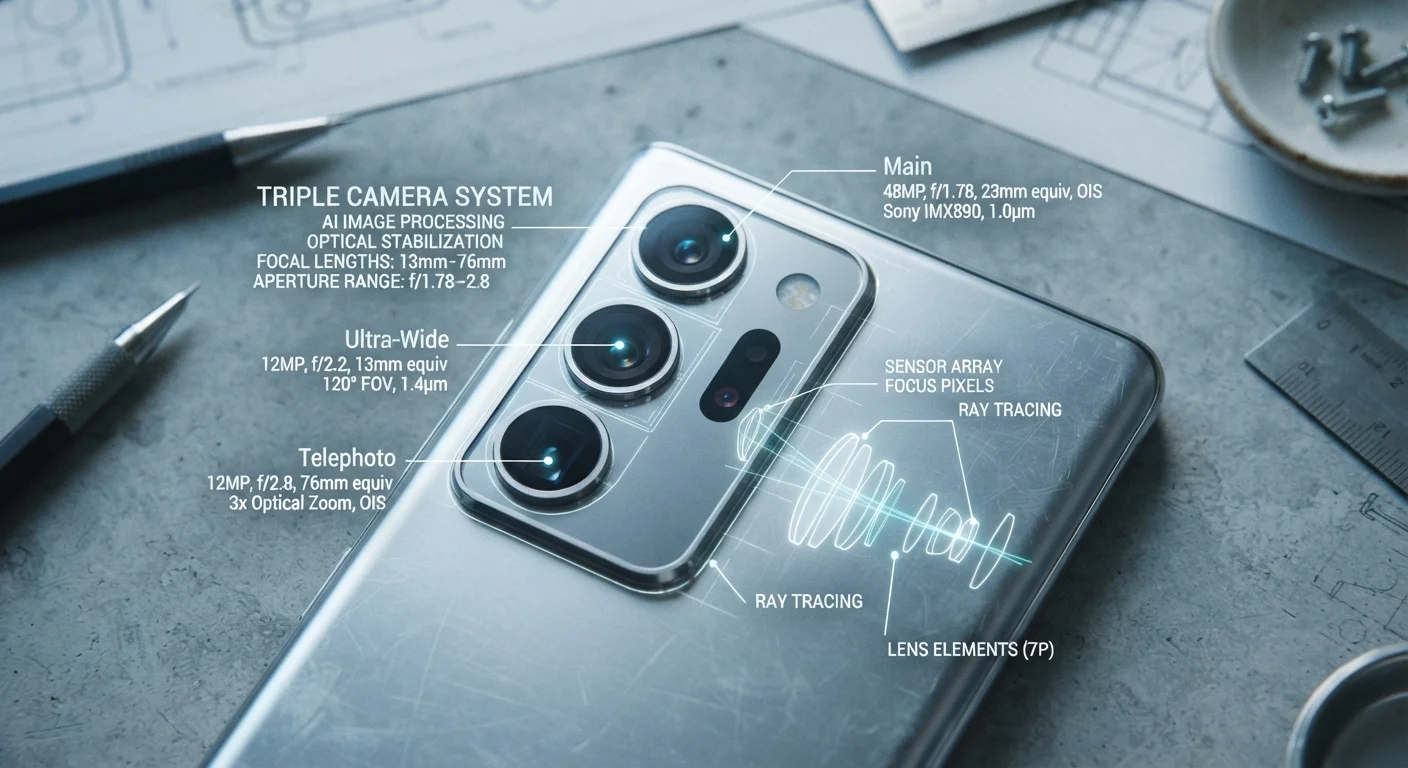
Aperture refers to the size of the lens opening and is expressed as an f-number (such as f/1.8 or f/2.4). Counterintuitively, a lower f-number means a wider opening, which lets in more light. A lens with f/1.8 is significantly better in low-light situations than one rated f/2.8. This single spec has an outsized effect on evening and indoor photos.
Image Processing and Computational Photography
Modern cameras — especially smartphones — rely heavily on software to produce the final image. The chip inside the device runs algorithms that merge multiple exposures, reduce noise, sharpen edges, and adjust color. This computational layer often matters as much as the physical hardware. Two cameras with identical sensors can produce noticeably different results depending on how well their image processing is tuned.
12 MP
Resolution where most viewers see no added benefit
Photography analysts widely note that prints and screens viewed at typical distances show no perceptible improvement beyond approximately 12 megapixels for standard use cases.
2–3 stops
Low-light advantage of a larger sensor
In imaging science, a larger sensor can capture two to three stops more light than a comparably specified small sensor, translating to significantly cleaner low-light images.
Optical vs. Digital Zoom
Optical zoom physically moves glass elements inside the lens to magnify a subject — no image quality is sacrificed. Digital zoom simply crops and enlarges the existing image, which degrades sharpness. When a spec sheet lists zoom capabilities, it is worth checking whether that number refers to optical or digital zoom, or a combination of both.
If you want to dive deeper into how specifications across devices can be more (or less) meaningful than they appear, our guide to TV specs and settings walks through a similar set of trade-offs in a different context.
Don't Rely Solely on Spec Comparisons
Spec sheets are a starting point, not a final verdict. Two cameras with identical numbers on paper can produce very different results in practice. Whenever possible, look at real-world sample images taken in conditions similar to how you actually shoot — indoors, in low light, or at a distance — before drawing conclusions about quality.