The Sensor Stack: What's Actually Inside Your Smartwatch
Your smartwatch isn't just a tiny computer — it's a bundle of specialized sensors, each continuously collecting different kinds of data. Understanding what each sensor does (and doesn't do) helps you use those health and fitness readings with the right expectations.
| Most common sensor | Accelerometer (motion detection) |
| Heart rate method | Optical PPG (photoplethysmography) |
| SpO2 healthy range | 95–100% (general reference) (General clinical reference range) |
| GPS type | Built-in or connected (phone-assisted) |
| ECG capability | Single-lead only; not equivalent to clinical ECG |
| Skin temperature | Wrist surface only; not core body temp |
Here's a plain-language breakdown of the most common sensors found in mainstream smartwatches today.
Accelerometer
This is the sensor responsible for detecting motion and orientation. It measures changes in velocity across three axes — up/down, left/right, and forward/backward. Your watch uses this data to count steps, detect when you've been sitting still too long, recognize when you've started a workout, and in some cases, detect a hard fall. Almost every smartwatch includes one.
Gyroscope
Often paired with the accelerometer, a gyroscope measures rotational movement. Together, these two sensors give the watch a richer picture of how your body is moving — helping distinguish between arm swings during a walk versus the rotation of lifting weights, for example.
Optical Heart Rate Sensor (PPG)
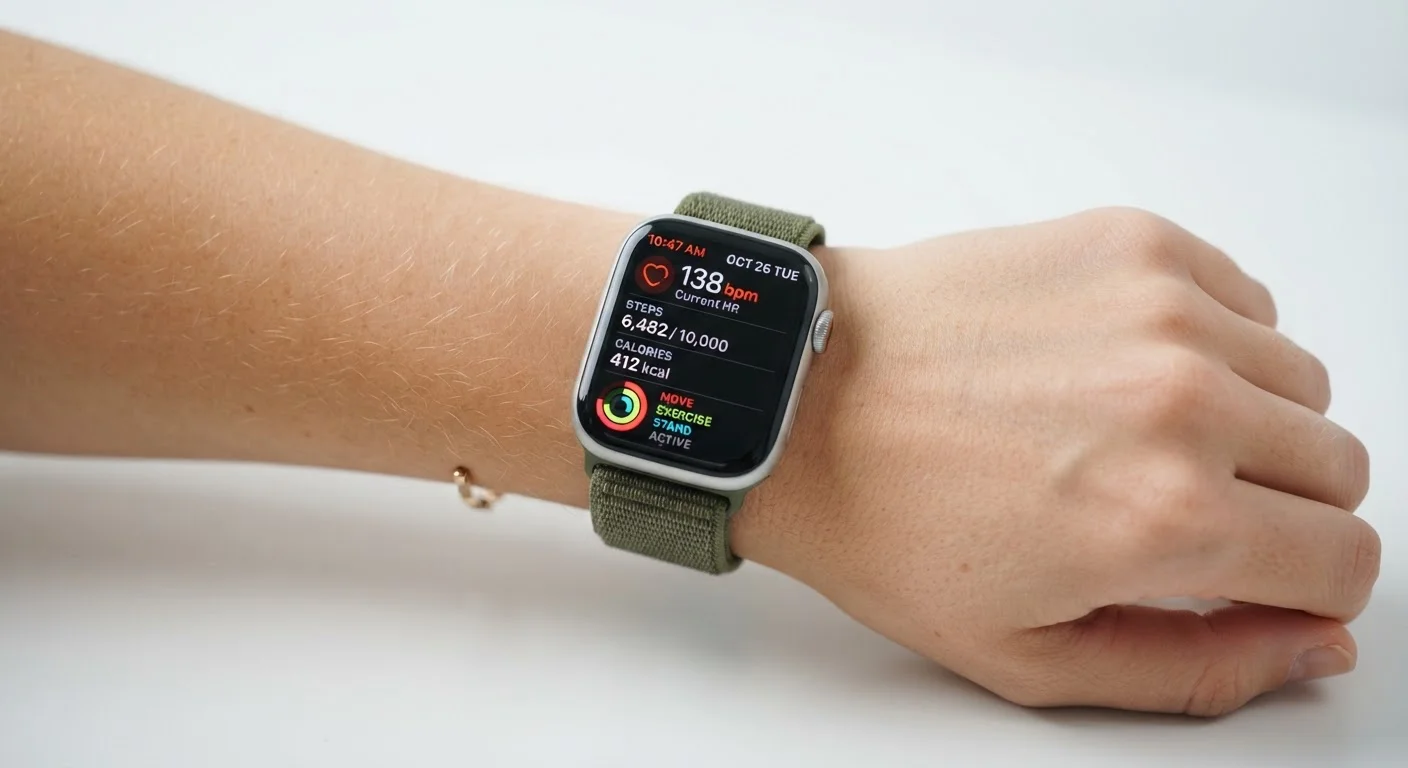
The green (and sometimes red or infrared) lights on the back of your watch are part of a PPG sensor — short for photoplethysmography. It works by shining light into your skin and measuring how much reflects back. Because blood absorbs light differently depending on how much is flowing through your vessels, the sensor can estimate your pulse. This same technology is also used to measure heart rate variability (HRV), a metric linked to recovery and stress.
SpO2 Sensor (Blood Oxygen)
Using a similar optical principle but with red and infrared light, the SpO2 sensor estimates how much oxygen is being carried by your red blood cells. This measurement is expressed as a percentage. Healthy adults typically read between 95–100%. These readings are estimates — consumer-grade sensors are not medical devices and should never be used to diagnose or monitor a health condition.
Additional Sensors You May Not Realize You Have
GPS and GNSS
Built-in GPS (or the broader GNSS) lets your watch track outdoor routes without your phone. It calculates pace, distance, and elevation during runs, hikes, or bike rides. Watches without built-in GPS rely on your phone's signal instead — a feature sometimes called "connected GPS."
Barometric Altimeter
This sensor measures atmospheric air pressure to estimate altitude. It's how your watch counts flights of stairs climbed and tracks elevation gain on a hike. Pressure changes as you move up or down, and the watch converts that shift into an altitude estimate.
Skin Temperature Sensor
A growing number of smartwatches include a sensor that reads the temperature at your wrist. This isn't the same as a core body temperature reading — it measures the surface of your skin. Manufacturers use it primarily to detect trends over time, such as slight overnight temperature shifts that may correlate with the menstrual cycle or early illness signs. The absolute number is not a clinical thermometer reading.
Electrical Heart Sensor (ECG)
Some watches include electrodes that can record a single-lead electrocardiogram when you place a fingertip on a button or crown. The result is a simplified electrical snapshot of your heart rhythm. This is not equivalent to a clinical multi-lead ECG performed by a cardiologist, but it has proven useful for detecting irregular rhythms in some users. Always consult a healthcare professional if your watch flags anything unusual.
PPG (Photoplethysmography)
An optical technique that uses light to detect blood volume changes beneath the skin. Smartwatches use PPG to estimate heart rate and heart rate variability.
SpO2
Blood oxygen saturation — a percentage estimate of how much oxygen your red blood cells are carrying. Consumer watches provide estimates, not clinical measurements.
HRV (Heart Rate Variability)
The variation in time between consecutive heartbeats. Many smartwatches track HRV as a proxy for recovery and stress levels.
ECG (Electrocardiogram)
A recording of the electrical activity of the heart. Smartwatch ECG features capture a simplified single-lead version, not the full clinical test.
Barometric Altimeter
A sensor that measures air pressure to estimate elevation changes. Used in smartwatches to count stairs climbed and track hike elevation.
GNSS
Global Navigation Satellite System — the umbrella term for satellite positioning systems worldwide, including GPS (US), GLONASS (Russia), and Galileo (EU). Some watches support multiple systems for better accuracy.
For a related look at what data your apps are accessing, see app permissions on your phone — many of those permissions interact directly with sensor data.
What Your Smartwatch Data Can and Can't Tell You
Smartwatch sensors are genuinely impressive, but their accuracy is affected by several real-world factors:
- Fit matters. A loose watch produces noisier optical readings. The sensor needs consistent skin contact to work correctly.
- Motion artifacts. During high-intensity movement, the optical heart rate sensor can struggle to separate pulse signal from movement noise. This is why heart rate readings during a sprint are sometimes less reliable than readings at rest.
- Skin tone and tattoos. Research has shown that optical sensors can be less accurate on darker skin tones and over tattooed skin, because ink affects light absorption. This is an active area of sensor design improvement.
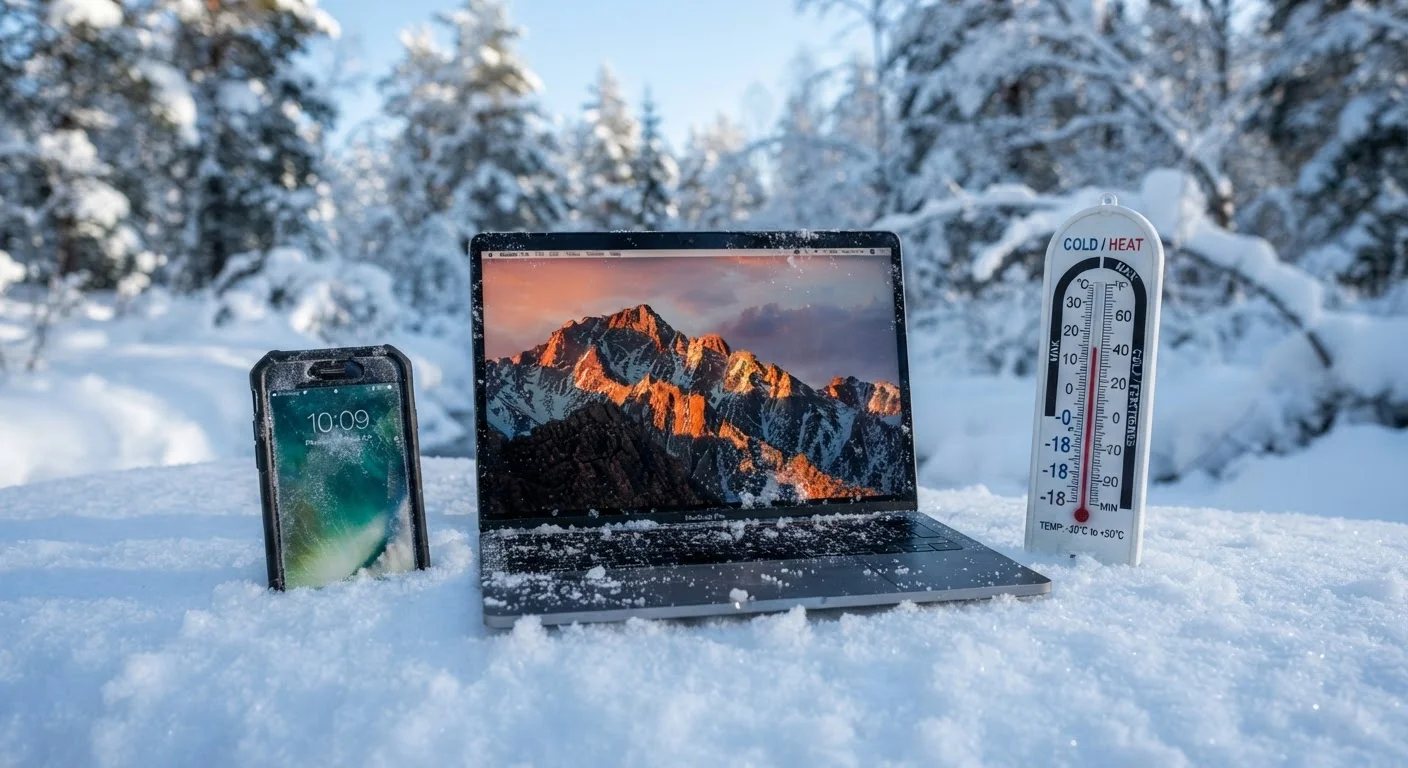
- Cold temperatures. Reduced blood flow near the skin surface in cold weather can lower sensor accuracy.
~95%
SpO2 minimum considered normal in healthy adults
General clinical reference; individual results vary and consumer devices are not medical-grade instruments.
3 axes
Directions an accelerometer measures simultaneously
X, Y, and Z axes allow detection of movement in every direction, enabling step counting and fall detection.
1 lead
ECG leads captured by most consumer smartwatches
A clinical resting ECG typically uses 12 leads; smartwatch ECGs capture a simplified single-lead trace.
The bottom line: treat your smartwatch readings as useful trends and general patterns, not clinical measurements. If a reading worries you, or if you're managing an existing health condition, speak to a qualified healthcare professional rather than relying on your wrist.
This article is for general informational purposes only and is not medical advice. Consult a qualified healthcare professional before making any health-related decisions based on wearable device readings.