Why This Question Matters for Your Cat's Health
The indoor-versus-outdoor debate is one of the most common conversations in feline veterinary care. It's not a trivial lifestyle preference — where a cat spends its time has measurable effects on lifespan, disease exposure, injury risk, and mental well-being. Understanding the specific trade-offs helps owners make more intentional decisions rather than defaulting to habit or convenience.
For a broader look at how lifestyle decisions intersect with lifespan data, see our companion piece on health and lifespan evidence for indoor vs. outdoor cats. This article focuses on the practical health pros and cons of each environment.
Significantly lower risk of traumatic injury
Indoor cats avoid traffic, predator attacks, and fights with other cats — the primary sources of acute, life-threatening injury in free-roaming cats.
Reduced exposure to infectious disease
Without contact with stray or feral cats, indoor cats have far lower rates of FeLV, FIV, and common upper respiratory infections.
Lower parasite burden overall
Fleas, ticks, intestinal worms, and other parasites are substantially less common in cats that don't go outdoors, reducing both health risk and treatment costs.
Greater opportunity for owner observation
When a cat is home all day, owners can more easily notice early signs of illness or behavior change — an important factor in timely veterinary care.
Outdoor cats get more natural physical exercise
Climbing, running, hunting, and exploring terrain all provide forms of physical activity that are harder to fully replicate indoors.
Richer sensory and mental stimulation
Outdoor environments offer complex, ever-changing stimuli — sounds, smells, textures — that engage a cat's natural curiosity and hunting instincts in ways an indoor setting rarely matches.
The Real Risks of Outdoor Access
Outdoor life exposes cats to a range of hazards that are essentially absent inside the home. Traffic is the most immediate — road injuries are among the leading causes of traumatic death in free-roaming cats. But the list extends well beyond vehicles.
Traffic and physical injury risks are substantial
Road accidents represent one of the most common causes of death in outdoor cats, particularly in suburban and urban environments where traffic volume is high.
Higher rates of infectious disease exposure
Contact with other cats — through fights or shared territory — increases the likelihood of contracting FeLV, FIV, and respiratory viruses.
Parasite exposure is significantly elevated
Outdoor cats regularly encounter fleas, ticks, and intestinal parasites, requiring more intensive and consistent preventive treatment year-round.
Indoor cats are prone to obesity without enrichment
Reduced activity combined with unrestricted food access is a common recipe for weight gain, which carries serious downstream health consequences for cats.
Boredom and stress can cause behavioral problems
Insufficient stimulation in an indoor environment may lead to anxiety-driven behaviors such as over-grooming, destructive scratching, or aggression between housemates.
Toxin and predator hazards are unpredictable outdoors
Antifreeze, pesticides, toxic plants, and wildlife encounters pose dangers that owners cannot easily monitor or control once a cat is roaming freely.
Infectious diseases represent a significant category of risk. Feline leukemia virus (FeLV), feline immunodeficiency virus (FIV), and upper respiratory infections spread through contact with other cats — fights, shared spaces, or close proximity. Outdoor cats are also far more likely to pick up intestinal parasites, fleas, ticks, and to encounter wildlife that may carry rabies or other zoonotic pathogens.
Toxin exposure is another concern that's easy to underestimate. Antifreeze, rodenticides, certain garden plants, and pesticide-treated lawns can all pose serious dangers to a cat roaming a neighborhood. Owners often have limited visibility into what their cat contacts during unsupervised time outside.
What Indoor Living Can Cost Your Cat
Indoor cats are protected from many acute dangers, but the indoor environment introduces its own set of chronic health challenges — particularly when enrichment is limited.
10–15 yrs
Average indoor cat lifespan
Veterinary sources generally cite indoor cats living 10–15 years on average, compared to estimates of 2–5 years for free-roaming outdoor cats in some studies.
~60%
Estimated overweight/obese cat rate
Some veterinary surveys suggest that roughly 60% of domestic cats in the U.S. are overweight or obese, a condition disproportionately associated with sedentary indoor lifestyles.
Physical inactivity is the most common problem. Without access to outdoor terrain, cats may spend the majority of their day sedentary, leading to weight gain. Feline obesity is associated with diabetes, joint disease, urinary problems, and a shortened lifespan — making it a serious, not cosmetic, concern.
Mental stimulation deficits are equally important to address. Cats are natural hunters with strong instincts for stalking, pouncing, and exploring. When those drives go unmet, some cats develop stress-related behaviors such as over-grooming, house soiling, or inter-cat aggression. Subtle behavioral changes are worth monitoring closely, as they can signal both physical illness and psychological stress.
Indoor Enrichment Is Not Optional
Many cat owners assume that keeping a cat indoors is sufficient on its own for good health. Veterinarians and animal behaviorists increasingly emphasize that enrichment — daily play, climbing opportunities, and sensory variety — is a medical necessity, not a luxury. A bored indoor cat is at genuine risk of chronic stress and its associated health effects. Aim for at least two structured interactive play sessions per day.
Bridging the Gap: Enrichment and Supervised Access
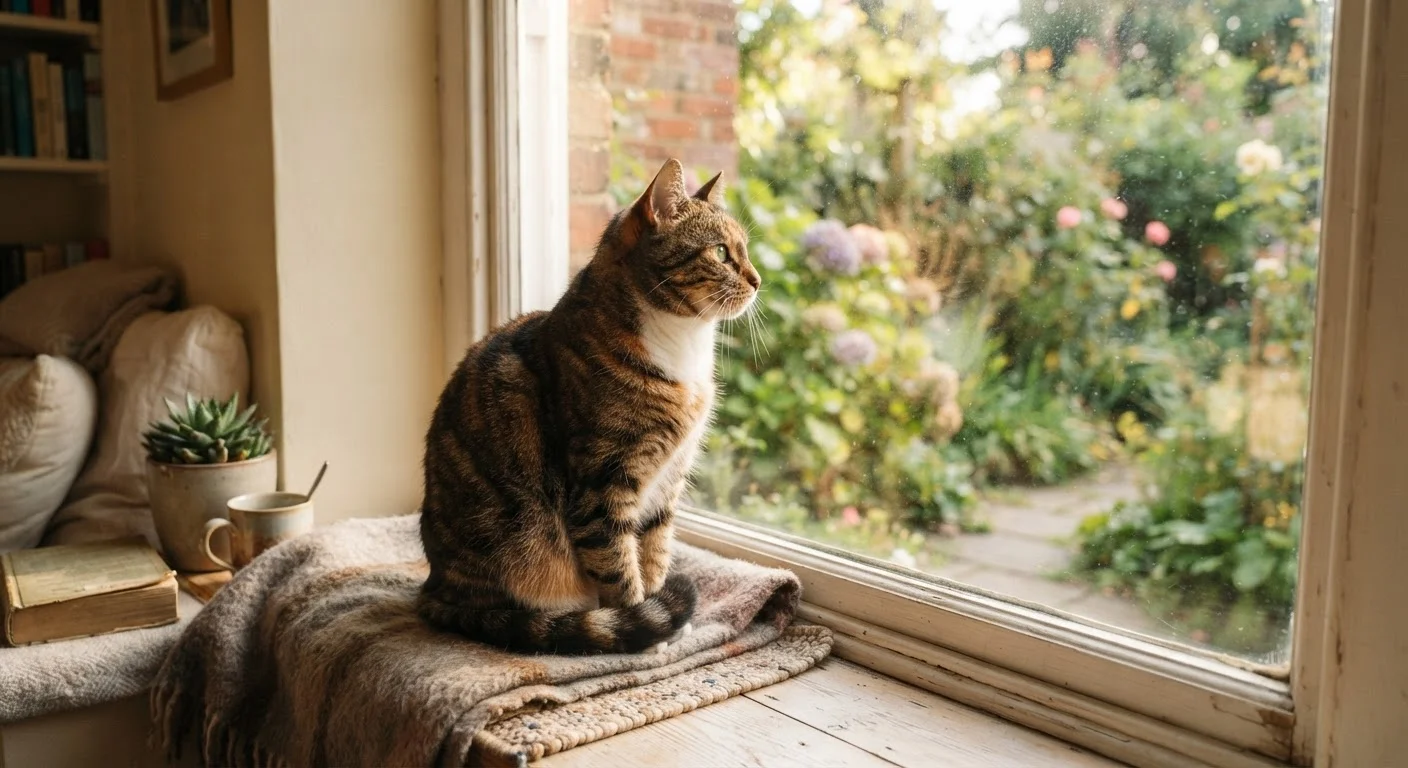
The good news is that the risks on both sides are manageable with deliberate planning. For indoor cats, environmental enrichment — puzzle feeders, climbing structures, window perches, rotating toys, and daily interactive play — can meaningfully offset the downsides of a sedentary lifestyle. Providing opportunities to express natural hunting behaviors matters for both physical fitness and emotional health.
For owners who want to give their cats some outdoor experience with reduced risk, options like enclosed catios, screened patios, or leash-and-harness walking provide controlled exposure to outdoor stimuli without free-roaming. These approaches require investment of time and sometimes money, but they can offer a practical middle ground.
Preventive veterinary care is essential in either scenario. Vaccinations, parasite prevention, annual wellness exams, and microchipping are foundational steps for any cat — indoors or out. If you're setting up care for a new cat, the new pet health checklist covers the core steps from the first vet visit onward. For everyday care guidance, the Pet Care Basics hub is a useful ongoing resource.
This article is for general informational purposes only and is not a substitute for professional veterinary advice. Always consult a licensed veterinarian for guidance specific to your cat's health and circumstances.