
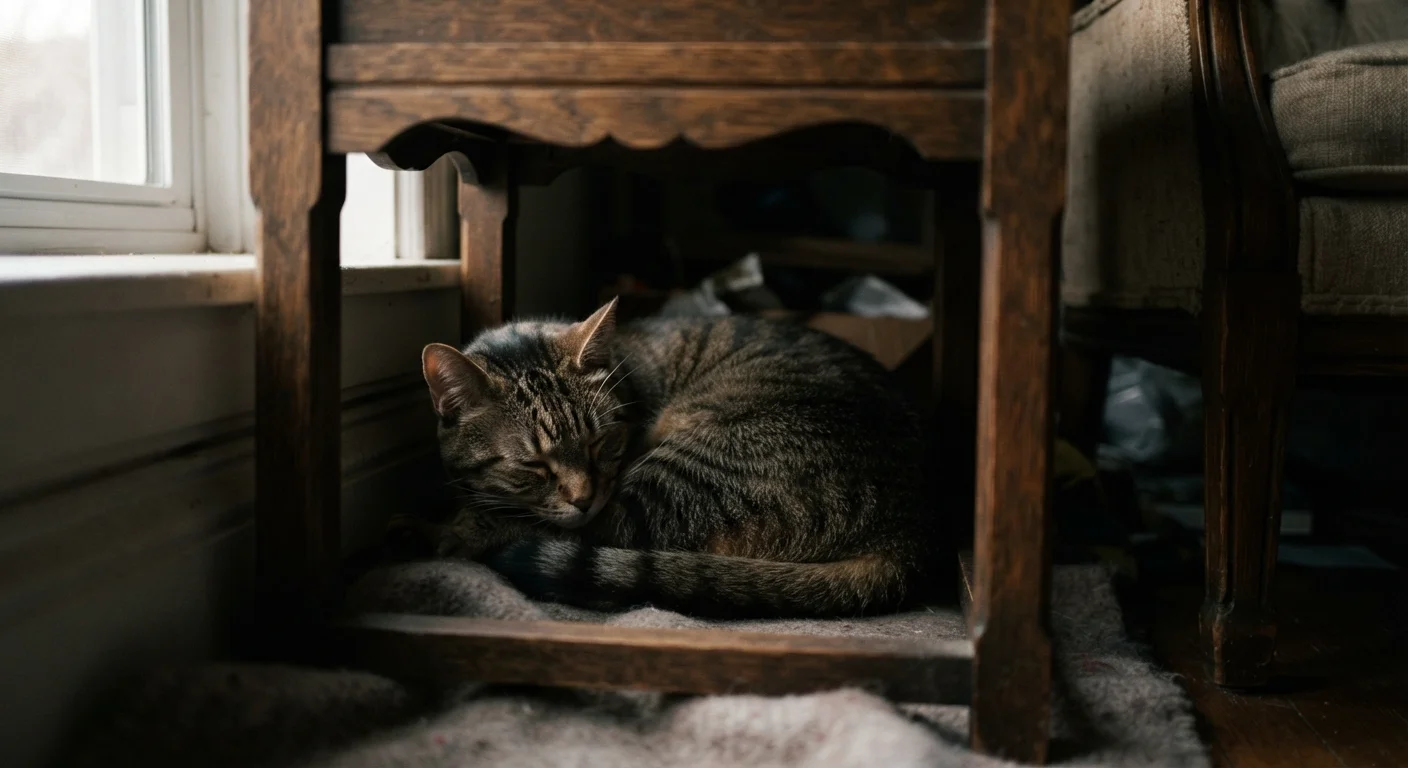
Why Cats Hide What They're Feeling
Cats have a well-earned reputation for self-sufficiency — and an equally well-earned one for concealing vulnerability. This instinct is rooted in survival: in the wild, showing weakness invites predation. Domestic cats carry that same wiring, which means a sick cat often looks, at first glance, like a cat that's simply being a cat.
That's what makes behavioral changes so important. Before obvious physical symptoms appear — weight loss, labored breathing, visible wounds — cats will frequently show you something is wrong through shifts in how they act. These changes can be easy to miss or rationalize away. But owners who know their cat's normal patterns are in the best position to catch them early.
This list covers the less obvious behavioral signals worth paying attention to. If you notice several of these together, or if a change is sudden or persistent, contact your veterinarian. For a broader look at which behavioral shifts should prompt an immediate evaluation, see when a vet visit should come first.
Withdrawing or hiding more than usual
A cat who suddenly retreats to closets, under beds, or behind furniture — and resists being drawn out — is displaying one of the most classic illness-related behavioral shifts. While some cats are naturally reclusive, a change from your cat's normal social pattern deserves attention. Sick or painful cats often seek isolation as a self-protective response.
Note how long the hiding lasts and whether your cat is eating, drinking, and using the litter box normally during that time. Persistent withdrawal combined with any appetite change is a meaningful combination. Signs your pet may be in pain offers additional guidance on reading these overlapping cues.
Persistent hiding combined with appetite changes is a meaningful combination that warrants veterinary attention.
Changes in grooming — too much or too little
Cats are fastidious groomers by nature, so deviation in either direction is notable. Over-grooming — licking a specific area repeatedly until the fur thins — can indicate localized pain, skin irritation, or anxiety. Under-grooming, resulting in a dull, matted, or greasy coat, often signals that a cat is feeling too unwell to maintain normal self-care. This is especially common in older cats dealing with joint pain or systemic illness.
Check for bald patches, redness, or skin changes beneath over-groomed areas. A coat that has visibly declined in condition without explanation warrants a vet conversation. You can also review stress signals in cats, since anxiety-driven over-grooming has its own set of accompanying signs.
A coat that's visibly declined in condition — without explanation — warrants a conversation with your vet.
Reduced or eliminated interest in play
A cat who suddenly stops engaging with toys, ignores play invitations, or moves with uncharacteristic lethargy may be experiencing discomfort, fatigue, or systemic illness. While play drive naturally decreases with age, a sharp or sudden drop — particularly in a younger or previously active cat — is different from gradual change and deserves notice.
Pay attention to whether your cat is moving differently as well. Reluctance to jump, stiffness when rising, or avoiding previously favorite elevated spots can accompany reduced play and suggest musculoskeletal pain or other physical issues.
A sharp or sudden drop in play drive — especially in a younger cat — is different from normal aging.
Changes in litter box habits
Alterations in litter box behavior are among the more reliable early signals that something may be physically wrong. These include: going outside the box, straining without producing output, visiting the box more frequently than normal, or producing noticeably different stool or urine (in color, consistency, or volume). Cats experiencing urinary tract issues, kidney problems, gastrointestinal distress, or pain during elimination may all display these changes.
Straining in the litter box — particularly in male cats — should be treated as urgent. A complete blockage can become life-threatening within hours. Any sudden litter box change warrants prompt veterinary contact rather than a wait-and-see approach.
Straining in the litter box — especially in male cats — should be treated as urgent and requires prompt vet contact.
Altered vocalization patterns
Most cat owners have a feel for how vocal their cat typically is. A quiet cat who begins vocalizing frequently — particularly at night — or a normally chatty cat who goes unusually silent may be signaling a shift in how they feel. Increased vocalization, especially yowling, can be associated with pain, cognitive changes in older cats, hyperthyroidism, or sensory decline such as hearing loss.
Changes in the quality of vocalization matter too. A hoarse or strained-sounding meow may suggest a throat or respiratory issue. Senior cats showing this pattern are worth evaluating for age-related conditions; caring for a senior pet covers what changes are expected versus which ones need investigation.
A quiet cat who begins yowling frequently, or a chatty cat who goes silent, may both be signaling something medical.
Increased irritability or new touch sensitivity
A cat who is normally tolerant of handling and suddenly reacts with hissing, swatting, or fleeing when touched in a specific area is communicating pain in the clearest way available to them. Pain-related aggression can look like a personality change but is most accurately read as a physical symptom. Location matters: if your cat reacts strongly to being touched around the abdomen, back, or legs, that area deserves examination.
Don't dismiss new aggression or fearfulness as a behavioral quirk without ruling out a medical cause first. For guidance on distinguishing pain-related behavioral changes from temperament or social issues, this resource on medical roots of behavioral change is a useful starting point.
Pain-related aggression can look like a personality change — but it's most accurately read as a physical symptom.
When to Act on What You Notice
No single item on this list automatically means something is seriously wrong. Context matters enormously: a cat who hides during a thunderstorm is behaving normally; a cat who stops emerging from under the bed for two days is not. The key is knowing your individual cat's baseline and treating meaningful deviations as information worth following up on.
Keep a Simple Behavior Log
If you notice a potential change in your cat's behavior, jot down what you observed, when it started, and how often it occurs. Even a few notes on your phone can help your veterinarian understand the timeline and pattern. Cats often appear more comfortable in a clinical setting than at home, so your observations are valuable diagnostic information.
When in doubt, a phone call to your veterinarian — describing what you've observed and for how long — is always a reasonable first step. You don't need to wait for a dramatic symptom before reaching out. Cats who receive care earlier in the course of an illness generally have better outcomes. Understanding your cat's body language more broadly can also help; this guide to feline body language is a helpful companion resource.
This article is for general informational purposes only and does not constitute veterinary medical advice. Always consult a licensed veterinarian regarding your cat's health and any symptoms you observe.