
How to Read This Guide
Cats communicate almost entirely through body language. Unlike dogs, they rarely use vocalizations as their primary signal — instead, they layer information across ears, eyes, tail, posture, and whiskers simultaneously. Reading these signals accurately can help you respond appropriately, reduce stress, and build trust with your cat.
This guide is organized by body region so you can look up a specific signal quickly. Keep in mind that individual signals rarely tell the whole story; always read the full body together. For a broader look at how stress shows up in pet behavior, see stress signals every pet owner should know.
Ears, Eyes, and Whiskers
Ears forward or slightly tilted: Alert and engaged. Your cat is curious and comfortable.
Ears rotated to the side ("airplane ears"): Anxious or overstimulated. This often precedes a swat or withdrawal — give the cat space.
Ears flattened against the head: Fearful or aggressive. This is a clear warning signal; do not reach toward the cat.
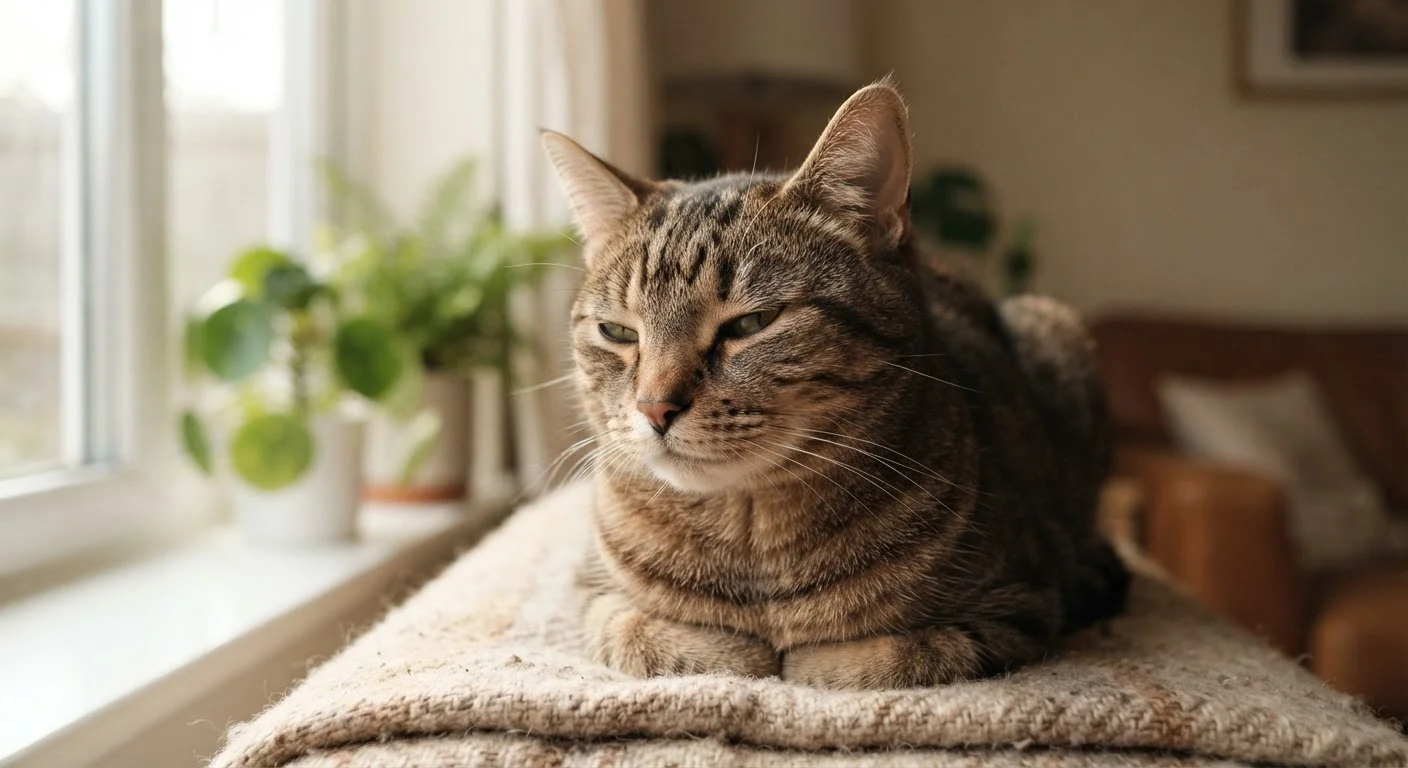
Slow blink: One of the clearest affiliative signals a cat can offer. A relaxed, deliberate blink directed at you signals trust. You can return the gesture by slowly blinking back.
Dilated pupils: Can indicate excitement, fear, or low light — context matters. Paired with flattened ears, it signals threat. Paired with a loose body, it may simply reflect dim lighting or playfulness.
Whiskers forward: Active curiosity or arousal during play. Whiskers pulled back flat: Fear or defensive aggression.
Piloerection
The involuntary raising of fur along the back and tail, making the cat appear larger. It is triggered by fear or aggressive arousal and is not under the cat's conscious control.
Slow blink
A deliberate, relaxed closing and reopening of the eyes directed at another individual. In cats, it signals trust and non-threat, functioning as a kind of social greeting.
Affiliative behavior
Friendly, bonding behaviors between individuals — such as head bunting, grooming, and slow blinking — that strengthen social relationships rather than establish dominance.
Overstimulation
A state in which a cat's sensory or emotional threshold is exceeded during interaction, often during petting. It can trigger sudden biting or scratching even when the cat appeared calm moments before.
Bunting
The act of pressing the forehead or cheek against a person or object. Cats have scent glands in these areas, so bunting is both an affectionate gesture and a form of scent-marking.
Tail Position and Movement
Tail held high, tip slightly curved: Confident, content, and friendly. Cats greeting a trusted human or companion often approach with tail up.
Tail straight up, fully puffed: Fear or defensive aggression. The cat is trying to appear larger. Back away and give it room to de-escalate.
Tail low or tucked: Submission, anxiety, or illness. A cat that suddenly begins carrying its tail low warrants a closer look — see subtle behavioral shifts that can signal illness in cats for what else to watch for.
Slow tail sway: Focused concentration, often seen during hunting. The cat is locked onto something.
Rapid tail lashing: Irritation or overstimulation. This is a pre-bite or pre-scratch warning, especially during petting.
When Body Language Changes Suddenly
A cat that abruptly shifts from relaxed to defensive postures — without an obvious environmental trigger — may be responding to pain or illness rather than a social threat. Chronic discomfort can make cats more reactive, withdrawn, or aggressive than their normal baseline. If you notice a persistent change in your cat's signals, consult your veterinarian to rule out a physical cause before assuming a behavioral one.
Posture and Full-Body Signals
Relaxed loaf or side stretch: The cat feels safe. A belly-up position is a trust signal, but it is not always an invitation to touch — many cats will swat if their belly is approached.
Arched back, sideways stance: Classic fear-aggression display. Combined with piloerection (raised fur), the cat is trying to intimidate a threat.
Head bunting and cheek rubbing: Affectionate scent-marking. Your cat is claiming you as part of its social group.
Crouched low with wide eyes: Fear without escape route. Avoid cornering a cat in this state.
Body language also shifts when cats share territory. If you have multiple cats and notice these defensive postures recurring between them, understanding feline territorial behavior in multi-cat households can help you interpret and address the tension. And if a cat's posture changes alongside other unusual behaviors, signs your pet may be in pain is worth reviewing with your veterinarian.
16+
Distinct ear positions cats can form
Researchers studying feline communication have identified over 16 distinct ear orientations, each conveying different emotional states.
~25
Vocalizations in adult cat repertoire
Studies in animal behavior suggest adult domestic cats use roughly 25 distinct vocalizations, but body language remains their primary social communication channel.