Why Mood Boards Work — and Where They Fall Short
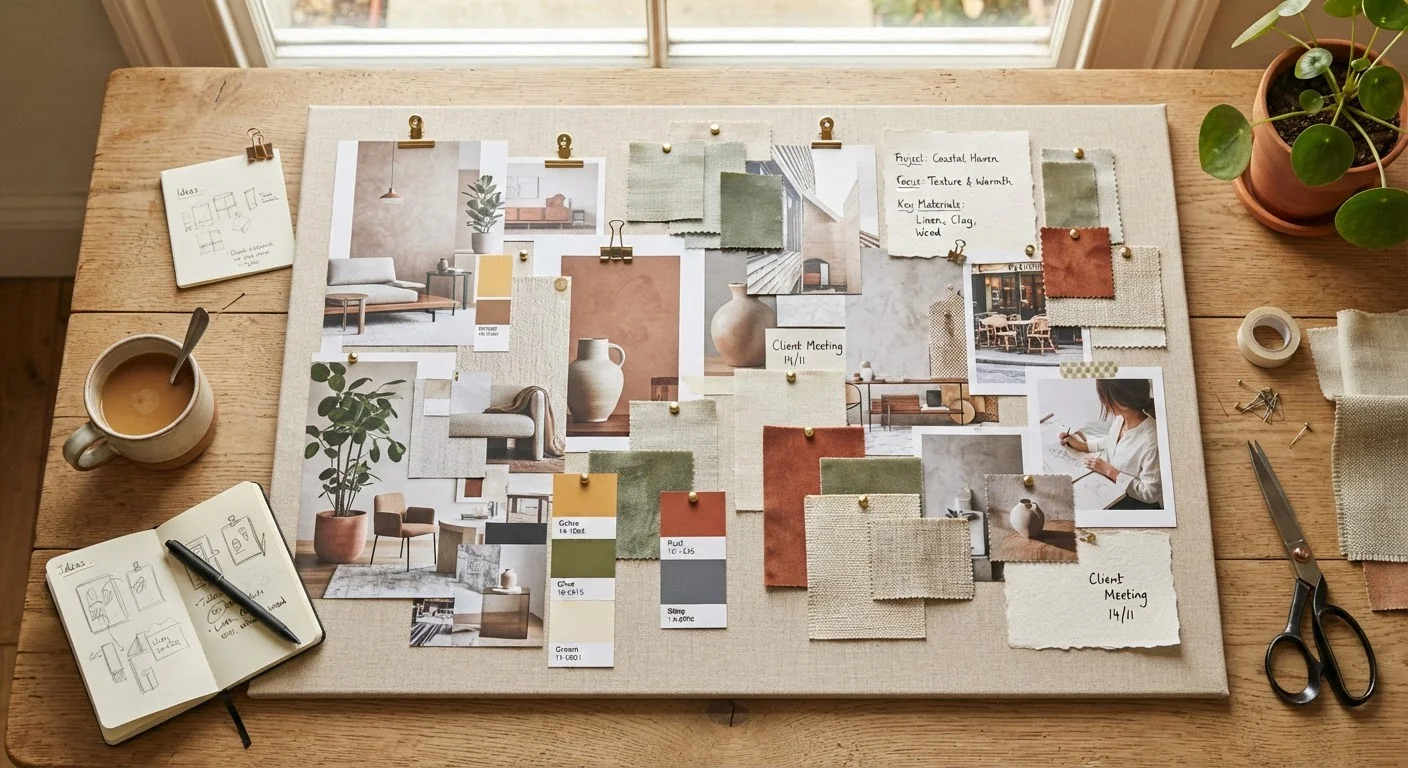
Mood boards have long been used by fashion designers, interior stylists, and creative directors to align a team around a visual language before anything is made. For everyday style development, the same principle holds: gathering imagery in one place forces you to confront what you're actually drawn to, rather than what you think you should like.
The process works because it bypasses rationalization. When you're scrolling or clipping on instinct, you accumulate honest data about your aesthetic before your analytical brain has a chance to edit it. The patterns that emerge — in color, texture, silhouette, and mood — tend to be more revealing than anything you'd arrive at by describing your style in words first.
That said, mood boards have real limits. The most common pitfall is building a board that's really a fantasy collage — images of lives, bodies, budgets, or contexts that have no relationship to your actual circumstances. This kind of board can feel motivating in the moment but produces no useful guidance when you're standing in front of your closet or making a practical decision. For a broader perspective on how self-directed creative practices can either empower or miss the mark, this grounded look at self-care practices offers useful context.
The exercises below are designed to make your mood board a genuinely useful tool — one that clarifies rather than complicates your style decisions.
Physical corkboard or poster board
Provides a tangible surface for arranging and rearranging clippings, swatches, and printed images.
Digital pinboard app (e.g., Pinterest, Milanote, or a simple folder of saved images)
Allows you to gather and organize visual inspiration digitally without physical materials.
Magazines or printed lookbooks
Rich source of editorial imagery that captures mood, texture, and styling in context.
Fabric or color swatches
Grounds the board in tactile reality — especially useful for understanding texture preferences.
Scissors and adhesive (for physical boards)
Needed to cut and attach physical clippings to a board surface.
A notebook or journal
For jotting down observations, recurring words, or questions that arise while building the board.
How to Build Your Mood Board Step by Step
Follow these steps in order. Each one builds on the last, moving you from open collection toward concrete, actionable style insight. You'll need the materials listed below before you begin.
What you will need
Gather without filtering
For the first phase, your only job is to collect. Pull images, textures, colors, and scenes that make you feel something — without stopping to question whether they're realistic, affordable, or consistent with what you already own. Go wide: pull from fashion editorial, interior design, nature photography, film stills, and art. This cross-category approach often surfaces patterns you wouldn't find in fashion alone.
Set a timer for 20–30 minutes and commit to pure instinct. Resist the urge to second-guess or self-edit.
Look for recurring patterns
Spread everything out — physically or digitally — and look at the collection as a whole. What colors keep appearing? What silhouettes, textures, or moods come up again and again? Are the images predominantly structured or relaxed? Saturated or muted? Urban or natural?
Write down three to five words that describe the overall feeling of your collection. These become the verbal anchors for your aesthetic — more useful than any single image.
Edit ruthlessly down to a focused board
Now apply the filter. Remove anything that doesn't resonate with your identified words — even if it's beautiful or stylish. The goal isn't to showcase everything you find appealing; it's to isolate what's distinctly you. Aim to reduce your collection by at least half.
A focused board of 15–20 images is more useful than a sprawling collection of 80. Clarity is the point.
Identify the gap between board and reality
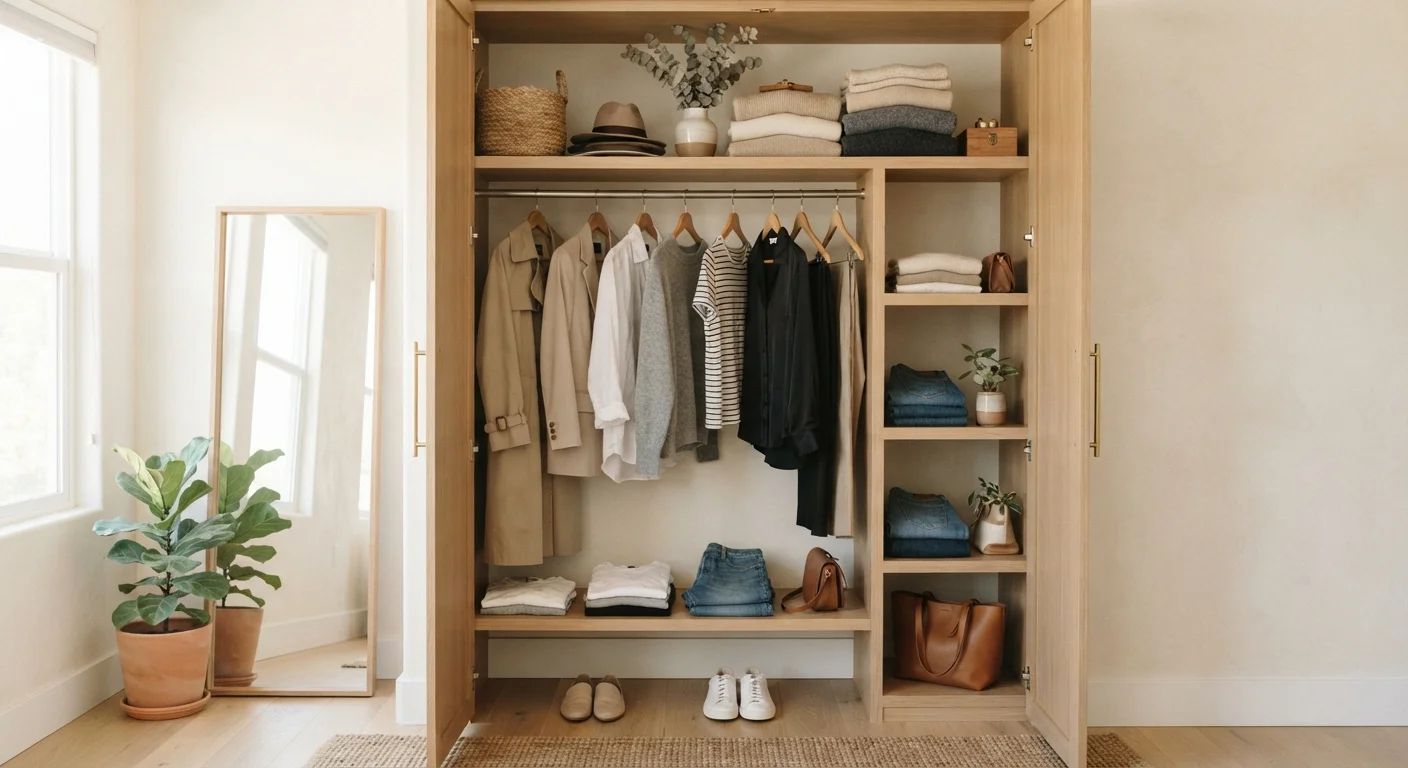
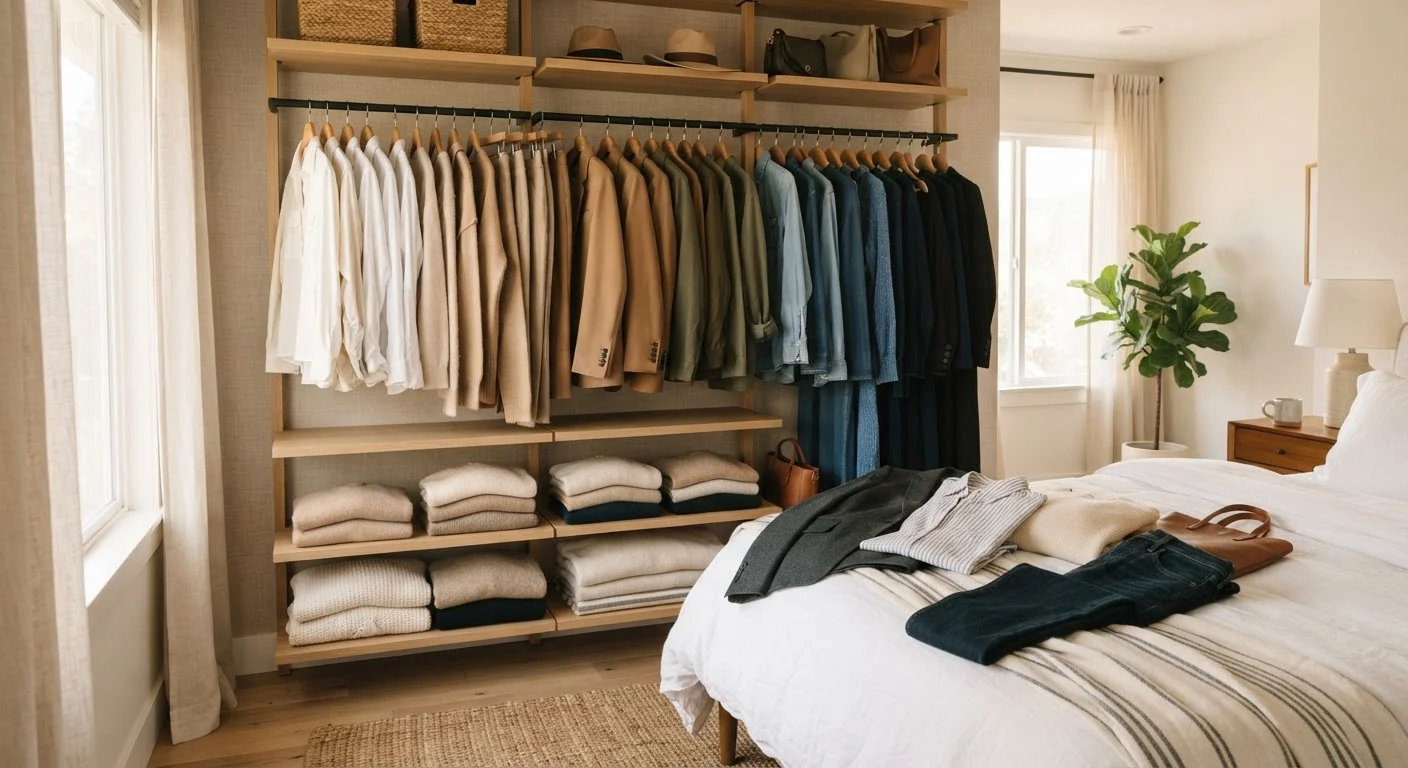
Place your edited board next to a photo of your current wardrobe or a mental inventory of what you actually wear. Where does the board connect to your real life? Where does it feel completely foreign?
This gap is the most important information the exercise produces. It tells you whether your aesthetic vision is practically achievable, whether it requires gradual shifts over time, or whether it reveals preferences you hadn't consciously acknowledged. For a deeper look at translating this insight into real wardrobe decisions, see our wardrobe-building guide.
Extract actionable style principles
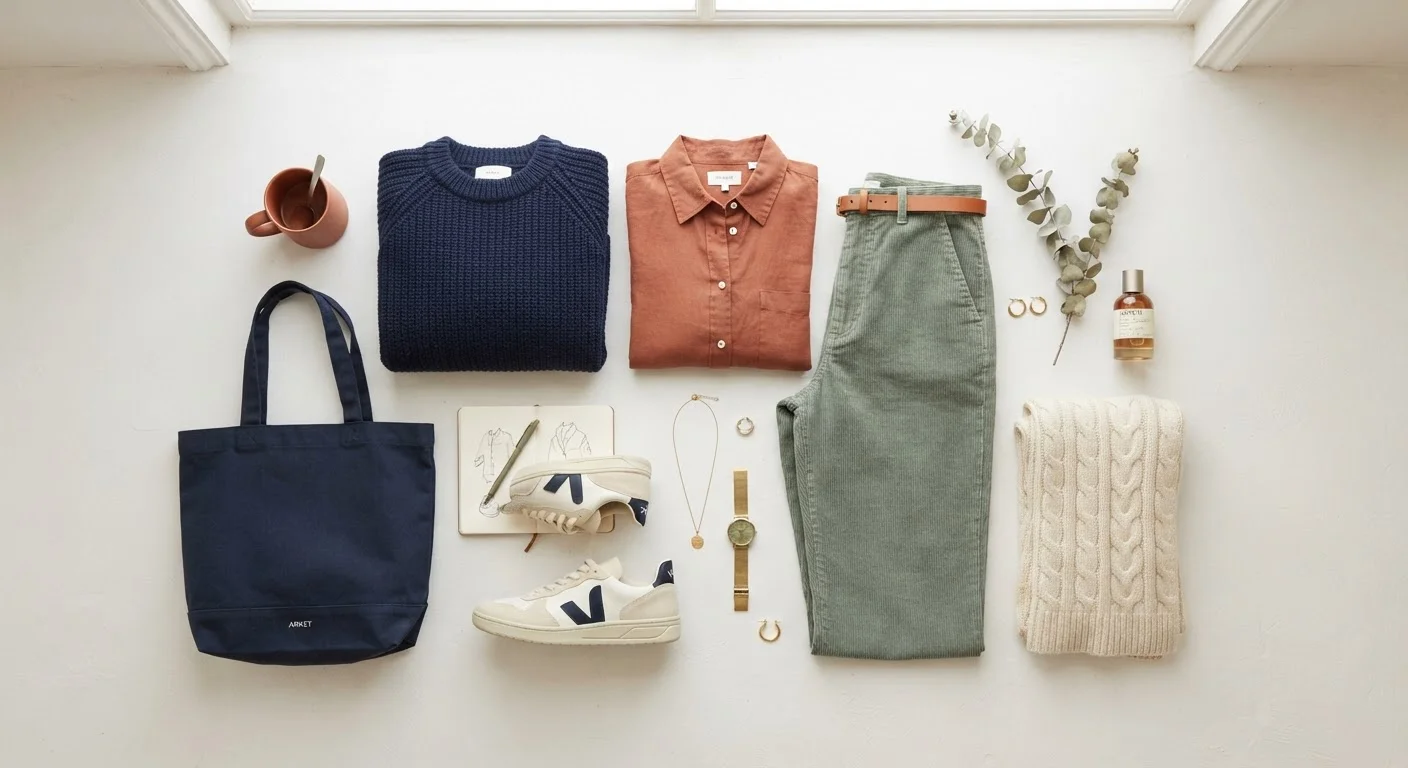
Translate your board from imagery into guidelines. Instead of "I want to dress like that," convert what you see into principles: "I'm drawn to monochromatic layering," "I prefer structured shoulders over oversized fits," "Earthy tones feel more like me than cool blues."
These principles travel with you into any shopping context or wardrobe decision — they don't depend on budget, season, or trend cycle. They're also the foundation of what style experts often call style touchstones: the recurring elements that give a look its cohesive quality.
Revisit and update the board periodically
A mood board is a living document, not a finished project. Life circumstances, environments, and personal values shift — and your aesthetic should be allowed to evolve with them. Plan to revisit your board every six to twelve months, adding new imagery and removing what no longer resonates.
This ongoing practice keeps your style intentional rather than reactive to trend cycles. If you're interested in how trends factor into that balance, our piece on navigating trends without losing your identity is worth reading alongside this exercise.
Use Words Alongside Images
After your first pass through your collected images, write down five adjectives that describe the feeling of the whole board — not individual pieces. Words like "grounded," "graphic," "quiet," or "layered" often capture an aesthetic more precisely than any single image. These descriptors become your most portable style reference, useful even when your board isn't in front of you.
Putting It Into Practice
Once you have your principles in hand, the mood board has done its job. From here, the work shifts to applying those principles in real-world decisions — auditing what's already in your wardrobe, making intentional additions, and recognizing when something doesn't actually fit your aesthetic even if it's appealing in isolation.
This is where the mood board exercise connects to the larger project of developing a personal style that's genuinely yours. For a complete framework covering identity, color, fit, and wardrobe building together, see our end-to-end personal style guide. It's a natural next step once you've clarified your visual direction here.
Don't Let Inspiration Become Pressure
A mood board is a reference tool, not a standard to measure yourself against. If reviewing your board starts to feel discouraging rather than energizing, it may be skewed too far toward aspirational imagery. Recalibrate by replacing images with ones that feel genuinely attainable and true to your current life — not a projected future version of it.