
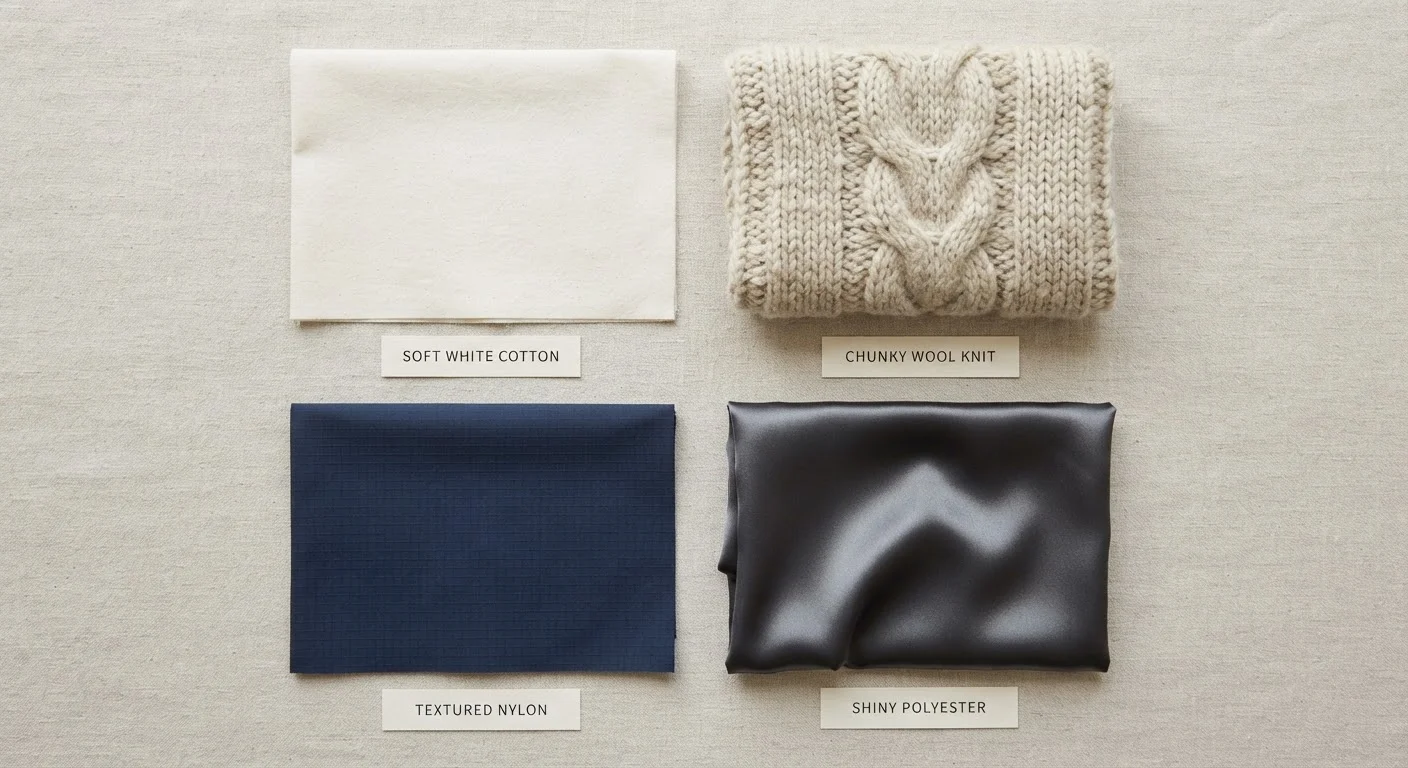
Where Each Fabric Comes From
The most fundamental difference between natural fibers and synthetic fabrics is their origin. Natural fibers are sourced directly from nature — cotton from the cotton plant, wool from sheep, silk from silkworm cocoons, and linen from the flax plant. These materials have been used in clothing for thousands of years and are processed with relatively minimal chemical intervention.
Synthetic fabrics, by contrast, are manufactured in laboratories and factories using chemical processes. Polyester is derived from petroleum, nylon from coal and water, and spandex from a group of polymers. These materials didn't exist until the 20th century, when advances in chemistry made it possible to engineer textiles with specific performance properties.
Understanding this origin difference helps explain why the two categories behave so differently on the body and in the laundry — something worth knowing when building a wardrobe that reflects your personal style.
| Criterion | Natural Fibers | Synthetic Fabrics |
|---|---|---|
| Source | Plants or animals (cotton, wool, silk) | Chemical processes (petroleum, polymers) |
| Breathability | Generally high | Generally lower |
| Moisture management | Absorbs moisture | Wicks moisture away |
| Durability | Moderate; care-dependent | High; resists wear and washing |
| Laundry ease | Requires more attention | Generally machine-washable, quick-dry |
| Odor retention | Lower tendency | Can trap odors over time |
| Environmental impact | Biodegradable; resource-intensive farming | Non-biodegradable; microfiber shedding |
| Cost (general range) | Varies; often higher | Often lower cost to produce |
Comfort, Breathability, and Performance
Natural fibers are widely recognized for their breathability. Cotton, for instance, absorbs moisture and allows air to flow through its weave, making it a go-to for warm climates and everyday wear. Wool is uniquely temperature-regulating — it insulates in the cold and releases heat in warmer conditions. Linen, though prone to wrinkling, is exceptionally light and breathable in summer heat.
Synthetic fabrics trade natural breathability for engineered performance. Polyester and nylon are hydrophobic — they repel water rather than absorbing it — which is why they're used in athletic wear and rain-resistant outerwear. Spandex (also called elastane or Lycra) adds stretch and recovery, allowing garments to move with the body. However, many synthetics trap heat and can hold onto odors when worn during physical activity, which is something to weigh against their durability advantages.
60%+
Share of global fiber production that is synthetic
According to Textile Exchange's Preferred Fiber & Materials Market Report, synthetic fibers — led by polyester — make up the majority of global fiber output.
~35%
Portion of microplastics in oceans from textile washing
Research published in the journal Environmental Science & Technology estimated that synthetic textile laundering accounts for a significant share of ocean microplastic pollution.
Blended fabrics — such as a cotton-polyester mix — are engineered to capture the best of both worlds: the softness and breathability of cotton combined with the wrinkle resistance and durability of polyester. These blends are common in everyday shirts, bed linens, and work attire.
Care, Durability, and Environmental Considerations
How a fabric holds up over time — and how much effort it takes to maintain — varies significantly between natural and synthetic materials. Natural fibers tend to require more attentive care: cotton can shrink in hot water, wool may felt or pill if agitated harshly, and silk demands gentle handling. That said, well-cared-for natural fiber garments can last decades and often soften beautifully with age.
Synthetics are generally more forgiving in the laundry. They resist shrinking, wrinkle less, and dry faster. However, they can develop static cling, pill over time, and — as research has increasingly noted — release microscopic plastic particles called microfibers with each wash cycle. These microfibers enter waterways and have been detected in marine ecosystems, raising environmental concerns about widespread synthetic use.
A Note on Fabric Labels and Blends
Garment care labels in the U.S. are required by the Federal Trade Commission to list fiber content by percentage. A label reading '60% cotton, 40% polyester' tells you exactly what you're working with. When shopping, checking this label gives you a clearer picture of how the fabric will feel, perform, and hold up — far more useful than relying on marketing terms like 'premium' or 'luxury' alone.
Natural fibers are biodegradable, but their production is not without environmental cost — cotton farming, for example, is water-intensive. The environmental calculus is genuinely complex on both sides, which means fabric choice involves trade-offs rather than clear-cut winners. Thinking critically about material sourcing is part of dressing with intention, much like understanding the difference between whole and processed ingredients in nutrition.