
Why Layering Is a Skill, Not Just an Outfit Strategy
Unpredictable weather doesn't have to mean unpredictable outfits. Once you understand what each layer is actually doing, getting dressed for a shifting forecast becomes a straightforward process rather than a daily guessing game. Layering is one of those foundational fashion concepts — like understanding your body proportions or building a color palette — that quietly upgrades everything else in your wardrobe. If you're working on developing a look that's both functional and personal, it's worth exploring how layering fits into the bigger picture of building a wardrobe that reflects who you are.
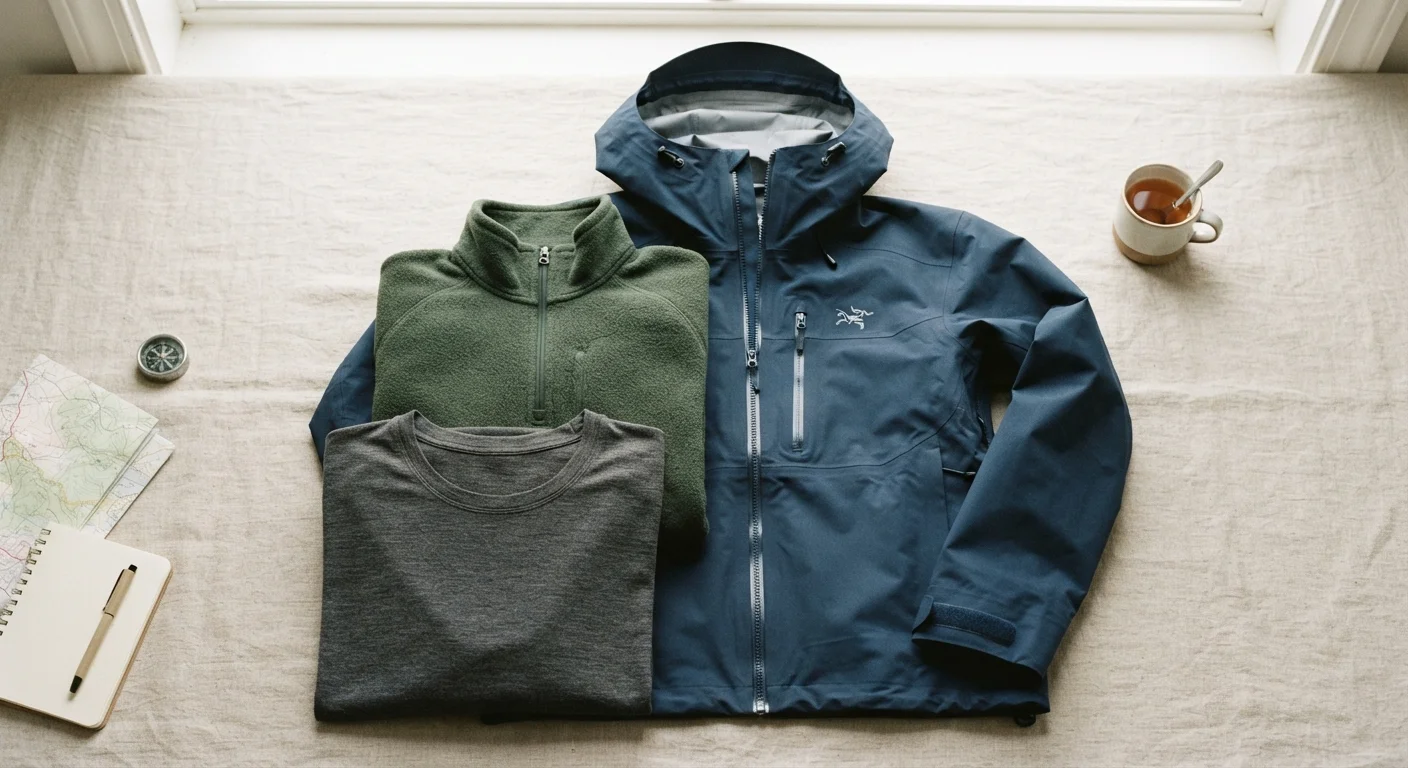
The system works on three levels: a base layer that manages moisture, a mid-layer that provides insulation, and an outer layer that protects against elements. Each layer has a specific role. When you understand those roles, you can mix and match pieces you already own — and make smarter decisions when you do add something new.
Moisture-wicking base layer
Pulls sweat away from your skin to keep you dry during temperature fluctuations or physical activity.
Insulating mid-layer
Traps body heat to keep you warm when temperatures drop, without adding excessive bulk.
Weather-resistant outer layer
Shields against wind, rain, and sharp temperature changes while allowing inner layers to breathe.
Packable tote or backpack
Lets you carry removed layers easily when conditions improve throughout the day.
How to Build Your Layering System Step by Step
Building a working layering system starts with evaluating what you already own and identifying the gaps. You may find that two of the three layers are already covered. The steps below walk you through selecting and assembling each layer so the system functions as a whole — not just as individual pieces stacked together.
Choose a breathable base layer
Your base layer is in direct contact with your skin, so its job is moisture management — not warmth. Look for lightweight, breathable fabrics like cotton jersey for dry climates or synthetic blends and merino wool for higher-activity situations. The fit should be close but not restrictive, allowing subsequent layers to sit smoothly on top.
Add an insulating mid-layer
The mid-layer is your primary source of warmth. Fleece pullovers, lightweight quilted vests, and knit sweaters all work well here. The key consideration is fit: your mid-layer needs to move freely over your base without bunching, and it should be slim enough to allow an outer layer on top. Zip-up styles offer better adjustability than pullovers when temperatures swing.
Select an outer layer suited to conditions
Your outer layer defends against wind, rain, and sudden cold. For mild unpredictability, a structured denim jacket or chore coat may be enough. For more serious weather swings, a water-resistant shell or a trench coat offers better protection. Prioritize outer layers with some breathability so heat doesn't build up underneath — look for venting options or moisture-releasing fabrics.
Check that all three layers work together
Put all three layers on at once and move around. Raise your arms, sit down, and check for pulling or bunching. Each layer should slide easily over the one below. If your outer layer feels tight across the shoulders with a mid-layer underneath, size up in outerwear — it's a common fit issue that can make a perfectly functional system uncomfortable to actually wear.
Plan for easy removal and storage
A layering system only works if you can adapt it on the go. Pieces that pack down small — like a packable vest or a lightweight shell that folds into its own pocket — give you flexibility without requiring a bag. If you're commuting or traveling, practice folding and stowing your layers so removing them midday feels natural rather than awkward.
Build Your System Gradually
You don't need to invest in all three layers at once. Start by identifying which layer you're currently missing — most people already own a decent base and outer layer but lack a versatile mid-layer. Filling that one gap can make an immediate difference. See our guide to common wardrobe gaps for more on identifying what's missing.
As seasons shift, your layering system will need to adapt too. The fabrics and weights that work in early fall are different from what you'll need in late winter. For a deeper look at making those transitions smoothly, see our piece on seasonal wardrobe transitions that actually hold up.
Common Layering Mistakes and How to Avoid Them
Fit Is Non-Negotiable in Layering
No amount of technical fabric performance compensates for layers that don't fit together properly. If your base bunches under your mid-layer, or your outer layer restricts arm movement, you'll stop using the system. Always try layers together — not just individually — before committing to them as part of your wardrobe.
Avoid Buying for a Single Scenario
It's tempting to build a layering system around one specific trip or occasion, but highly specialized pieces rarely earn their closet space. Focus on layers that work across multiple contexts — your daily commute, weekend errands, and casual social plans. Versatility is what makes a layering system genuinely useful rather than situational.
One of the most common layering errors is treating the outer layer as the only weather-adaptive piece and ignoring how the layers beneath it affect comfort. Another is choosing mid-layers that are too bulky, which limits outer layer options and makes the overall outfit look and feel overdressed. Keep mid-layers streamlined and your whole system gains flexibility.
If your style or lifestyle has shifted recently — a new job, a move to a different climate, or a change in daily routine — your layering needs may have changed too. The way we dress is rarely static. For perspective on navigating those kinds of shifts, personal style across life transitions offers useful framing.