What Heat Actually Does to Your Hair
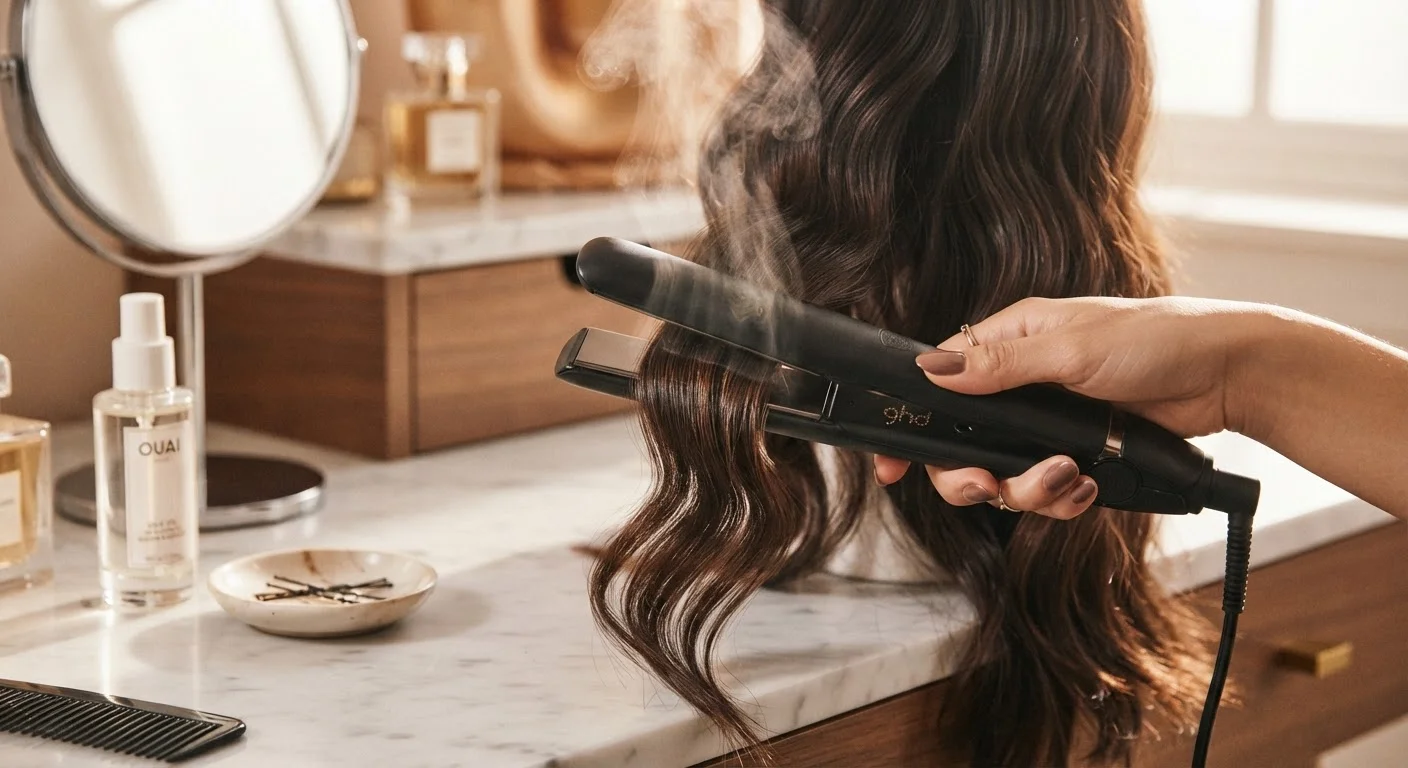
Every time you run a flat iron or blow dryer over your hair, you're triggering a temporary chemical shift. Hair strands are made up largely of keratin protein held together by hydrogen bonds. Heat breaks those bonds, allowing you to reshape the hair — straight, wavy, or curly — before the bonds reform as the hair cools. That's the science behind every blowout and sleek press.
The problem arises when heat is applied too frequently, at too high a temperature, or without any barrier between the tool and the strand. At those extremes, you're not just softening hydrogen bonds — you're potentially degrading the keratin itself. Cuticle cells (the protective outer layer of each strand) lift and crack, leaving the cortex inside more exposed to moisture loss and environmental stress. Over time, this shows up as frizz, split ends, dullness, and breakage.
Scalp health also plays an underappreciated role here. A well-nourished scalp produces stronger hair from the root, meaning the strand starts its life with more resilience to withstand the occasional heat session.
Hair Porosity Changes Everything
High-porosity hair — whether from genetics or chemical processing — absorbs and loses moisture rapidly, making it more vulnerable to heat damage than low-porosity hair. If your hair dries quickly, feels rough when wet, or absorbs products fast, you likely have higher porosity and may need to take extra precautions with heat. A strand test (dropping a clean hair in water and observing how quickly it sinks) is a simple at-home indicator. A licensed stylist can give you a more accurate assessment and personalized guidance.
The Real Pros of Heat Styling
Let's be honest — heat tools exist because they work, and for millions of people they're an essential part of feeling put-together. Here's what heat styling genuinely delivers:
Delivers precise, long-lasting style results quickly
Heat tools give you reliable control over texture and shape that air-drying alone rarely achieves. A blowout or press can last several days, reducing the total number of styling sessions per week.
Works across a wide range of hair types and textures
From fine, straight hair to thick natural coils, heat tools are among the most versatile styling options available, with adjustable temperature settings to accommodate different strand needs.
Boosts confidence and supports professional presentation
For many people, achieving a polished, intentional style is directly tied to how they feel in social and professional settings — a benefit that's genuinely meaningful and worth acknowledging.
Enhances product absorption and effectiveness
Gentle heat, particularly from a hooded dryer or warm blow dry, can help certain conditioning treatments penetrate the hair shaft more effectively, improving moisture retention.
The Real Cons Worth Knowing
The downsides of heat styling are real, but they're also largely manageable once you understand what's happening at the strand level.
Degrades keratin protein with repeated high-heat exposure
Sustained high temperatures break down the structural proteins in hair over time, leading to weakened strands that snap more easily and resist holding styles as well as healthy hair does.
Strips moisture, increasing dryness and frizz
Heat accelerates water evaporation from the strand. Hair that's chronically heat-styled without adequate moisture replenishment often becomes dehydrated and more prone to static and frizz.
Chemically processed hair is significantly more vulnerable
Hair that has been colored, bleached, relaxed, or permed already has a compromised cuticle. Adding heat to pre-processed hair compounds the structural stress, increasing the risk of severe breakage.
High heat can cause irreversible structural change
Unlike surface dryness that can be temporarily addressed with conditioning, damage to the inner cortex of the hair strand cannot be repaired — only grown out. This makes prevention far more effective than any post-damage treatment.
Tool quality directly affects the level of damage caused
Cheaper tools with inconsistent heat distribution create localized hotspots on the strand, causing uneven damage. Investing in a quality tool with precise temperature control reduces (though does not eliminate) this risk.
450°F+
Temperature at which severe hair protein damage accelerates
Hair science researchers generally identify temperatures above 450°F as the threshold where keratin degradation becomes most pronounced, though damage begins at lower temperatures with repeated exposure.
~3 inches
Average monthly hair growth to replace damaged ends
Since heat damage to the cortex is irreversible, the only true remedy is growing out affected hair — a process that takes months depending on individual growth rates.
Practical Ways to Style Smarter
Reducing heat damage doesn't mean giving up your tools — it means using them more strategically. A few habits make a significant difference:
- Use a heat protectant every single time. These products create a temporary barrier that slows moisture loss and distributes heat more evenly. Look for formulas that note a temperature range on the label and match it to your tool setting.
- Start low, go slow. Many people reflexively reach for the highest heat setting, but most fine-to-medium hair responds well to temperatures between 300°F and 350°F. Coarser or very thick hair may need more, but starting lower and adjusting is always safer than assuming maximum heat is necessary.
- Dry hair before applying direct heat. Using a flat iron or curling wand on damp hair causes the water inside the strand to boil and expand, which is significantly more damaging than styling dry hair.
- Build in rest days. Alternating heat styling with air-dry days or protective styles gives your hair's moisture balance a chance to recover.
- Trim regularly. Split ends travel up the shaft over time. Regular trims keep the damage from compounding.
Understanding how your tools work also matters — for example, ceramic and tourmaline plates distribute heat more evenly than lower-quality alternatives, reducing hot spots that cause uneven damage. Just as temperature extremes can harm electronics (learn how heat warps device batteries), concentrated heat from a poorly made tool can create damaging spikes on individual strands.