Why Coat Type Is the Starting Point for Every Grooming Decision
Not all dog grooming advice applies equally to every dog. A brushing schedule that works perfectly for a Labrador Retriever could leave a Standard Poodle matted and uncomfortable within days. That's because coat structure - the texture, layer count, and growth pattern - determines how quickly tangles form, how much dead hair accumulates, and how often a dog truly needs a bath or trim.
Understanding your dog's coat category is the most practical first step toward a routine that actually fits their needs. The five major types covered here - smooth, double, long, wiry, and curly - each have distinct care requirements. If you're also looking to build the broader schedule around grooming, a structured daily routine can help you integrate grooming naturally alongside feeding and exercise.
| Smooth coat brushing frequency | Once per week |
| Double coat brushing frequency | 2-3 times per week (daily during shedding season) |
| Curly/wavy coat brushing frequency | Every 1-2 days |
| Typical professional grooming interval (curly coats) | Every 4-6 weeks |
| Typical professional grooming interval (wiry coats) | Every 8-12 weeks |
| Should double coats be shaved? | Generally no - shaving can disrupt natural insulation |
The Five Main Dog Coat Types and What They Need
Undercoat
The dense, soft layer of fur beneath a dog's outer coat. It provides insulation and sheds seasonally in double-coated breeds, requiring regular removal to prevent matting.
Hand-stripping
A grooming technique used on wiry-coated breeds that involves manually pulling dead outer coat hairs rather than cutting them. It preserves the coat's natural texture and encourages healthy new growth.
Blowout (shedding season)
The period - typically in spring and fall - when double-coated dogs shed their undercoat heavily. During this time, more frequent brushing is needed to manage the volume of loose fur.
Slicker brush
A flat or slightly curved brush with fine, short wire pins set close together. Used to remove loose fur, detangle, and smooth a variety of coat types, especially longer or denser coats.
De-shedding treatment
A professional grooming service designed to remove loose undercoat efficiently using specialized tools or techniques, often recommended during heavy shedding periods for double-coated breeds.
Smooth Coats
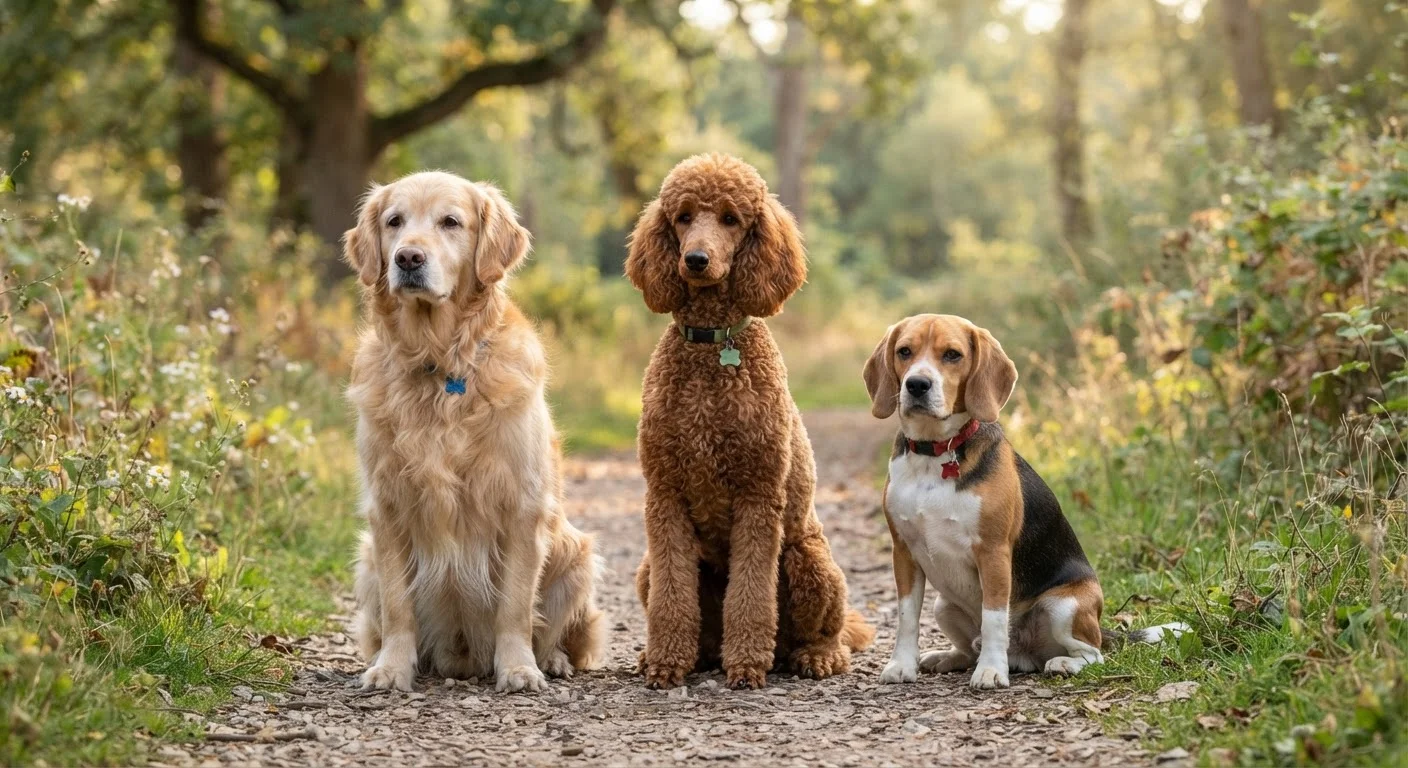
Breeds like Beagles, Boxers, and Greyhounds have short, flat coats that lie close to the skin. Shedding still occurs - sometimes heavily - but tangles are not a concern. A rubber grooming mitt or a bristle brush used once a week manages loose hair effectively. Bathing every four to six weeks is typically sufficient unless the dog gets into something messy. The main task is keeping skin folds or wrinkles (in breeds like Bulldogs) clean and dry to prevent irritation.
Double Coats
Double-coated breeds such as Huskies, German Shepherds, and Golden Retrievers have a dense undercoat beneath a longer outer coat. This insulating layer sheds heavily - especially during seasonal blowouts in spring and fall. An undercoat rake or slicker brush used two to three times per week prevents matting and removes dead undercoat before it compacts. Professional de-shedding treatments can help during peak shedding periods. Avoid shaving a double coat: it disrupts the natural insulation system and can interfere with temperature regulation.
Long Coats
Afghan Hounds, Shih Tzus, and Maltese fall into this category. Long, flowing coats are prone to tangles, debris pickup, and mat formation - particularly around the ears, armpits, and collar area. Daily brushing with a pin brush or wide-toothed comb is typically necessary. Many owners opt for professional grooming every six to eight weeks for trims that keep the coat manageable. Bathing frequency depends on the coat's condition, but thorough drying after baths is critical to prevent skin moisture buildup.
Wiry (Harsh) Coats
Terriers, Schnauzers, and Wirehaired Pointing Griffons have coarse, dense coats with a rough texture. This coat type ideally benefits from a process called hand-stripping - physically pulling dead outer coat hairs to maintain texture and allow new growth. Many pet owners opt for clipping instead, which is easier but gradually softens the coat's characteristic texture over time. Brushing two to three times per week prevents debris buildup. Professional grooming every eight to twelve weeks is common for wiry-coated breeds.
Curly and Wavy Coats
Poodles, Portuguese Water Dogs, and Bichon Frises have coats that grow continuously rather than shedding in a traditional cycle. This reduces loose hair in the home but means the coat can mat quickly if not brushed frequently - ideally every one to two days. Professional grooming every four to six weeks for trimming and shaping is typically necessary to keep the coat healthy and comfortable. Curly coats also trap moisture, so thorough drying after baths is especially important to avoid skin issues.
Building a Realistic Routine Around Your Dog's Coat
Once you know your dog's coat category, the goal is consistency over perfection. A short, frequent brushing session is more effective than an occasional marathon grooming attempt - and far less stressful for your dog. Start grooming routines early in a dog's life so they become accustomed to being handled.
Mixed-Breed Coats Can Combine Traits
Dogs with mixed heritage - particularly popular doodle crossbreeds - may inherit coat characteristics from both parent breeds, resulting in a coat that doesn't fit neatly into one category. The grooming needs can vary even between littermates. A professional groomer experienced with mixed coats can assess the texture and density and recommend a routine suited to that individual dog.
Professional groomers are a genuine resource for coat-specific guidance. They can identify early matting, skin conditions, or coat changes that might otherwise go unnoticed. If your dog has a mixed-breed coat - common in doodle crosses, for example - a groomer can help you identify which traits are dominant and tailor their approach accordingly.
Keep in mind that grooming isn't only about appearance. Regular brushing allows you to check for lumps, parasites, skin irritation, or unusual hair loss - early observations worth discussing with your veterinarian. This article provides general guidance; always consult your vet if you notice skin changes or coat problems that concern you.
This article is for general informational purposes only and does not constitute veterinary advice. Consult a licensed veterinarian for concerns about your dog's health or coat condition.