Understanding Why Your Dog Reacts
Leash reactivity - barking, lunging, or growling at other dogs while on a leash - is one of the most commonly misunderstood dog behaviors. It is not a sign that your dog is aggressive or untrainable. Most reactive dogs are experiencing anxiety, frustration, or an overloaded stress response, often amplified by the physical constraint of a leash.
The leash removes your dog's ability to flee or approach on their own terms, which forces an exaggerated reaction. Understanding this distinction matters: you are not correcting bad behavior, you are helping your dog feel safe enough to make better choices.
Before beginning any training, it helps to understand what your dog is communicating through their body. Reading dog body language gives you the foundational signals - tension in posture, hard stares, and tail position - that tell you how your dog is feeling before they hit full reaction mode. Catching these early warning signs is critical to effective training.
Avoid Punishment-Based Corrections
Jerking the leash, scolding, or using aversive tools like prong or shock collars to suppress reactive behavior does not address the underlying anxiety - and can make it significantly worse. These approaches risk increasing your dog's negative associations with other dogs. Positive reinforcement-based desensitization is the approach most supported by current behavioral science.
What You'll Need Before You Start
Successful desensitization training requires the right setup and tools. Attempting this without preparation can stall progress or make reactivity worse.
What you will need
High-Value Training Treats
Used to reward calm behavior and counter-condition your dog's emotional response to other dogs.
Standard 4-6 Foot Leash
Maintains safe control while allowing your dog to move naturally during training sessions.
Front-Clip or No-Pull Harness
Reduces pulling force on the neck and gives you better directional control without adding discomfort.
Clicker or Verbal Marker
Precisely marks the moment of desired behavior so your dog understands what earned the reward.
Training Pouch or Treat Bag
Keeps treats accessible so you can reward your dog quickly without fumbling.
A predictable daily routine also supports this work - dogs that get adequate exercise, rest, and mental stimulation enter training sessions with lower baseline stress.
Step-by-Step: Desensitization and Counter-Conditioning
The two core techniques used in reactive dog training are desensitization (gradually exposing your dog to triggers at a safe distance) and counter-conditioning (pairing the trigger with something your dog loves, like a high-value treat). Used together, they work to change what your dog feels when they see another dog - not just what they do.
Identify Your Dog's Threshold Distance
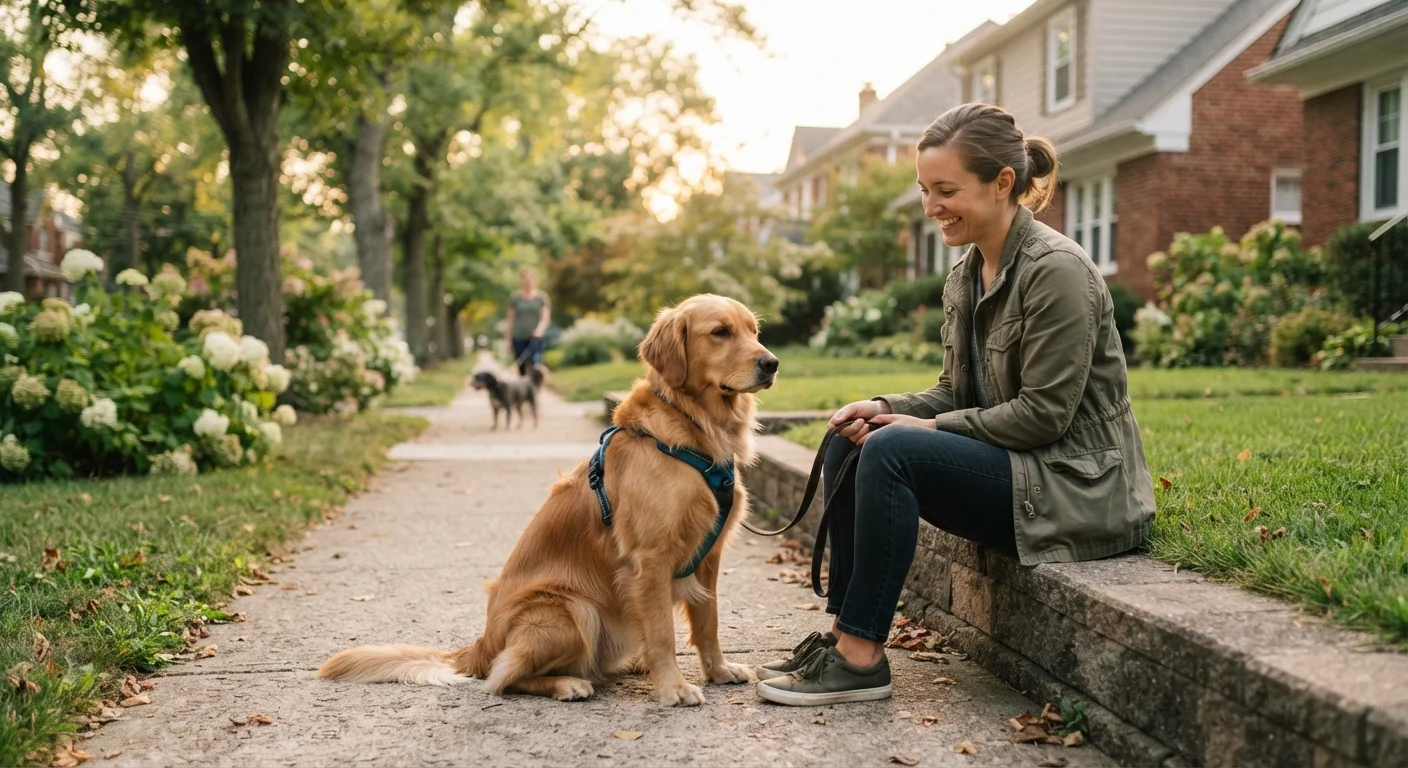
Your dog's threshold is the distance at which they can see another dog without reacting. This is your starting point - never begin training above threshold. Take your dog to a quiet area and observe: at what distance can they notice another dog, glance away, and still accept a treat? That distance is your working zone.
Practice 'Look at That' to Build Awareness Without Reaction
Once you know your dog's threshold, use a simple exercise: when your dog notices another dog at a safe distance, immediately mark the moment (with a clicker or a clear verbal marker like "yes") and deliver a high-value treat before any reaction builds. Over repetitions, your dog learns that spotting another dog predicts a reward, which begins to shift their emotional response from alarm to anticipation.
Gradually Decrease Distance Over Multiple Sessions
Once your dog is consistently orienting to you for a treat after seeing a dog at their current threshold distance, you can slowly decrease the gap - by a few feet at a time, across separate sessions. Never rush this. If your dog reacts, you have moved too close too fast. Calmly increase distance and return to where they were successful.
Teach a Reliable Attention Cue
Training a strong name response or "watch me" cue gives you a tool to redirect your dog's focus before a reaction escalates. Practice this cue in low-distraction settings first, rewarding your dog heavily for eye contact. Then gradually introduce it in busier environments, building toward using it when another dog is at the edge of your dog's threshold.
Manage the Environment Between Training Sessions
Training sessions are structured practice - but your dog's day-to-day exposure matters equally. Avoid situations that push your dog over threshold between sessions, as each full-blown reaction reinforces the emotional pattern you are working to change. Cross the street when needed, choose low-traffic walking times, and use physical barriers like parked cars to increase distance quickly when another dog appears unexpectedly.
Short Sessions Work Better Than Long Ones
Keep desensitization sessions to 5-10 minutes maximum. Dogs - especially anxious ones - fatigue mentally much faster than physically. Ending while your dog is still calm and successful builds confidence far more effectively than pushing through until they react.
If your dog's reactivity is severe, accompanied by redirected biting toward you, or has not improved after consistent training, consult a certified professional dog trainer (CPDT-KA) or a veterinary behaviorist. When pet anxiety goes beyond quirky outlines what professional behavioral support looks like and when it is the right step.
This article is for general educational purposes only and is not a substitute for professional behavioral or veterinary advice. A qualified professional can assess your individual dog's needs.