
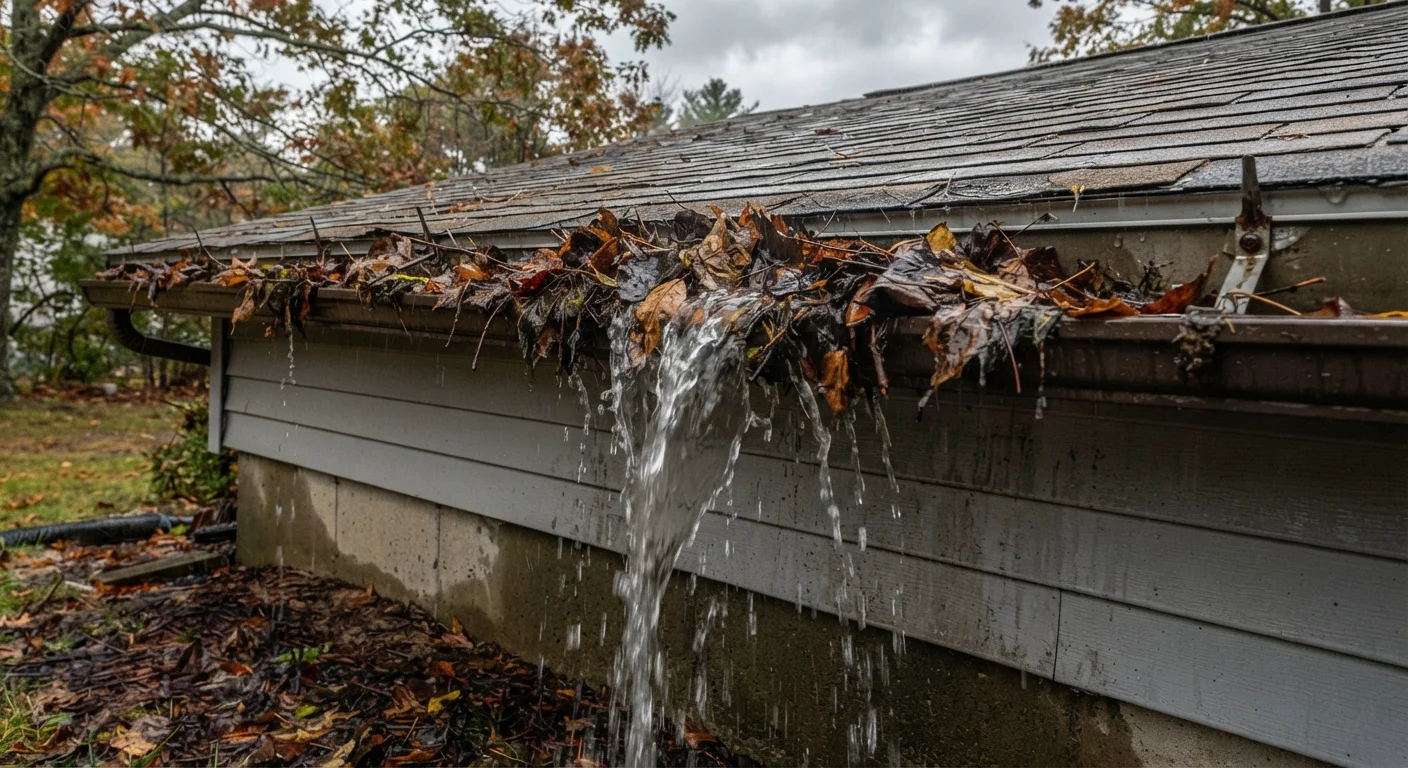
Why Gutters Deserve More Attention Than They Get
Gutters are easy to overlook. They sit at the edge of the roofline, out of direct sight, and when they're working correctly you never think about them. That invisibility is exactly why gutter neglect is one of the most common - and most expensive - home maintenance mistakes American homeowners make.
The job of a gutter system is deceptively simple: collect rainwater and snowmelt from the roof and channel it away from the home's foundation. When that system fails, water goes somewhere it shouldn't. It pools against your foundation, saturates your soil, backs up under roofing materials, and eventually finds its way inside. The damage that follows - foundation cracks, basement leaks, rotted fascia boards, mold - can cost thousands of dollars to remediate.
Understanding what goes wrong, and why, is the first step toward preventing it. See also our guide on deferred maintenance costs for a broader look at how skipped upkeep compounds over time.
Cleaning gutters only once a year - or not at all.
Why it happens: Most homeowners treat gutter cleaning as a once-and-done fall chore, not realizing that spring debris from blooming trees and winter's accumulated grit also create blockages.
Ignoring sagging or separating gutter sections.
Why it happens: Gutters that visibly droop or pull away from the fascia are often dismissed as cosmetic issues, when in fact they indicate failed hangers or rotted attachment points that prevent proper drainage.
Failing to check that gutters are pitched correctly toward downspouts.
Why it happens: Gutters need a slight slope - roughly a quarter inch of drop for every 10 feet - to drain properly. Over time, hangers loosen or settle, leaving sections level or even pitched backward, causing water to pool.
Neglecting downspouts and their discharge points.
Why it happens: Homeowners focus on the gutter trough itself and overlook the downspouts, which can clog at elbows or discharge water too close to the foundation.
Assuming gutter guards eliminate the need for maintenance.
Why it happens: Gutter guards and leaf filters are marketed as low-maintenance solutions, leading many homeowners to stop inspecting gutters entirely after installation.
The Real Consequences: What Neglected Gutters Actually Damage
The damage trail from ignored gutters typically follows a predictable pattern, starting at the roofline and working downward.
$10,000+
Average foundation repair cost from water intrusion
Industry estimates from home inspection and foundation repair professionals consistently place water-related foundation remediation in this range or higher, depending on severity.
2x/year
Recommended gutter cleaning frequency
Most building and home maintenance authorities recommend cleaning gutters at least twice annually, with additional cleanings for homes surrounded by heavy tree cover.
Roof and fascia damage usually appear first. When gutters fill with debris, standing water backs up against the fascia board - the trim that runs along the roofline - and saturates the wood. Over time, this causes rot that compromises the structural attachment points of the gutter itself and can allow moisture to work under roofing materials. For more on spotting early roof warning signs safely, see roof maintenance guidance for homeowners.
Foundation problems are the most serious downstream consequence. When water overflows gutters and pools at the base of a home rather than being diverted away, it saturates the soil around the foundation. Repeated cycles of saturation and drying cause soil to expand and contract, which can lead to foundation settling or cracking - a repair that frequently runs into the tens of thousands of dollars.
Basement and crawlspace moisture often trace back to the same source. Homeowners spend significant money on interior waterproofing solutions without realizing that properly functioning gutters and downspouts - combined with correct soil grading - are the first line of defense. Similarly, water problems that seem like plumbing issues can sometimes involve drainage; our overview of underestimated plumbing problems covers related warning signs worth knowing.
Foundation Damage Is Not a DIY Repair
If you notice cracks in your foundation, water intrusion in your basement, or doors and windows that no longer open and close properly, consult a licensed structural engineer or foundation specialist before attempting any fix. These symptoms can indicate serious structural issues that require professional assessment. Gutter maintenance is straightforward homeowner territory; foundation remediation is not.
For a full seasonal framework that includes gutter maintenance alongside other critical tasks, refer to our seasonal home maintenance calendar.