
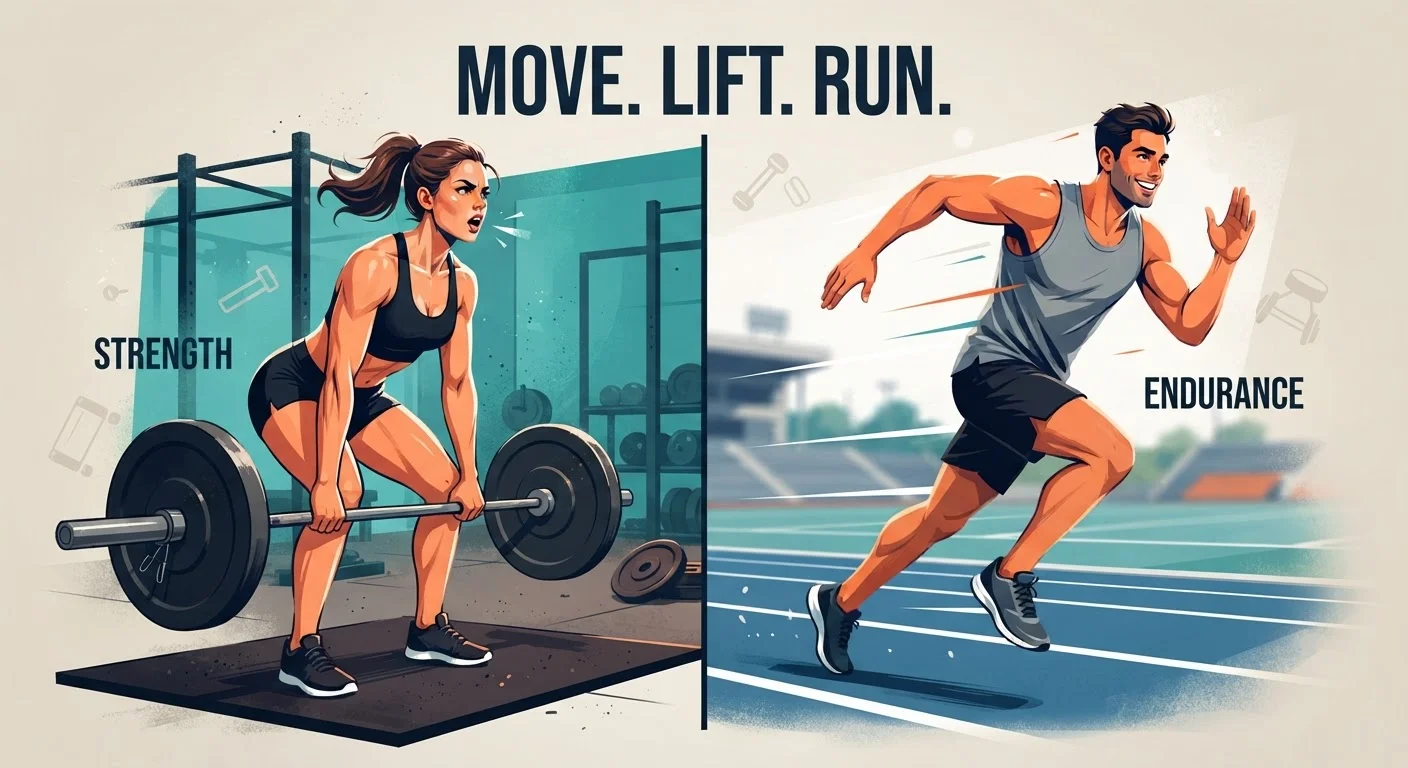
What Strength Training Does to Your Body
Strength training - also called resistance training - involves working muscles against an external load. That load can be free weights, machines, resistance bands, or even your own bodyweight. For a thorough look at the latter, see our introduction to bodyweight training.
The core adaptation from strength training is muscle hypertrophy: controlled micro-damage to muscle fibers triggers repair and growth during recovery. Over time, this process increases lean muscle mass, which raises your resting metabolic rate - meaning your body burns more calories even at rest. Research published in peer-reviewed exercise science journals consistently links higher muscle mass to better insulin sensitivity and reduced risk of type 2 diabetes.
Strength training also places mechanical stress on bone, which stimulates bone-forming cells called osteoblasts. This is why it is frequently recommended as a tool for maintaining bone density, particularly as people age. Additionally, building strength in key muscle groups supports joint stability and can reduce the risk of common injuries in daily life.
| Criterion | Strength Training | Cardio |
|---|---|---|
| Primary adaptation | Muscle growth, strength gains | Improved heart and lung efficiency |
| Bone health impact | Directly stimulates bone density | Modest benefit (weight-bearing types) |
| Calorie burn (per session) | Moderate | Higher during activity |
| Resting metabolism | Increased with muscle mass gains | Minimal long-term effect |
| Mood and mental health | Positive, moderate effect | Strong effect via endorphins and BDNF |
| Equipment needed | Weights, bands, or bodyweight | Often none (walking, running) |
| Chronic disease risk reduction | Strong evidence | Strong evidence |
What Cardio Does to Your Body
Cardiovascular exercise - any sustained, rhythmic activity that elevates your heart rate - trains the heart and lungs to work more efficiently. The most direct adaptation is an increase in VO₂ max, the maximum rate at which your body can use oxygen during intense exercise. A higher VO₂ max is one of the strongest known predictors of long-term cardiovascular health and longevity.
Regular aerobic activity lowers resting blood pressure, improves cholesterol profiles, and reduces inflammation markers associated with heart disease. It also triggers the release of endorphins and brain-derived neurotrophic factor (BDNF), a protein linked to improved mood, reduced anxiety, and better cognitive function.
Cardio burns more calories per session than most strength workouts of equal duration, which can support body composition goals - though this advantage narrows when strength training's effect on resting metabolism is factored in over weeks and months. For a deeper look at specific cardio formats, including the increasingly discussed low-intensity approach, see our article on Zone 2 cardio.
~17%
Lower all-cause mortality risk
A large meta-analysis in the British Journal of Sports Medicine found that meeting both aerobic and muscle-strengthening guidelines was associated with roughly 17% lower all-cause mortality compared to meeting neither.
2x/week
Minimum strength sessions recommended
U.S. physical activity guidelines recommend muscle-strengthening activities on two or more days per week for substantial health benefits in adults.
150 min
Weekly moderate-intensity cardio target
Federal guidelines suggest at least 150 minutes of moderate-intensity aerobic activity per week, or 75 minutes of vigorous-intensity activity, for most healthy adults.
What the Evidence Says About Combining Both
Major health organizations, including the U.S. Department of Health and Human Services, recommend that most adults aim for both moderate-intensity aerobic activity and muscle-strengthening activities each week. This is not arbitrary - research consistently shows that people who perform both types of exercise have lower all-cause mortality than those who do only one.
A combined approach addresses the full spectrum of fitness: cardiovascular efficiency, muscular strength, metabolic health, bone density, and functional capacity. Many workout formats deliberately blend both stimuli; our guide to common exercise formats explains how structures like circuit training and HIIT attempt to deliver both benefits in a single session.
Both Types Complement, Not Compete
A common concern is that doing cardio will undermine muscle-building, or that lifting will make you 'too stiff' for aerobic fitness. Current research suggests these fears are largely overstated for most people training at moderate volumes. Thoughtful programming - spacing sessions appropriately and monitoring total load - allows both to coexist productively. If you find your performance declining, see our article on recognizing overtraining signs.
Regardless of which type of exercise you prioritize, adequate recovery is essential. Muscle repair and cardiovascular adaptation both happen between sessions, not during them. Our article on understanding recovery in exercise covers how to structure rest days effectively.
This article is for general informational and educational purposes only and does not constitute medical advice. Always consult a qualified healthcare professional before beginning or significantly changing an exercise program, particularly if you have existing health conditions.