
What Each Term Actually Means
The words mobility and flexibility get used interchangeably in fitness conversations, but they describe distinct physical qualities. Getting the distinction right matters - especially if you want to address the right limitation in your own body.
Flexibility refers to the ability of a muscle or group of muscles to passively lengthen. When you sit on the floor and reach toward your toes, you're testing hamstring flexibility. The muscle is being elongated by an external force - gravity, your own body weight, or a partner - rather than active muscular effort.
Mobility, by contrast, refers to a joint's ability to move actively through its full range of motion with control. It involves not just the surrounding muscles and connective tissue, but also the nervous system's ability to coordinate movement. Think of the difference this way: flexibility is the raw material; mobility is what you do with it.
A gymnast might have exceptional passive flexibility - able to place a leg flat behind them - but struggle to control that same position while bearing weight. That's a mobility limitation despite high flexibility. Similarly, a strength-trained athlete might have excellent joint control through a moderate range but lack the tissue length to move into deeper positions. Both scenarios call for different training solutions.
These Concepts Overlap - but Aren't Interchangeable
Mobility and flexibility influence each other - improved tissue length can expand the range available to a joint, and stronger neuromuscular control can help you access and maintain flexible positions more safely. However, training one does not automatically improve the other. Addressing both intentionally produces more durable, functional results than focusing on either alone.
How They Differ in Practice
Understanding the difference becomes clearest when you look at how each quality is trained and tested.
| Criterion | Mobility | Flexibility |
|---|---|---|
| Core definition | Active joint control through range of motion | Passive muscle lengthening capacity |
| Primary structures involved | Joints, muscles, nervous system | Muscles, tendons, fascia |
| Typical training method | Dynamic drills, controlled rotations | Static holds, PNF stretching |
| Strength component | Yes - requires muscular control | No - passive elongation only |
| Transfers to functional movement | Directly - especially under load | Indirectly - supports range potential |
| Best training timing | Before activity (warm-up) | After activity (cool-down) |
Flexibility training typically involves static stretching - holding a position for 20 to 60 seconds - or PNF stretching (proprioceptive neuromuscular facilitation), which alternates contraction and relaxation to increase passive range. These methods work primarily on the length and extensibility of soft tissue.
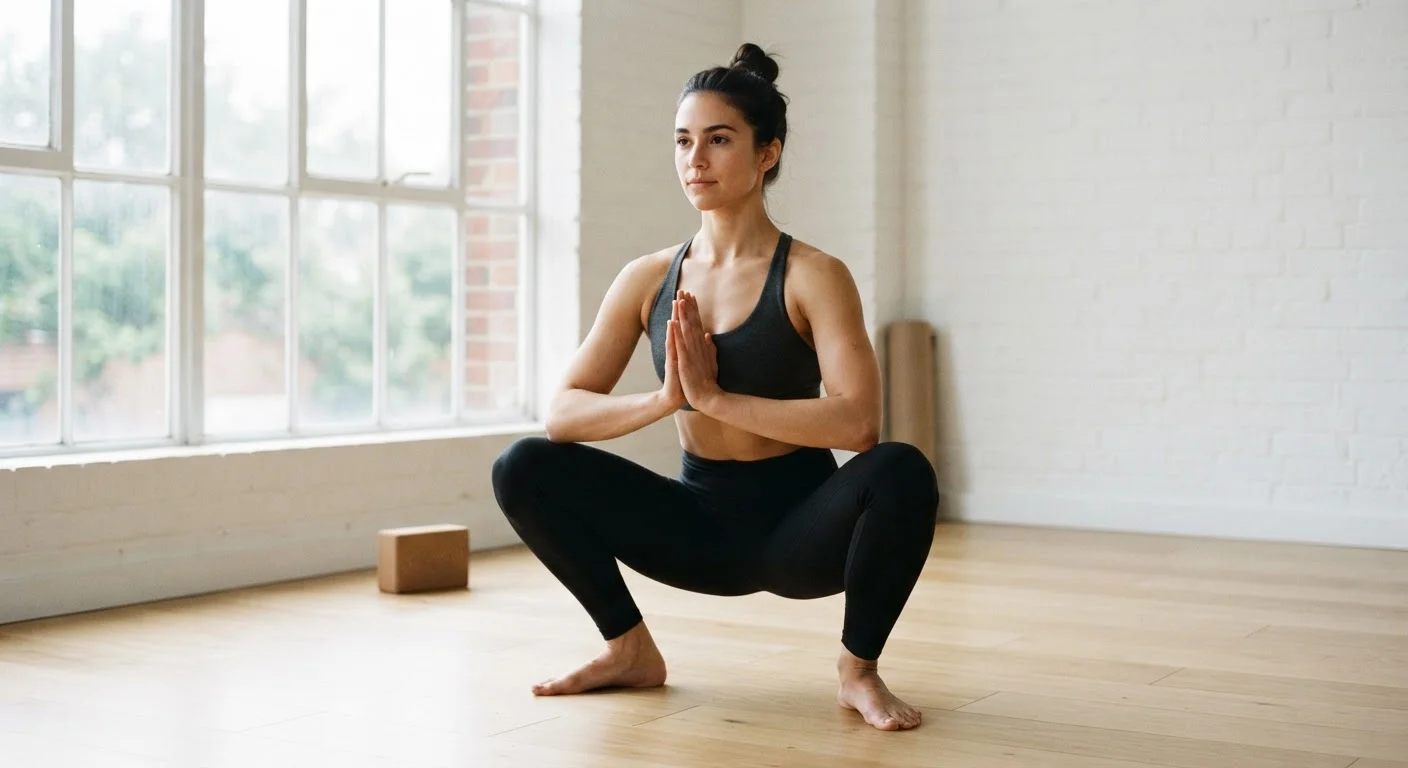
Mobility training, on the other hand, uses dynamic drills: controlled articular rotations, loaded carries, deep squats with active engagement, and movements that ask the joint to work through its full range under muscular control. The nervous system is trained alongside the tissues.
It's worth noting that gains in one don't automatically transfer to the other. Spending months doing passive hamstring stretches may improve your ability to touch your toes, but it won't necessarily improve your ability to hinge powerfully at the hip during a deadlift. For that, you need active control through that range - which is a mobility challenge. Incorporating short movement breaks throughout the day is one practical way to layer both types of training into a busy schedule without carving out separate gym time.
Why Both Matter for Long-Term Health
Research in physical therapy and sports science consistently suggests that adequate joint mobility is a significant factor in injury prevention - particularly for the hips, shoulders, and ankles, which bear substantial load during everyday movement. Limited mobility in these areas often forces the body to compensate, loading adjacent structures and increasing wear over time.
~30%
Decline in joint range of motion with aging
Studies in geriatric and sports medicine literature consistently show joint range of motion can decrease by roughly 20-30% between young adulthood and older age without targeted training.
2x
Injury risk reduction linked to hip mobility
Research published in sports physical therapy literature suggests athletes with adequate hip mobility have meaningfully lower rates of lower-extremity injury compared to those with restricted range.
Flexibility contributes to this picture by reducing the mechanical tension muscles place on joints at rest and during movement. Chronically tight hip flexors, for example, can contribute to low back strain not because the hip is immobile per se, but because the shortened muscles alter pelvic alignment - a flexibility issue with downstream mobility consequences.
The practical takeaway is that these qualities work best together. A routine that only prioritizes passive stretching may leave joints under-supported; one that focuses solely on dynamic drills without adequate tissue length may reach a ceiling. For most people, a mix - some static work after activity, some active mobility drills before it - provides a more complete foundation.
If you're navigating a chronic condition, recovering from injury, or managing joint pain, consult a physical therapist or qualified healthcare professional before starting a new stretching or mobility program. General information like this is a starting point, not a personalized plan.
This article is for general informational and educational purposes only and is not a substitute for professional medical advice, diagnosis, or treatment. Always consult a qualified healthcare provider with questions about your physical health or before beginning a new exercise program.