Where the Idea Comes From
The capsule wardrobe concept traces back to the 1970s, when London boutique owner Susie Faux used the term to describe a core set of timeless, high-quality garments that could be refreshed each season with a few trend-forward additions. Designer Donna Karan brought the idea to wider attention in 1985 with her "Seven Easy Pieces" concept — a coordinated system of garments designed for working women who needed versatility without complexity.
Since then, the idea has been reinterpreted countless times. Today it's less about a specific number of pieces and more about an approach: choose intentionally, buy what fits your actual life, and keep only what earns consistent wear. That shift from formula to philosophy is what makes the concept durable.
“A capsule wardrobe is about having the right things, not the most things. When every piece works with every other piece, getting dressed stops being a problem to solve.”
— Susie Faux, London boutique owner and originator of the capsule wardrobe concept
What Makes a Wardrobe a "Capsule"
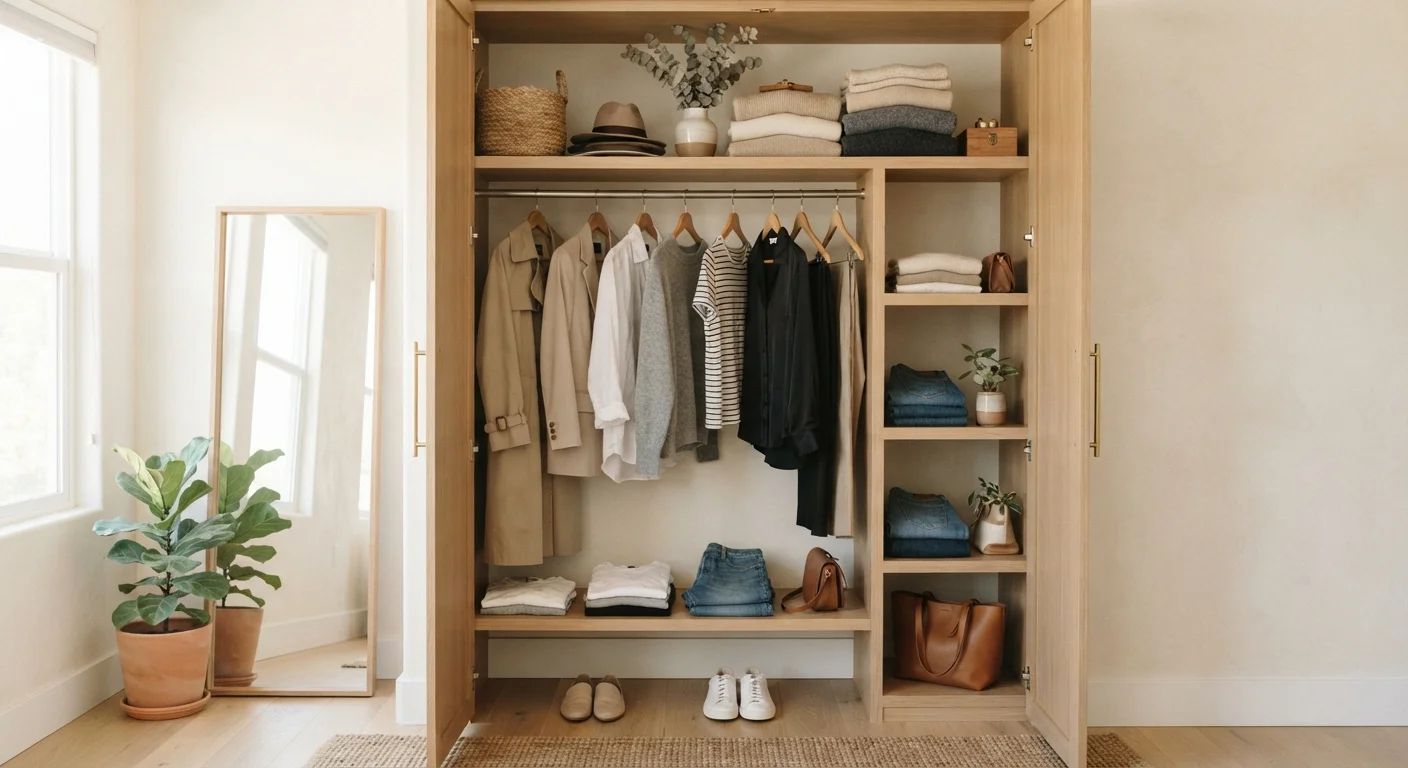
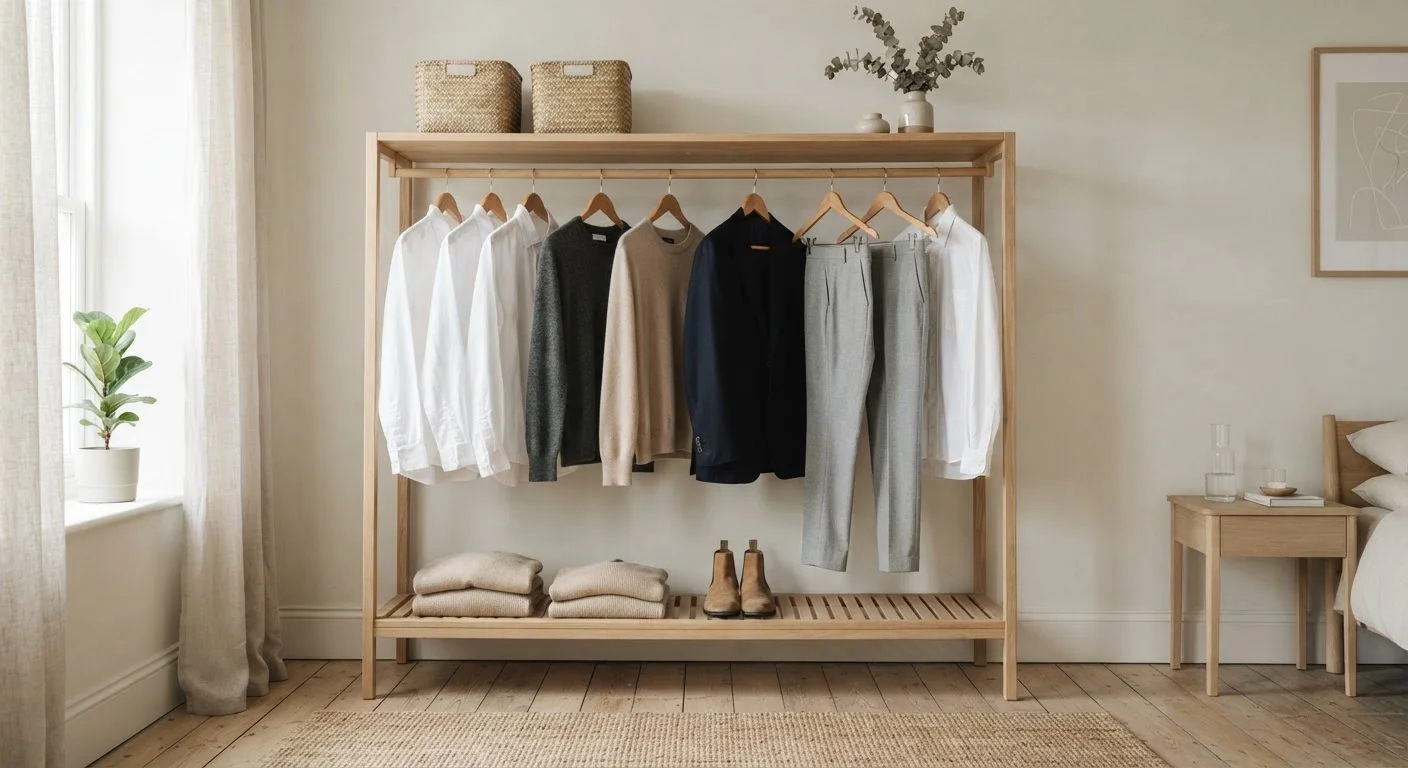
The defining characteristic isn't size — it's coherence. A capsule wardrobe is one where most items can be worn with most other items in the collection. That interchangeability is what separates it from a regular edited closet.
A few principles tend to show up consistently across different capsule frameworks:
- Versatility over novelty: Pieces are chosen for how many outfits they enable, not how exciting they are on the hanger.
- Fit to your actual lifestyle: If you work from home, five blazers don't belong in a capsule. A capsule mirrors how you actually spend your days.
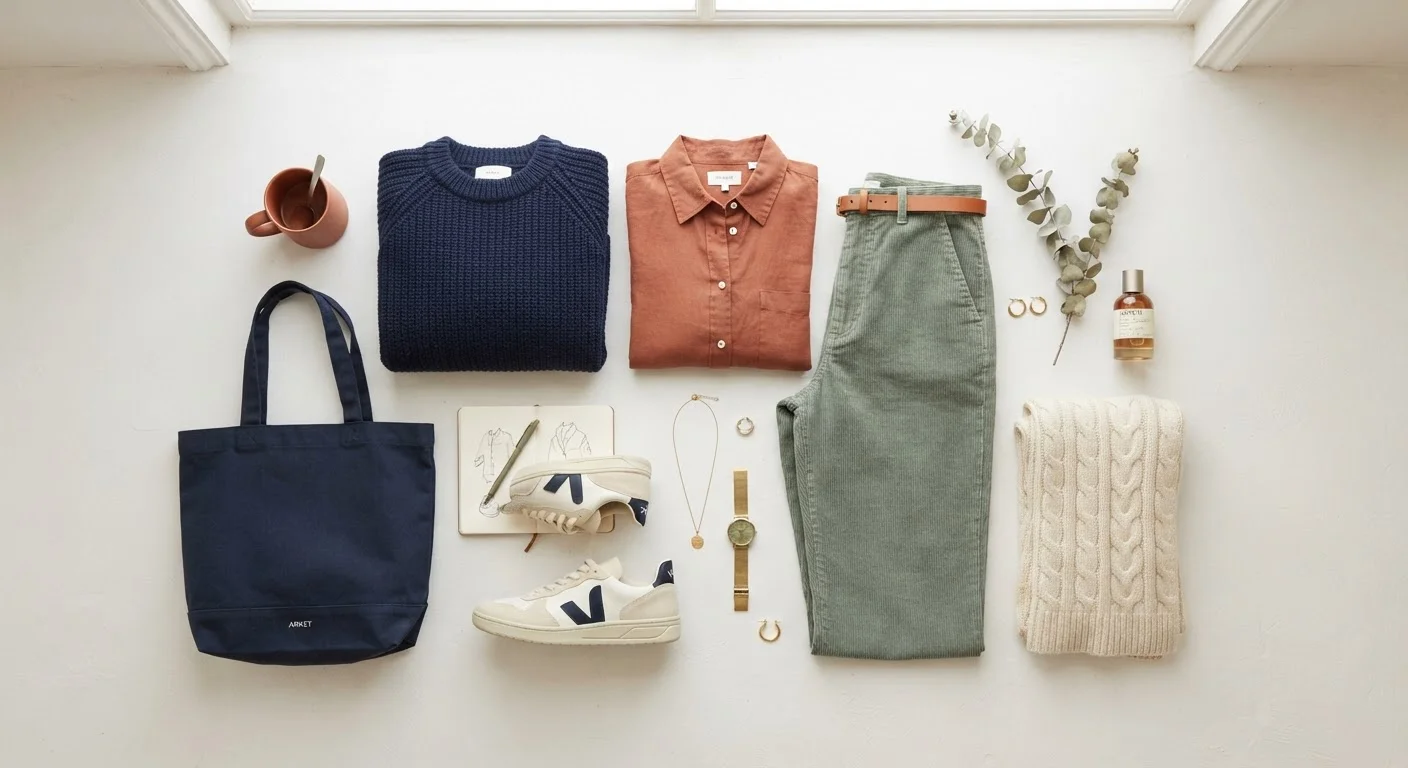
- Cohesion in palette: Colors and patterns are chosen to work together, so getting dressed becomes intuitive rather than effortful.
- Quality over quantity: Fewer items means each one needs to hold up — physically and stylistically — over repeated wear.
Start With What You Already Wear
Before buying anything new, spend a week noticing which pieces you reach for repeatedly without thinking. Those instinctive choices are the natural foundation of your personal capsule. Building from real habits rather than aspirational ones produces a wardrobe that actually gets used.
If you're exploring your own personal style, the capsule concept can be a useful framework for testing what you actually reach for versus what you thought you'd wear.
The Practical Benefits (and Real Limitations)
Proponents of the capsule approach often cite reduced decision fatigue — when your wardrobe is coherent and intentional, getting dressed becomes faster and less stressful. There's also an argument for environmental benefit: buying fewer, longer-lasting pieces generates less textile waste over time.
~20%
Clothes worn regularly from the average closet
Research and consumer behavior studies have consistently suggested most people wear only a small fraction of what they own on a regular basis.
30–50
Items in a typical capsule framework
Common capsule wardrobe frameworks suggest this range, including shoes and outerwear, though the ideal count varies widely by individual lifestyle.
That said, the capsule wardrobe isn't a perfect system for everyone. People whose lives span many different contexts — formal work environments, creative industries, active outdoor pursuits — may find that one capsule doesn't cover enough ground. The solution many people land on is building multiple mini-capsules for different areas of life that share some crossover pieces.
The approach also doesn't inherently save money upfront. Building a functional capsule from scratch involves real purchasing decisions. If your goal is to use a wardrobe overhaul to support broader financial goals, it's worth approaching spending thoughtfully — general principles from budgeting basics apply here just as they would to any discretionary spending.
For a deeper look at putting this into practice, building a wardrobe from scratch walks through where to actually begin.
Making It Your Own
The most common mistake people make with capsule wardrobes is treating them as a prescription — copying a specific list from a blog and expecting it to fit their life. A capsule built on someone else's lifestyle and aesthetic rarely works long-term.
The more effective approach is to use the framework as a lens: ask which items in your current closet you actually wear, which combinations you repeat without thinking, and where the real gaps are. That process of honest evaluation — often called a closet audit — is where most people find the most clarity.
From there, you can begin filling gaps intentionally, guided by your own pattern of use rather than a generic formula. The capsule concept works best when it reflects who you actually are — not a curated version of someone else's style. And as seasons shift, seasonal wardrobe transitions become much smoother when your core pieces are already versatile and well-chosen.